In the 1990s, the term "vintage" was used to describe vintage clothing that did not meet the definition of "antique," but still had value, as opposed to "antique" clothing that was 100 years old. Nowadays, there is a movement to find new value in "new vintage," even in old clothes from the 1980s onward, which used to be called "regular" vintage clothes. In this project, four vintage clothing stores with different styles propose new ways to enjoy vintage clothing. Each of them will talk about the charm of vintage clothing with their own sense of style.
Thankfully, this series is now entering its 19th season! For the 145th installment—the first in a new lineup of featured shops—we’re right in front of Nakameguro Station at “Aurora Nakameguro,” a store that conveys the joy of vintage clothing in a down-to-earth way. What kind of new vintage finds will store manager Aoyagi introduce to us!?
Text_Tommy
Edit_Yosuke Ishii
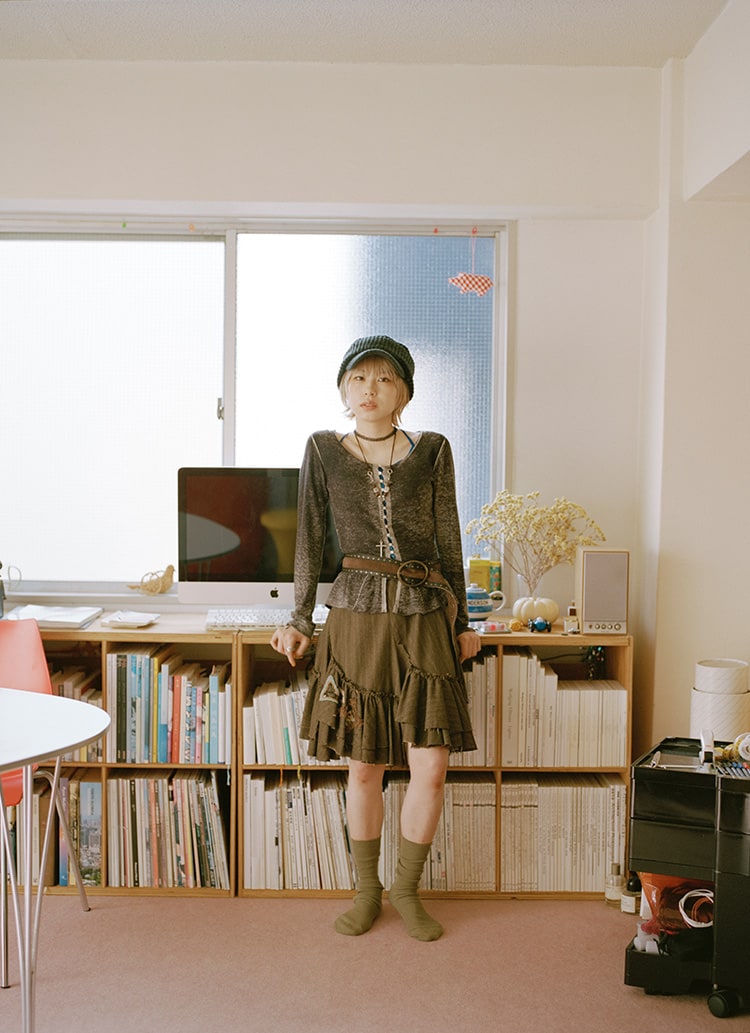
Soma Aoyagi / Manager, Aurora Nakameguro
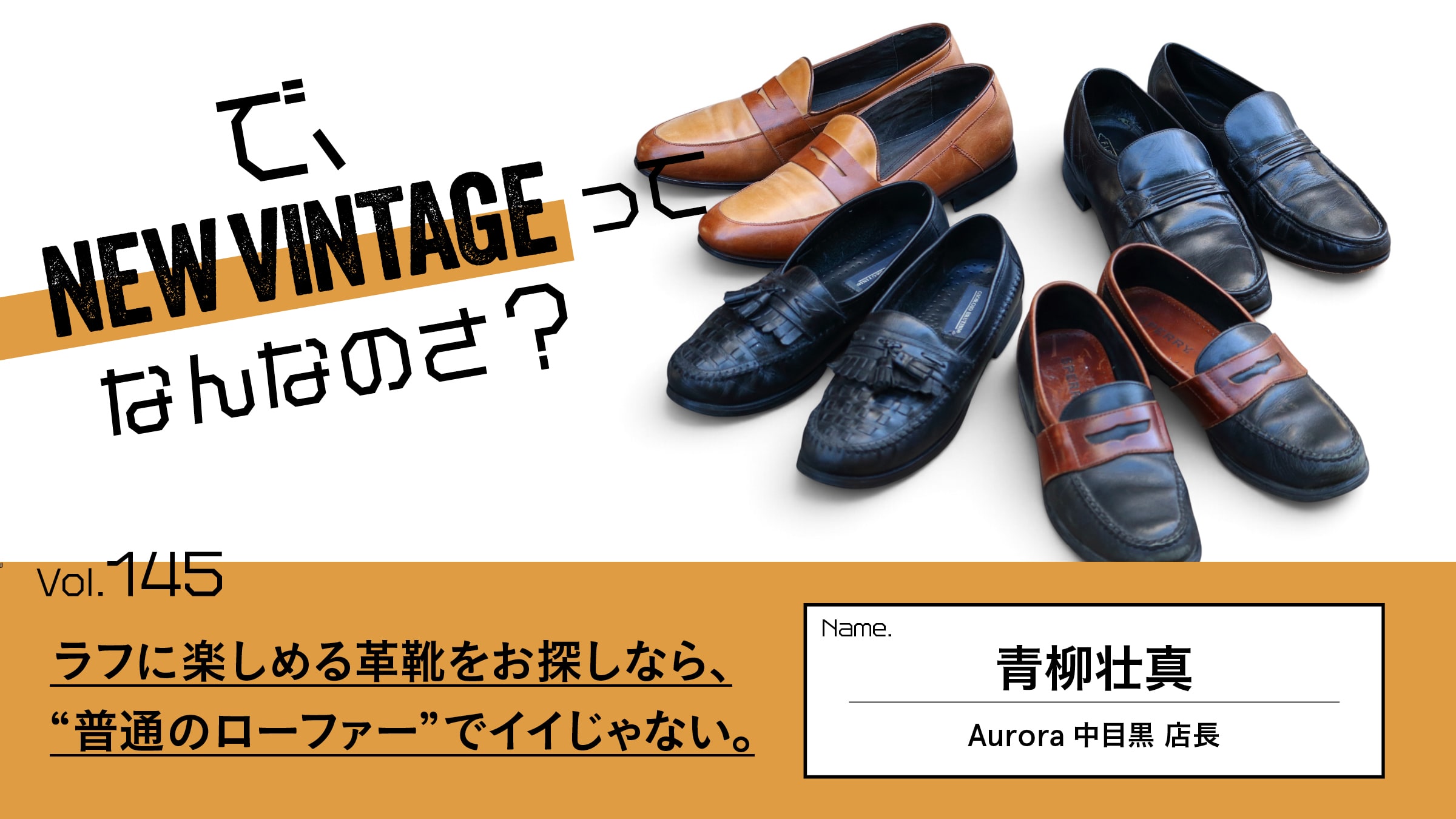
Vol. 145_Everyday Loafers
—The theme of this series is “finding good regulars now that will be remembered and go down in history like true vintage.” What kind of shop is “Auroa Nakameguro”?
While we do carry some vintage pieces, our lineup consists mostly of regular items. Within that selection, we focus primarily on “simple items that are easy to wear every day and can also be styled for a slightly more sophisticated look.” Given our location in front of Nakameguro Station, our customer base tends to be on the older side, so we place a high priority on selecting quality items without being limited by brand or era.
—In your opinion, Mr. Aoyagi, what are the criteria for a “new vintage”?
I guess these are items that haven’t really been in the spotlight yet, but when you take a closer look, you can see their appeal in all sorts of little details. I think vintage pieces have their own unique charm, and regular items have their own distinct appeal. Personally, I’m often drawn to items based on their immediate appeal—like the materials and design—rather than their background stories or trivia. So, I feel that items which allow us to evaluate them objectively as clothing—without narrowing our perspective just because they’re “regular” items—will eventually come to be recognized as “new vintage.”
—That’s when you chose the loafers.
Since many Japanese people have worn them during their school days, and because they’re such a familiar type of leather shoe, I’d like to shine a spotlight once again on loafers—a style that can be worn by everyone, from young people to adults, regardless of age. Following the example of past articles, I should probably narrow it down to “such-and-such from such-and-such place,” but this time, please let me keep it more general and simply call them “regular loafers.”

—What does “ordinary” mean? When it comes to loafers, brands like G.H. Bass and Regal are considered classics.
That’s definitely the classic approach, but if you’re looking for vintage shoes right now, I’d like you to choose a pair you can wear without feeling self-conscious. So, the shoes I’m featuring this time are all entry-level brands—the kind that ordinary middle-aged American guys wear every day. Some of these are from a time period close to the current models, but they’re all affordable shoes that you can get brand-new for under $100. So, let’s take a look right away.
—Let's start with the more casual brand, *SPERRY*.
Founded in the U.S. in 1935, this brand is best known for its deck shoes, but this model is a classic coin loafer—the quintessential loafer. While a solid black pair in this style can look too student-like or, conversely, too chic, the two-tone color scheme gives it a casual vibe. Another feature that makes them easy to incorporate into your wardrobe is the slip-resistant rubber sole. If you’re new to loafers, why not start by giving this style a try?
Sperry Loafers ¥ 17,600 (Aurora Nakameguro)
—I think I can pull this off like a pair of sneakers. What's next?
〈FLORSHEIM〉 was founded in Chicago, Illinois, in 1892. True to its reputation for crafting high-quality men’s shoes since its inception, the brand is a true staple in the vintage market. The brand offers a wide variety of designs, including straight-tip and wing-tip styles, and its side-elastic boots are considered true classics. With their relatively basic design and solid black color, they pair well with any bottoms. They’re definitely a great choice for everyday wear.
Florsheim Loafers ¥ 17,600 (Aurora Nakameguro)
—The tassels and braided design on these are just so cool. I have a memory of adults often wearing shoes like this during the bubble economy era.
It’s , isn’t it? Founded in 1969. The name sounds Italian, but it’s actually American (lol). It’s said to have gained popularity because, while featuring distinctive designs that make use of braided details, crocodile-embossed patterns, and unique materials, the brand remains affordable. With its combination of tassels, braided details, and mocha stitching, the design is rich in style, and its relaxed feel exudes a sense of mature sophistication. I highly recommend pairing it with classic slacks made from textured fabric—it creates a nice contrast.
Giorgio Burtini Loafers ¥ 17,600 (Aurora Nakameguro)
—And finally, what an elegant look.
Since its founding in 1875, STACY ADAMS has continued to offer products that combine quality and style, earning the trust and affection of people across all generations. While the brand now offers a wide range of men’s fashion items—from clothing to accessories—it originally started as a shoemaker. Among its most famous models is the cap-toe “Madison.” Many of its shoes feature a slim, sexy silhouette, and this one is no exception. With its narrow toe and a natural-and-brown color combination, it has a slightly more “bad-boy dad” vibe than the original Sperry (lol).
Stacy Adams Loafers ¥ 17,600 (Aurora Nakameguro)
—When you say “ordinary,” I assumed you were talking about no-name brands, but these are all established brands with a long history, and the products are really well-made, aren’t they?
That’s the key point. It’s precisely because there’s a solid background behind it that, even though it looks “ordinary” at first glance, I can recommend it with confidence. It might not be the best fit for those who are particular about “Made in the USA,” but if you don’t mind products made in Asia, it’s definitely worth considering. When it comes to quality, there are plenty of poorly made U.S.-made products out there, and if you think of it as being able to keep the price affordable precisely because it’s made in Asia, there’s absolutely no problem with it.
—And winter is just around the corner. What kind of socks go best with loafers this time of year?
Of course, going barefoot is a bit much (lol), and if you wear thin socks that show a little bit of your ankles, you’ll end up looking like an old-fashioned middle-aged guy from a bygone era. So personally, I think it’s more interesting in terms of balance to pair them with something like skater socks and go all out with a casual look.
—With sneakers having become so expensive these days in the Reiwa era, it’s totally acceptable to wear loafers in a casual way.
That’s absolutely true. Aside from the common feature of having no shoelaces, each design is unique, so there are plenty of options to choose from. Plus, they’re affordable, and with countless brands to choose from, you’re surprisingly unlikely to end up with the same pair as someone else. That’s the appeal of “ordinary loafers.” While it might be a stretch to say, “They’re even suitable for formal occasions!” there are certainly plenty of opportunities to wear them. During the year-end and New Year’s season, when there are more occasions—like year-end parties and New Year’s gatherings—where you have to take off your shoes, ease of putting them on and taking them off is important. I hope you find that perfect pair that lets you enjoy yourself casually and without a care in the world.
Soma Aoyagi / Manager, Aurora Nakameguro
Born and raised in Nagano, she began working part-time at a vintage clothing store in Takasaki, Gunma Prefecture—where she settled after entering college—and thus entered the world of vintage fashion. Having just moved to Tokyo this spring, she’s been living here for less than half a year. At “Aurora Nakameguro”—a shop conveniently located just a one-minute walk from Nakameguro Station that specializes in “simple items that are easy to wear every day and can also be styled elegantly”—she serves as the store manager at the young age of 23.
Instagram:@aurora_nakameguro