A Philosophy of Work Through the Lens of Yakisoba.
After a 15-minute walk from Union Street, the two of them settled in at “Ishida-ya,” a place that evokes the taste of Mr. Kijima’s youth. Inside the restaurant, where the colorful staff bustled about, the aroma of their original sauce filled the air. With his appetite whetted by the scent, Kijima ordered his usual “Ishida-ya Special Mix” in a jumbo portion. Following Kijima’s recommendation, Ise also decided to try the jumbo portion.

The signature dish, “Ishidaya Special Mix,” features meat, ham, eggs, and vegetables. Its mild flavor is unique to this restaurant, and Mr. Kijima’s favorite way to enjoy it is to pour plenty of the Worcestershire sauce from the table onto it.
Ise: (Taking a bite of the yakisoba) Oh! This is surprisingly light. Even though it’s a jumbo portion, I could easily polish it off.
Kijima: Exactly! Even though Tokyo is overflowing with so many delicious things, when I come to Utsunomiya, I still find myself craving this taste. It’s the taste of youth, etched into our very instincts, that hasn’t changed in 40 years (laughs).
Ise: When I first moved to Utsunomiya, karaage was so deeply ingrained in the city that I mistakenly thought this place was something like the “City of Karaage” (lol).
— “Ishidaya,” you’re doing a great job (laughs). You two started doing business before you even met—in other words, you were connected purely through your “products.” Over the course of your long relationship, what aspects of each other’s work ethic do you respect the most?
Ise: I feel that Mr. Kijima’s personality truly shines through in his brand. Despite his impressive track record, he remains genuinely humble. I believe that it is precisely this humility that allows him to approach his craft with such care. When I look at the hats from 〈Takayuki Kijima〉, I always sense a spirit of inquiry—a desire to ask, “Wouldn’t this be even better if I did it this way?” I imagine he must be constantly refining his designs with tremendous ingenuity.
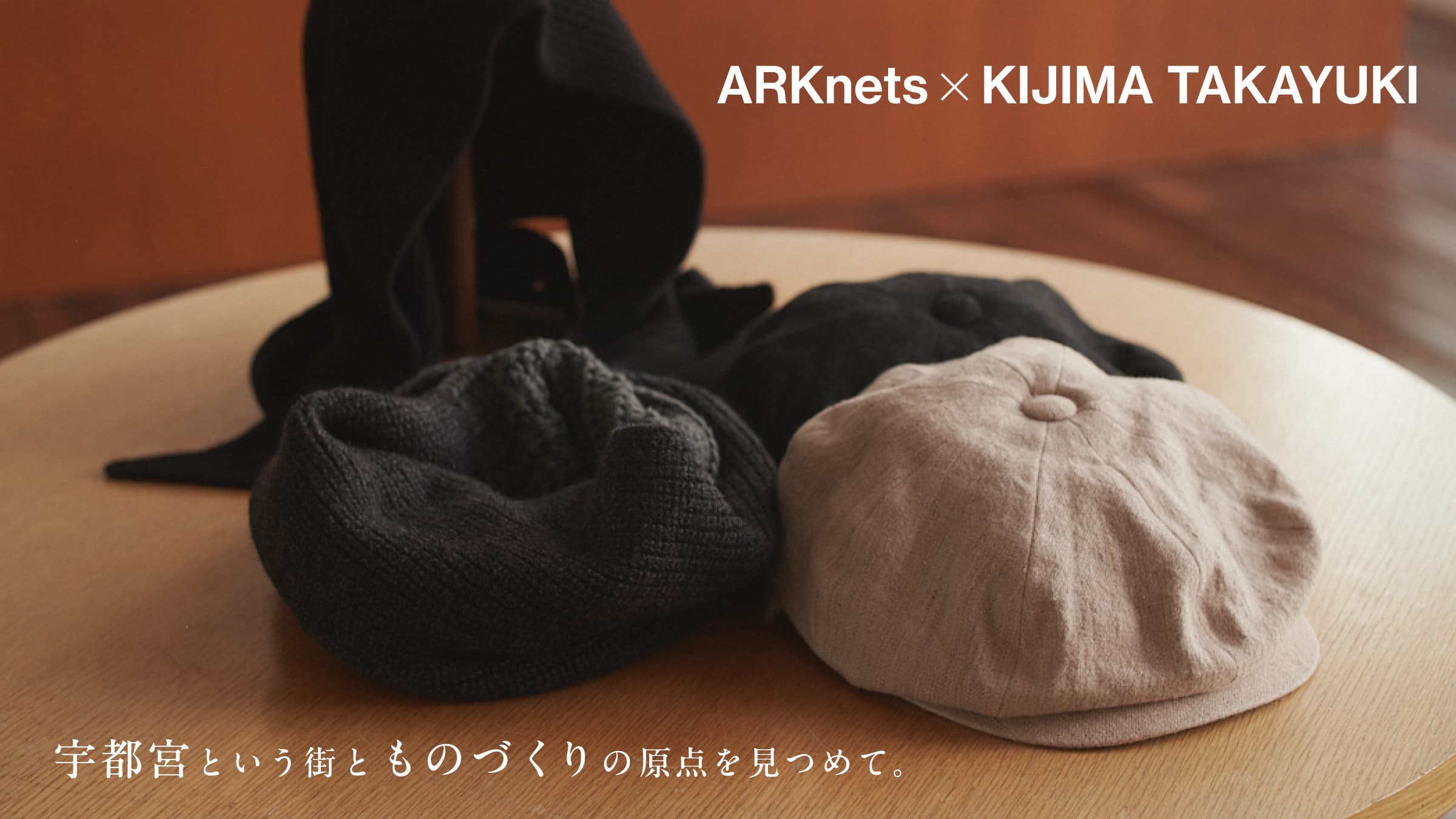
Kijima: No, no (laughs). But I’m really happy to hear you say that, Mr. Ise, especially since you’ve seen so many great pieces. After all, hats are essentially “supporting actors”—they’re the last thing you choose when putting together an outfit. Unlike clothes or shoes, you can still go out without a hat, and if you think, “This doesn’t go with what I’m wearing today,” it becomes unnecessary in an instant. That’s exactly why, when customers see themselves in the mirror, we have to create hats that make them think, “Yeah, I look better with this on.” There’s no point in simply copying the past or our archives; we’re always thinking about striking a balance with the present by adding that extra something—like being able to stuff it into a bag or being water-resistant.
— How do you tap into that “current sensibility” in that area?
Kijima: I guess it comes from the things I see every day. Even when I'm walking around town, I often find myself drawing inspiration from the vibe given off by people who don't seem to be thinking too much about fashion, rather than those who are all dressed up.
— Mr. Ise, as you’ve continued “ARKnets” for 30 years, have you made a conscious effort to launch new initiatives?
Ise: That’s right. Back during the Ura-Harajuku boom, I became really interested in imported goods. As a result, I once put together a forced, import-heavy selection—even though customers weren’t looking for it at all—and drove the company to the brink of collapse. That’s when I realized all too clearly that if what I have in mind doesn’t align with what customers want, the business simply won’t work. I think that’s a point where Mr. Kijima’s approach to craftsmanship and mine overlap.
— I suppose it’s precisely because of that mindset that you’ve been able to expand to 18 locations.
Ise: After all, I’m a bit of a trend-follower. I love fashion, so I love new things. That’s why, as I’ve gone through different fashion phases over the years, the number of stores has grown along with them, and that’s how we’ve gotten to where we are today. All 11 stores on Union Street have their own distinct styles, and you couldn’t create this much variety unless you were a trend-follower, right?
With a history spanning over 75 years, “Ishidaya Yakisoba Shop” is the birthplace of Utsunomiya yakisoba. The dish features extra-thick noodles with a chewy texture, and customers enjoy it by adding the shop’s special Worcestershire sauce after serving to customize the flavor to their liking. This Utsunomiya soul food was bustling with customers even during our visit. Address: 5-8-9 Chuo, Utsunomiya City, Tochigi Prefecture / Hours: 10:00 a.m.–3:30 p.m. (*Closes when sold out) / Closed: Wednesdays