Something born from an individual's passion.
The scene shifts to the “RIPE ARK” store, which carries items by Takayuki Kijima. Here, a pop-up event featuring collaborative items between the two brands—created to commemorate the 30th anniversary of “ARKnets”—was held in late October.

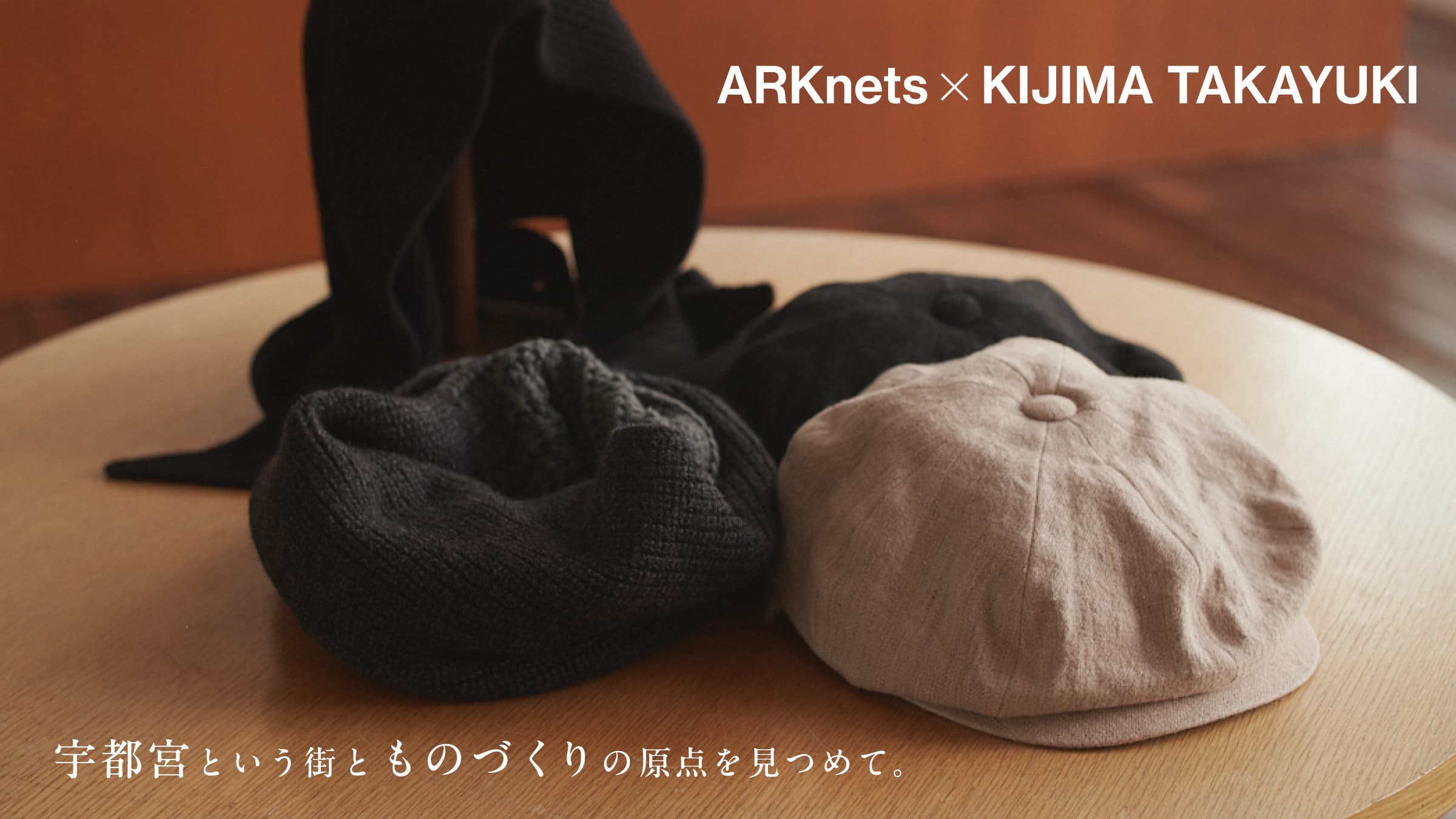
Wool-Linen Casquette ¥ 19,800
A casquette made from a blend of wool and linen. The crisp texture of the linen combined with the soft, fuzzy texture of the wool creates a look reminiscent of 1930s European vintage style.
Left: Wool Knit Hooded Scarf ¥24,200; Right: Middle & Chunky Combi Snood ¥26,400
A hooded scarf (left) made from Tasmanian wool, known for its smooth softness—comparable to cashmere—and its beautiful color saturation when dyed. A combination snood (right) that pairs a mid-gauge Merino wool knit with a low-gauge knit made from a blend of Merino wool and bulky acrylic.
— What kind of discussions led to the creation of these three custom-made items?
Kijima: As for the hooded scarves and snoods, we received a request to create a custom version in gray based on an existing design. To match the vibe of “RIPE ARK,” we produced them using materials and color tones that weren’t part of our regular lineup. I don’t really wear scarves myself, mainly because I always struggle with figuring out how to style the hanging ends when I do. But with a snood, you just pop it on—it’s a simple idea, but I think it’s pretty great.
— What about the Type 1 cap?
Kijima: The manager at “RIPE ARK” loves these caps so much that he wears one almost every day. We’d actually made a custom batch of caps for them before, and after a few years, they reached out saying they wanted to do it again. We deliberately finished the fabric to give it a slightly worn-in look. If you make a linen-wool blend too stiff, it ends up looking “too much like a hat” and feels dated, so we were committed to ensuring it works as a contemporary fashion item.
Ise: This season, “ARKnets” is featuring a “Grandpa Core” concept, offering classic items like the kind a grandpa might wear, and our staff was saying, “We really need Mr. Kijima’s flat cap for this look.” So, even though Mr. Kijima just said he’s “just a supporting character,” from “ARKnets’” perspective, this hat is actually the star of the show.
— The fact that personal interests are reflected in the products is typical of “ARKnets,” which places great importance on the individuality and personalities of its store staff.
Ise: That’s right. My philosophy is to put the staff front and center as much as possible. At the end of the day, I believe it’s the people who define a space. That’s why I make sure the staff can attend trade shows whenever possible, and while I do participate in detailed meetings for custom orders, my basic approach isn’t to issue orders from above—I want the staff to draw on their own ideas and vision when sourcing products and making proposals. Of course, I do oversee the big picture, but I really prioritize building a store that’s centered around the staff. Plus, Mr. Kijima is very respectful of requests from the staff.
Kijima: I’m actually pretty nervous about how we’re going to live up to your expectations (laughs). But having worked with you for so long, I can clearly picture the brand image of the clothing “ARKnets” carries and the tastes of your staff, which is exactly why I always feel confident working with you.
— It's interesting that there are scrolls as well as hats.
Ise: Since many of our customers who wear hats tend to be particular about fashion accessories in general—such as scarves and bags—this is the kind of direction we’re taking. Looking ahead, I can’t help but feel there’s great potential for the wonderful fabrics Mr. Kijima is experimenting with to be applied to bags and other fashion accessories. Personally, if they were to make bags or similar items, I’d definitely want one.
— Could you tell us about the future outlook for “ARKnets”?
Ise: On a more serious note, I’d like to use the added value that clothing creates to help address the challenges that regional cities will face in the future—such as a declining birthrate, an aging population, infrastructure issues, and the closure of schools—beyond just a business perspective. As part of this effort, we’re currently partnering with Utsunomiya University—the only national university in Tochigi Prefecture—to contribute through the production of merchandise and to provide financial support for programs where working adults can pursue their education. I believe that if universities, like those in the United States, become places where people gather more often as community hubs, it will help revitalize the city.
— So you’re really feeling that sense of crisis, right? How about from the perspective of an “ARKnets” store?
Ise: These days, it’s not just online shoppers—customers from neighboring prefectures like Tokyo and Saitama, as well as from other prefectures, are coming to our store specifically to see and touch the products in person before buying, and our in-store sales have been growing significantly. Including events like our “Weekend Shop,” which is open only on weekends, we hope to continue offering experiences that encourage people to make the trip here from this town.