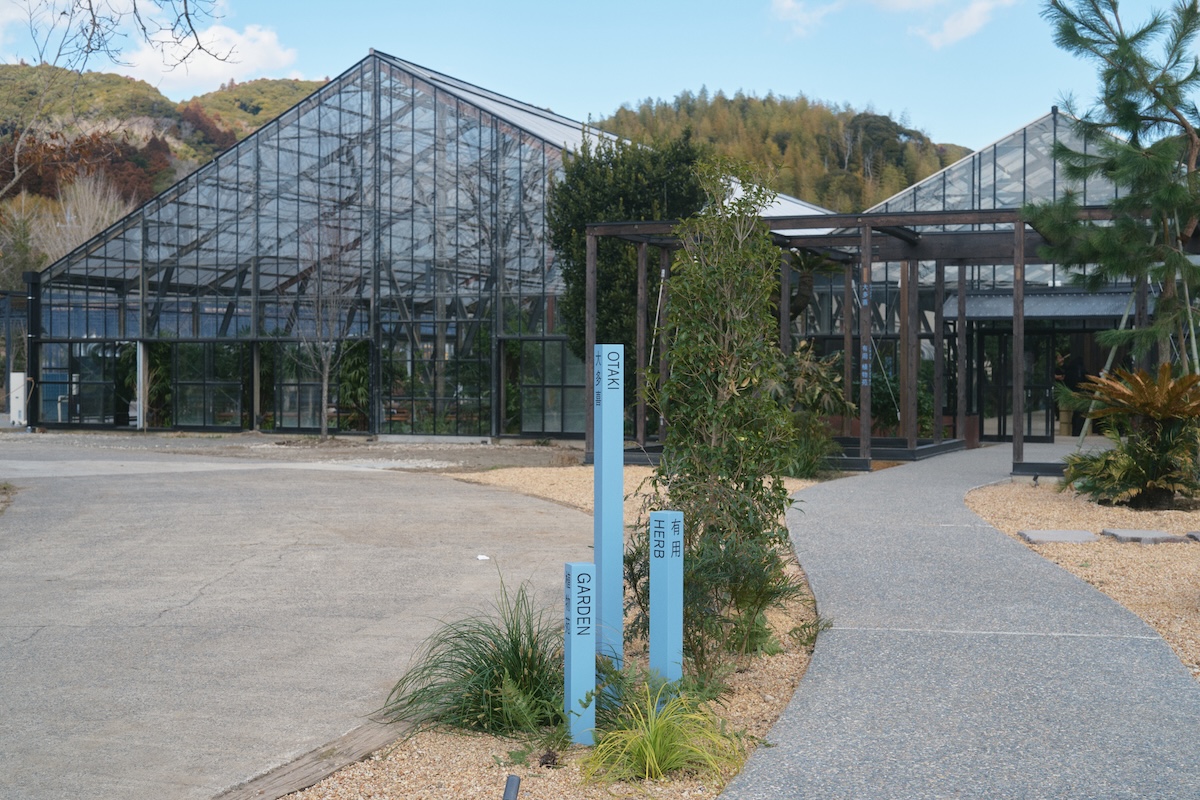
The “Otaki Useful Plant Garden” celebrated its grand opening on Wednesday, April 1. Originally a botanical garden where visitors could enjoy Western herbs, the facility has been reimagined and renovated into an open garden where visitors can experience firsthand the uses and charms of the herbs that have long supported Eastern lifestyles. Although it is a botanical garden, it offers more than just gardens—it also features a wide selection of dining options and shops. What exactly are “useful plants”? Curious to find out, I visited this new landmark in Chiba.
- Photo by Yuki Furue
- Text & Edit_Kazuki Sakaguchi
A garden where you can encounter the plant culture that is an integral part of daily life.
About an hour and a half by car from Shibuya. After passing through the Aqua Line, we arrived in Otaki Town, Isumi District, Chiba Prefecture. This is where the “Otaki Useful Plant Garden” is located. Originally operated as a Western herb garden, the facility has been renovated into a garden designed to help visitors rediscover the plants that have long supported Eastern lifestyles. For this renovation, specialists from various fields—including not only botany but also food, architecture, agriculture, and dyeing and weaving—joined the project team, transforming the space into a place where visitors can experience the benefits of plants from a variety of perspectives.

Incidentally, “useful plants” refer to plants that have been an integral part of people’s lives and have been passed down as part of their culture. In the past, in countries with rich vegetation—such as Japan and Southeast Asia—people relied on plants for nearly every aspect of their lives, from food and clothing to medicine, architecture, and tools. Through the experiences offered at this facility, visitors can learn how to make use of the plants around them and discover their charm, thereby enriching both their minds and bodies. Our goal is to restore a landscape where nature and daily life are one.
As the name “Botanical Garden” suggests, a garden where visitors can admire plants is essential. Comprising three areas—the Inner Garden, the Outer Garden, and the Park—the garden features plants from regions with broad-leaved evergreen forests, primarily Japan but also including East Asia and Southeast Asia. The decision not to limit the collection to plants native only to Japan stemmed from a desire to follow the natural classifications of climate and vegetation rather than the artificial boundaries drawn by humans. In fact, it is said that there are many commonalities in how people in East and Southeast Asian countries interact with plants.
Elevated Living Room
Here, we introduce the inner courtyard, which was completed at the time of our visit. The inner courtyard is divided into six zones classified by how they are incorporated into daily life: fragrance, building materials, spices and medicines, fruit trees, edible plants, and crafts. Surrounding the “raised-floor living area”—where visitors can sit back and leisurely admire the plants—are species such as Japanese sago palm and Japanese cypress, which have traditionally been used to block the wind or as building and tool materials. We’re told that this space will also serve as a stage for future live events. Just the thought of enjoying music in a botanical garden gets me excited.
Underground Living Room
Next, you’ll come to the “Underground Living Room”—a space where you can look up at the plants while sitting below ground level, creating a sensation of being embraced by the earth. By changing your usual perspective, you may discover a new side to the plants. Surrounding the area are plants that have long been used as herbs and spices to support daily well-being, such as loquat—used in folk medicine for teas and poultices—and longan, which is said to help relieve fatigue.
Living Room Under the Eaves
From the “Under the Eaves Living Room”—a covered bench made of bamboo from the neighboring town of Isumi City—you can enjoy a view of the outdoor garden. It’s a comfortable spot even in the summer when the sun is beating down. It seems like a great place to relax while sipping a drink you bought at the café. All around, you’ll find plants that delight the palate, such as the citrus-like tachibana and golden flower tea, whose dried flowers are brewed as tea. With so many places to sit like this, you can spend a relaxing time surrounded by plants.
Unlike typical botanical gardens, the “Otaki Useful Plant Garden” deliberately does not attach large name tags to individual plants. This is because the garden aims to let visitors enjoy the plants intuitively through their five senses—noticing things like, “That smells nice,” “The flowers are beautiful,” or “Look, there are fruits on the plant!” But don’t worry if you’re the curious type who simply must know the names and details of the plants. For visitors like you,Web Encyclopediaare available.
From the soil to the body: herbs that circulate in Otaki.
This spacious area, bathed in natural light, is a café and restaurant. The food and drinks feature useful plants harvested from the garden throughout the four seasons, allowing you to experience the bounty of nature through your taste buds. The food menu includes “Maruta"—a chef who served as the restaurant’s former head chef and explores cuisine that captures the essence of the forest, centered on wood-fired cooking and fermentation—Kazuki IshimatsuSupervised by [Name]. They’ve put a lot of effort into not just the garden but also the food and drink.
Wild Herb Curry with Karasushō ¥1650
On the day of our visit, we were served a wild herb curry made with karasusho. Karasusho is a type of sansho pepper characterized by its coconut-like aroma. The dish also features herbs harvested on the premises, such as cilantro, arugula, lemongrass, and shakuyaku. Fresh ingredients taste better, and this dish—which supports local production for local consumption—is a win-win that also helps reduce food miles.
The drink menu features creative non-alcoholic beverages and “Raw Sugar RoastThe menu features a wide variety of drinks, ranging from coffee-based beverages to herbal teas and juices. Given the location, many guests are likely to arrive by car, so it’s great to see such an extensive selection of non-alcoholic options.
We’ve focused on using plants from East Asia not only in the garden but also in the interior design and furnishings. The iconic long table placed at the center of the dining hall was designed by the architectural firm “suha"Produced on the Indonesian island of Bali. Made from carefully selected bamboo sourced from various Asian countries, it is secured using earthen plaster and bamboo screws, without any metal. The central hole is used to display plants picked that very morning, adding a splash of color to the table."
The fabric used on the sofas is dyed with plant-based dyes using discarded tree bark. The cushions are dyed with indigo, making this a facility that makes full use of plants.
Sharing Useful Plants.
It’s only human nature to want to buy souvenirs when you visit an area you don’t usually go to. After taking your time to enjoy the garden and café-restaurant, it’s time for some shopping. The spacious shop offers a wide variety of items, ranging from houseplants to products made from useful plants—such as seasonings and aromatherapy items—and a curated selection of home goods. Based on the concept of “sharing the bounty of useful plants,” this is a place where you can take home the blessings of plants—discovered through your five senses while exploring the grounds—to incorporate into your daily life.
What caught my attention in particular were the products from the fragrance brand *OHG Scent Research*, which was created based on research conducted in the garden’s fragrance laboratory. The craft gin *Holon (HOLON)〉The distiller behindRei HorieUnder the direction of [Name], we are exploring fragrances as luxury items using seasonal plants displayed within the garden. We currently offer four products: botanical tea, incense, room spray, and diffusers. This year, we have adopted the relationship between color and scent as our theme, and we offer three scents: green, white, and red.
Located just a day trip away from the Tokyo metropolitan area, the “Otaki Useful Plant Garden” offers a chance to experience something out of the ordinary. Why not pay a visit this weekend or during Golden Week? There’s even a dog run in the outdoor garden, so visitors with dogs can feel right at home.
Otaki Useful Plant Garden
Address: 2423 Kotsuro, Otaki Town, Isumi District, Chiba Prefecture
Hours: 10:00 a.m. – 5:00 p.m. (Last order for food at 4:00 p.m., last order for drinks at 4:30 p.m., last admission at 4:30 p.m.)
Admission: Adults 900 yen, Children (elementary school students and older, junior high school students and younger) 500 yen, Dogs 300 yen