"Fuinam" is also participating in the production of the podcast "The Economics of Culture and Urban Development: *Culture Scapers*". We've started releasing it once a week on Tuesday mornings—have you had a chance to listen yet?"
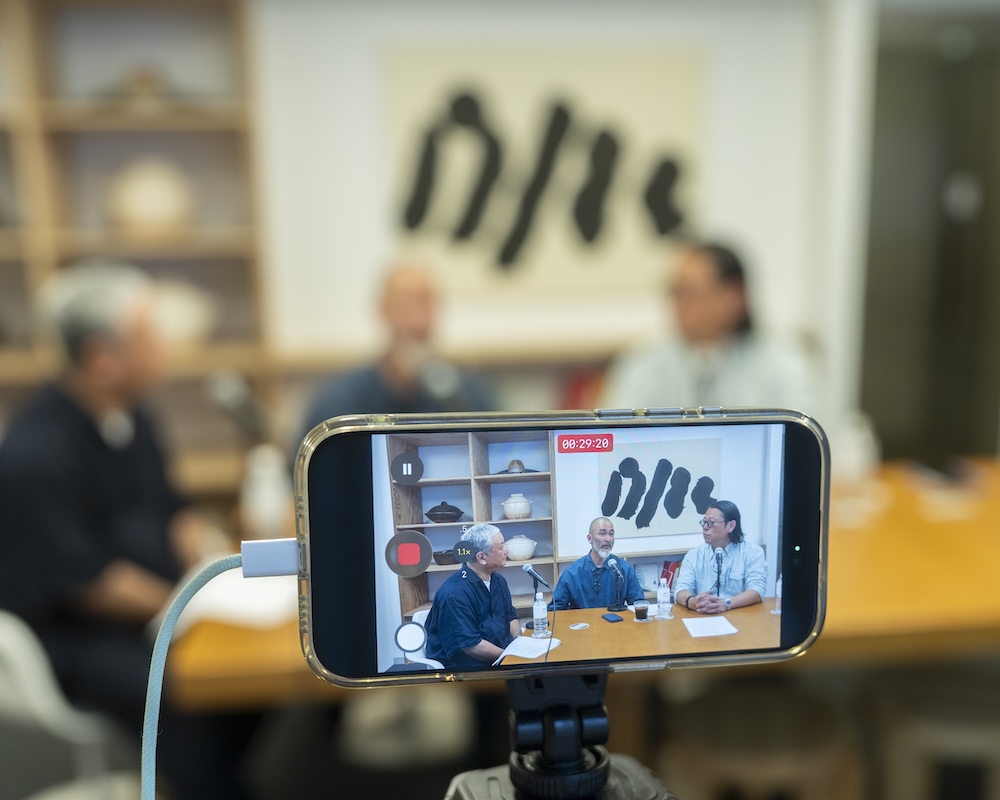
Following a roundtable discussion featuring three hosts—Masato Sekiguchi, CEO of “GREENING”; Shinichiro Nakahara, Representative Director of “Landscape Products”; and Ryo Komuta, Editor-in-Chief of “Fuinam”—the first episode featuring a guest has finally been posted.

The show’s first guest is Shinichiro Harakawa of the restaurant “BEARD.”
He launched “Beard” in Meguro, went on to establish “The Blind Donkey”—a restaurant shaped by Alice Waters’ influence—and later opened a new “Beard” in Unzen, which he has been running ever since.
Episodes #5 through 8 of the podcast, which explores the theme of “How Food Is Transforming Regional Communities and the Future,” are now available. For those who haven’t listened yet, we’ve summarized the highlights of each episode. If you’re interested, please check out the full episodes on the podcast.
#5 The Essence of "Food" as Learned in France
After studying abroad in Canada from a Catholic boarding school in Shizuoka, Mr. Harakawa returned to Japan and worked as a corporate employee at a travel agency and an NHK affiliate before making a somewhat late start—at the age of 27—in the culinary world. He then immersed himself in a two-Michelin-starred restaurant in Burgundy, France, to experience the authentic culinary scene firsthand. Although he faced language barriers there, he was deeply impressed by the richness of the local food culture—which was deeply rooted in the community—and by the way people communicated through food, experiences that went far beyond mere culinary technique.
He later returned to Japan, trained at renowned restaurants, and opened his own restaurant, “Beard,” in Meguro in 2012. Setting himself apart from the so-called “traditional restaurant” model, he enlisted a diverse group of creative friends to design the interior and create the space, crafting a community-like environment where different cultures naturally intersect. Described as “a French bistro you might find in New York,” the venue—though tucked away in a back alley—has become a space that bustles night after night with people seeking a cozy atmosphere.
#6: The Untold Story Behind the Birth of “the Blind Donkey,” Which Supports Japanese Food and Agriculture
“Chez Panisse,” the restaurant founded by Alice Waters in Berkeley, California, became the birthplace of the global organic and local food movement. Shortly after opening “Beard” in 2012, Mr. Harakawa temporarily closed the restaurant for just two weeks to head to “Chez Panisse” for an internship. There, he witnessed firsthand the chef’s free-spirited lifestyle—working for half a year and taking the other half off—an open and collaborative organization where artists worked part-time, and an overwhelming sense of community closely tied to local farms.
This experience would become a major foreshadowing of what would later become “The Blind Donkey.” After meeting Mr. Jérôme Wagsack—who had served as the restaurant’s head chef for many years and possessed an artistic sensibility—the two launched a new project driven by a strong desire to “support organic farming in Japan.” Deliberately choosing Kanda—the heart of the city bustling with office workers—they named the restaurant “The Blind Donkey,” a term derived from the teachings of Ikkyu-san and signifying “humility.” The restaurant posed a new question about the very nature of Japanese cuisine.
#7 The Reality of Regional Revitalization: How a Single Restaurant Can Double the Value of a Declining Hot Spring Town
Three years after launching “The Blind Donkey,” Mr. Harakawa entrusted his role in Tokyo to the next generation and his colleagues, and moved to Kohama Onsen in Unzen City, Nagasaki Prefecture, to become a local hub for revitalizing the community. He was driven by his encounter with Mr. Iwasaki, a local farmer who had preserved and passed down heirloom and open-pollinated seeds for nearly half a century, as well as by a strong curiosity to experience firsthand just how much a single outstanding restaurant could transform a declining hot spring town.
When Mr. Harakawa, who came from outside the area, redefined the value of local ingredients and put into practice a system where fair compensation was paid, the town’s landscape began to change little by little. By setting prices commensurate with value—rather than relying solely on low prices—the prices and perceived value of nearby inns, hot springs, and restaurants also seemed to improve naturally. Featuring vibrant heirloom vegetables sourced from fields within a 20-minute radius as the main attraction—and beginning with a soup made from their peels and trimmings simmered in spring water—the cuisine at “Beard” has now become a one-of-a-kind destination sought out by gourmets from across Japan and even overseas.
#8 Sustainable Food and Regional Revitalization: What Will Be the Future of “Manufacturing” in an Era of Rapid Change?
Then, at the end of August 2026, after five and a half years of work in Unzen, Mr. Harakawa will take the next step forward. Having taken on new challenges every five years, his next focus is on archival efforts to support native and heirloom varieties across Japan—as well as the young farmers who preserve them—and the establishment of a new hub to promote these initiatives. He continues to seek ways to shine a light on vegetables—which, compared to meat and high-end fish, still struggle to be properly valued—and to create a system that returns sustainable compensation to farmers.
Furthermore, another dream that Mr. Harakawa—who will soon be entering his 50s—vaguely harbors is to take on the challenge of “craftsmanship (woodworking).” Mr. Harakawa, who says he absolutely loves chopping vegetables in his daily life, explains that he is deeply drawn to the act of “carving”—where changes emerge as he shapes natural materials with his own hands—rather than pottery, which involves creating forms from scratch. Inspired by the lifestyles of artists in California, his new journey—moving from vegetables to wood and humbly engaging with the power of nature—has already begun.
Through the lens of food, Mr. Harakawa’s various initiatives are vividly transforming everything from agriculture and communities to the very nature of rural life. Going beyond the role of a mere cook, he paints a picture of towns and cultural landscapes—an approach that offers countless insights for thinking about the future of “culture and town-building.”
The show brings you these thought-provoking conversations every week. If you haven’t listened yet, be sure to search for “Culture Scapers” on Spotify or Apple Podcasts and tune in to the in-depth conversations between Ms. Harakawa and the hosts.
Every Tuesday morning, we bring you a fresh cultural perspective to help you update your approach to community building.
- Photo_Masayuki Nakaya
- Text_Shinri Kobayashi