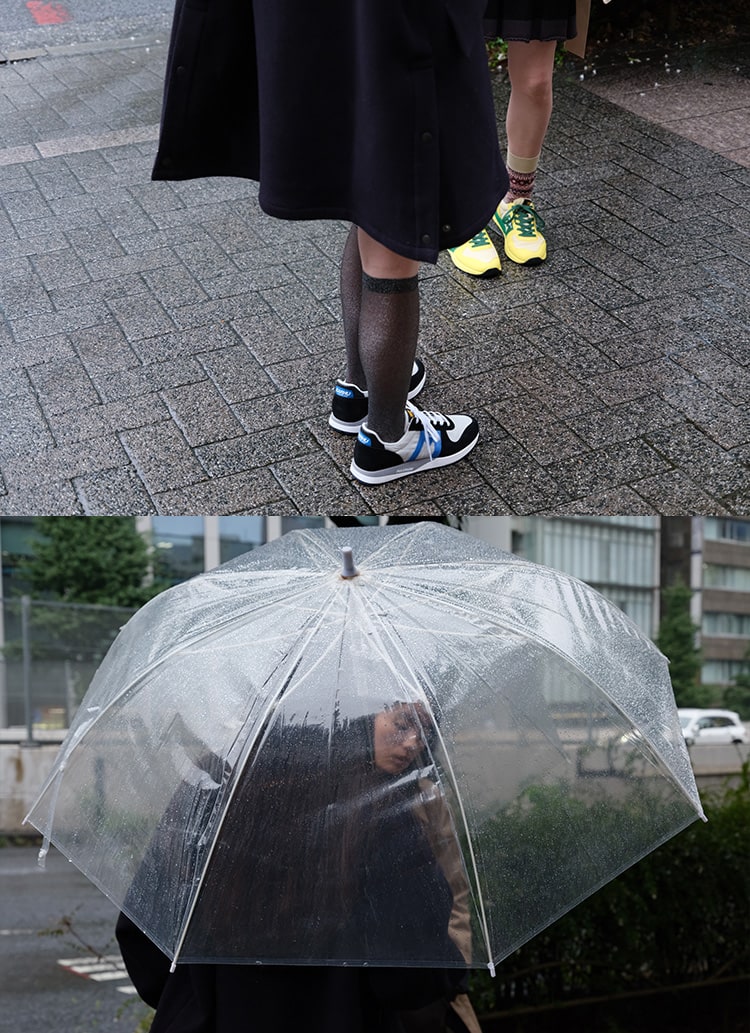
〈Tomo & Shoe & Co.〉, which launched last year with the concepts of “movement” and “travel,”
For over 120 years, the long-established shoemaker 〈REGAL〉A brand that creates alternative shoes with a modern and unique sense of style〈Tomo & Co.〉 is a collaborative project.
To mark the release of the new work resulting from this project, a tour will be held in four cities across the country.
In the promotional photos taken for the occasion, “people's welfareShinobu Okumura from "..." appears as a model.

Left: Tomotaka Onozaki; Right: Shinobu Okumura
Why did the owner of “Mingei Okumura”—a shop that presents handicrafts from a unique perspective within the context of folk art and craftsmanship—appear in a shoe brand’s visuals and video?
While he was in Jingdezhen, China, on a buying trip, we connected Mr. Okumura with Japan online and had him discuss the story behind the product—specifically, the journey it took and the craftsmanship involved.
- Photo by Yuma Yamashita
—I heard that the two of you have been friends for a long time. How did you first meet?
Onozaki: I live in Futtsu City, Chiba Prefecture, and Shinobu (Mr. Okumura) lives in Funabashi City. Even though our homes are actually quite far apart, there’s a boutique in Tsudanuma, Chiba, run by a mutual friend of ours who’s the same age as us.
Okumura: We were both regulars at that restaurant, and that's where we first met right after we graduated from college. That was about 20 years ago.
—Have you had the opportunity to work together before?
Onozaki: I’ve worked with them a little bit on a project other than “Tomo & CO,” but this is the first time we’ve collaborated on shoes like this.
Okumura: That’s right. So, being asked to model for Tomo-chan’s (Ms. Onozaki) brand this time really brings back a lot of memories.
—The visuals for this campaign had a really great vibe. How did you come to choose these models?
Tom: “Travel” and “movement” are major themes in this series, and among my friends, Shinobu is the one who travels the most. In my mind, there are two people I’ve unofficially made into secret ambassadors for my brand—and Shinobu is one of them (laughs).
—I hear these shoes are made at the factory in Iwate Prefecture.
Onozaki: Yes. In the world of shoemaking today, even on a global scale, the division of labor has become increasingly specialized. From cutting to sewing to finishing, every step involves the touch of a skilled artisan. Even casual shoes have reached a level where they can truly be called works of art. However, with domestic shoe factories closing down in recent years, passing down these techniques has become extremely difficult. To me, these shoes feel like a specialty product of Iwate.
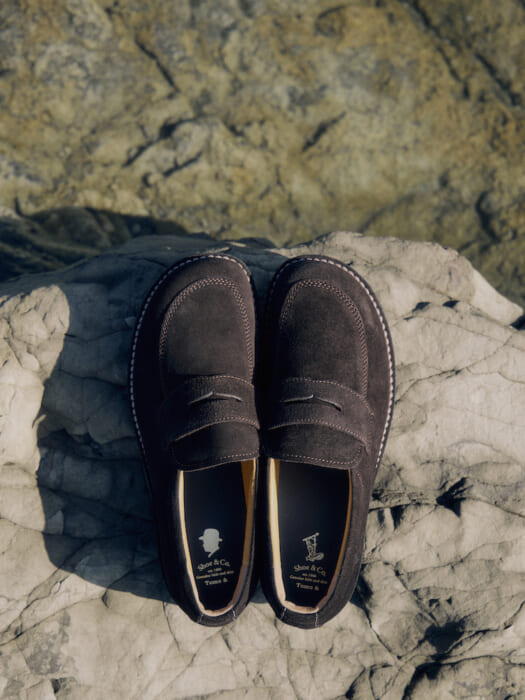
¥39,600
Okumura: When Tomo-chan was talking about the vulcanization process (making shoes by firing them in a kiln) in sneaker production, I felt it was very similar to the pottery and porcelain I work with. Not only is the process of firing in a kiln the same, but also the fact that traditional mass-produced items—like Arita-yaki and Hasami-yaki—are based entirely on a division of labor.
—So, what they have in common is the fusion of craftsmanship and mass-production systems.
Okumura: That’s exactly right. It’s precisely because we have professionals in each stage of the process that we can produce high-quality items quickly and in large quantities. But right now, that very system is gradually disappearing around the world. Seeing Tomo-chan’s stoic dedication to making great shoes, backed by the legacy of a historic manufacturer like , reminded me of the folk art and craft workshops I deal with in my daily work—there were clear parallels.
Onozaki: is truly amazing. Typically, when making leather goods, it’s standard practice to choose from existing leather samples (swatches). But they don’t use swatches—everything is custom-made from scratch. That means there’s nothing they can’t do. The way they balance that scale with such craftsmanship really makes me feel like they’ve brought together the very essence of Japanese shoemaking.
—Mr. Okumura, what did you think of these shoes after actually trying them on?
Okumura: That was really great. When it comes to my travel style, I tend to prioritize comfort above all else. But when I go to a nice restaurant or a fancy place while traveling, it can be a little embarrassing to wear sneakers that are designed for pure comfort, right? (laughs)
—I totally get it.
¥39,600
Okumura: The photographers I admire never compromise on their style, even when they’re traveling with a ton of gear and luggage. I think that’s really cool. It’s about not settling for just whatever’s comfortable, but finding the right balance between practicality and elegance. The shoes I’m wearing this time hit that sweet spot perfectly.
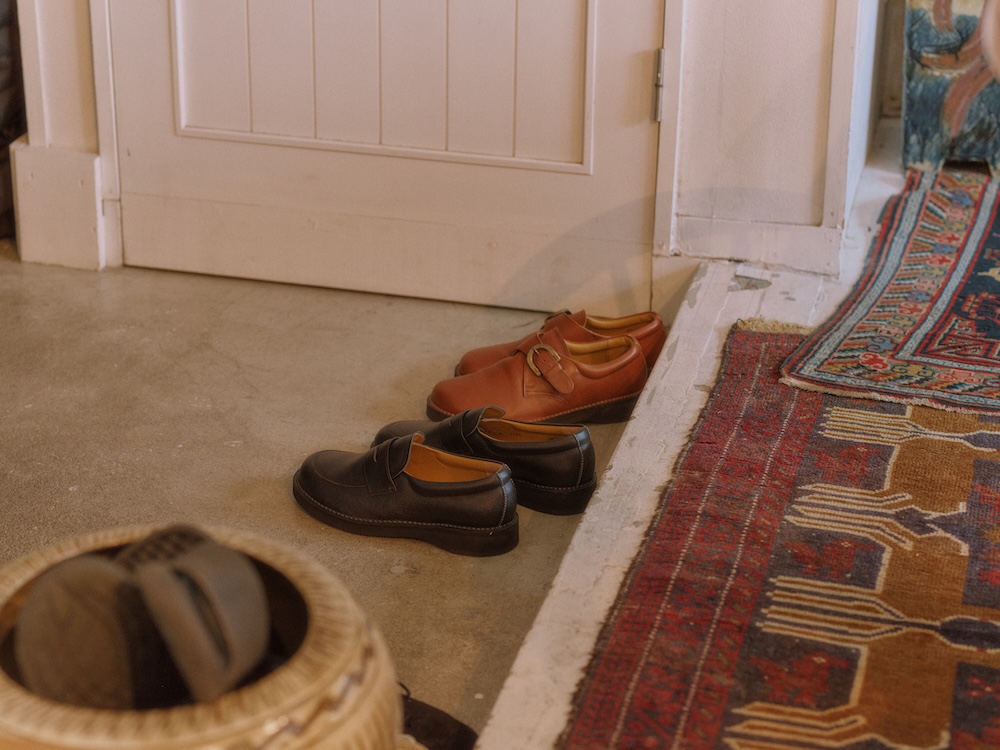
Onozaki: This model is based on the oblique-last walking shoes (with a wide toe box) that *Regal* produced in the ’80s and ’90s. They ensure ease of movement while maintaining the elegance of dress shoes.
—It looks like it'll make the perfect travel companion.
—Regal, a historic shoe manufacturer, and Tomo & CO., known for its independent and free-spirited approach. This combination alone feels incredibly fresh.
Onozaki: It’s just plain fun, isn’t it? (laughs) Even the folks at find it entertaining when we come up with these slightly offbeat approaches—the kind they’d never come up with on their own.
—For this shoot, we captured Mr. Okumura’s everyday life (buying fish at the market and cooking) exactly as it is.
Okumura: Yes. We had a variety of ideas, but in the end, this is how it turned out. I think it’s a video that conveys how shoes are a natural part of everyday life and travel, without coming across as overly pretentious.
—To begin with, those shoes looked really great on Ms. Okumura.
Okumura: Oh, I'm glad to hear that.
Onozaki: I’m thinking that eventually, I might have these shoes sold at “Mingei Okumura” as well. Also, you can have them serviced at stores in cities across the country.
—That’s wonderful.
Onozaki: I think it’s really great to be able to keep a pair of shoes for many years by having them maintained at a local shoe store.
As mentioned in the interview, the environment surrounding domestic shoe manufacturing has changed significantly in recent years, and the process of creating a single pair of shoes is becoming increasingly difficult.
The process of creating a single pair of shoes involves numerous specialized steps, and it is the skill and experience of the artisans responsible for each step that bring that pair of shoes to life.
This visual and video were created from the belief that this manufacturing process transcends the realm of mere industrial products and can be considered a “craft” born from the interplay of various artisans’ skills.
Why not take a moment to reflect on the craftsmanship and artistry behind shoemaking, as well as the new encounters and values that arise from travel and movement?
The reliable craftsmanship of and the originality of come together in harmony to create an evergreen shoe that blends classic and modern styles.
Tomo & Shoe & Co. Pop-Up Tour
Valley
Dates: Saturday, October 3 – Sunday, October 4
Address: 1F, 1-5-13 Umakari, Kokurakita Ward, Kitakyushu City, Fukuoka Prefecture
Phone: 093-533-7079
THE GROUND depot.
Dates: October 10 (Sat) – October 11 (Sun)
Address: 1-15-5 Minami-Horie, Nishi Ward, Osaka City, Osaka Prefecture
Phone: 06-6563-9674
THE LIBRARY Omotesando Store
Dates: October 17 (Sat) – October 18 (Sun)
Address: 4-11-2 Jingumae, Shibuya-ku, Tokyo
Phone: 03-3470-2151
JACK IN THE BOX
Dates: October 31 (Sat) – November 1 (Sun)
Address: 3-1-65 Osu, Naka Ward, Nagoya City, Aichi Prefecture
Phone: 052-265-9517