Even if we’re familiar with their work, we often wonder what their daily lives are really like. From the moment they wake up until they go to sleep—what do they eat, where do they go, who do they meet, and what are they thinking about? We’ll ask 10+ questions to the cultural figures and creators who intrigue us, exploring the wisdom behind living a creative and healthy life.
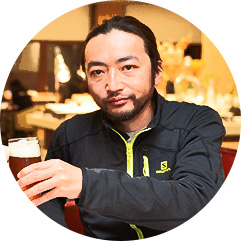
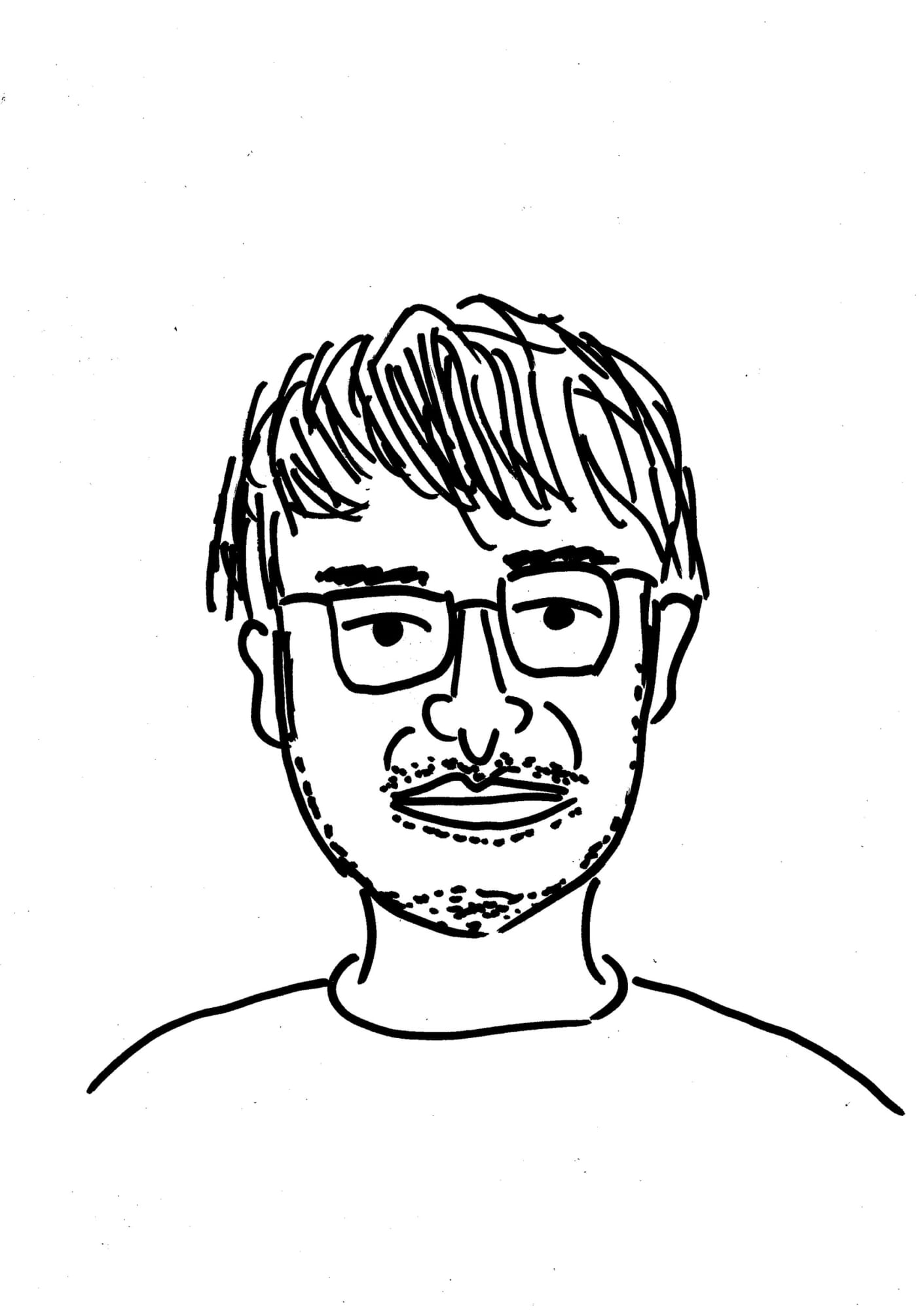
Our guest this time is Hikaru Ishii. He serves as chief director for a popular, long-running late-night radio show, and the Tokyo Dome event he produced drew a total of 156,707 enthusiastic attendees—including those watching via live viewing and online streaming. We take a closer look at the daily life of Mr. Ishii, who has turned numerous projects into hits, and explore the wellness practices he prioritizes.
- Text_Shogo Komatsu
- Edit_Hiroshi Yamamoto
- Illustration_Ken Kagami
PROFILE
Born in 1986 in Saitama Prefecture. He has been involved in popular late-night radio since 2011, serving as chief director. He also has experience as a producer for events at major venues such as the Nippon Budokan and Tokyo Dome. The live-streamed stage drama he produced, *I Remember That Night*, won the ACC Grand Prix at the “2022 62nd ACC TOKYO CREATIVITY AWARDS,” and the Amazon Audible podcast *Sato and Wakabayashi’s 3600* won the Grand Prize at the “4th JAPAN PODCAST AWARDS.” In 2024, he founded Genseki Co., Ltd. He has produced over 20 podcasts, including “Shusaku Toba’s Delicious Stories,” “Shihei Hayashi’s Inazuma Flash,” and “Sakura Inoue’s The Cabbage Danced,” and has also been involved in solo events for Tokai On Air and Reiwa Roman. His recent book is *“It Works Better When You Don’t Do It Yourself: 7 Rules Known Only to Those Who Are Trusted”* (PHP Institute). In it, he explains the work methods that have led to the success of various projects—covering topics such as schedule management, how to get projects approved, and the right mindset for approaching work.
https://x.com/HikaruIshii
https://www.instagram.com/hikaruishii/
Q1. Please tell me what your typical daily schedule looks like.
A. A. B.I wake up a little after 5:30 a.m. Since a marathon is coming up soon, I run 5 to 10 km on weekdays and about 20 km every other day on weekends. When I get back before 7:00 a.m. and start studying English, my child wakes up and mercilessly interrupts me (lol). After eating breakfast and dropping my child off at preschool—which is around 9:00 a.m.—I start work.
Since my main job is recording podcasts, my work location and schedule vary from day to day. I get home as early as 7:00 p.m. or as late as around 10:00 p.m. After taking a bath and doing some stretches, I fall asleep while watching something. I go to bed at 11:00 p.m. I used to be convinced that I was definitely a night owl, but when I switched to a morning routine, my health improved noticeably.
Q2. What do you usually eat for breakfast, lunch, and dinner?
A. A. B.For breakfast, I have either rice or bread. For lunch, since it’s a hassle to grill fish at home, I try to eat grilled fish when I’m out. Or I’ll have soba or udon. After all, there’s always a soba shop at every station. For dinner, if I can eat at home, I’ll have whatever my family has cooked, but if I get home late, I’ll wander the streets looking for grilled fish, just like I do at lunch.

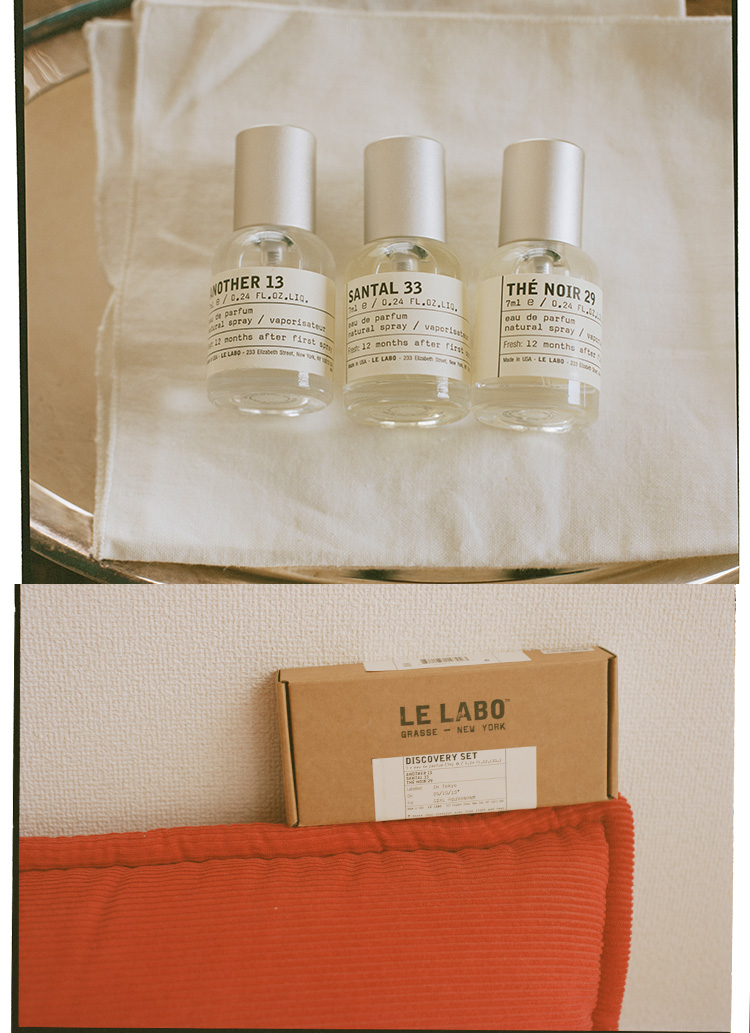
Q3. Do you wear perfume?
A. A. B.I don’t wear any at all. I’d never even thought of it as something I’d wear in my life. However, during a recording session for my podcast, *“Sakurashimeji’s Flower Training: A Story-Filled Journey,”* the two members of Sakurashimeji were genuinely surprised and asked, “Wait, you don’t have any? Why not?”
For a split second, I thought, “Oh, maybe I should wear it since I’m an adult…” but in the end, I still haven’t bought it (lol).
Q4. When do you feel at peace?
A. A. B.It’s the time between dinner and bedtime. I’m the type of person who can’t help but think about work all the time, so the moments when I don’t have to think about anything are when I feel the most at peace. Basically, it’s about setting aside “time away from my phone.”
Q5. Please tell us about a favorite item that you can’t live without in your daily life.
A. A. B.These are earphones. As a work tool, I deliberately use inexpensive wired earphones that cost around 3,000 yen. Of course, I do own high-end earphones with great sound quality, but I figure that listening with a more understated sound is probably closest to the listening environment of my actual audience. However, since the sound quality starts to deteriorate after about a year of use, I regularly replace them with the same model.
Q6. Please tell us about the people you see frequently, both personally and professionally, and explain why.
A. A. B.Yuta Maeda from Timondi and Kawara Miyamori, a radio writer. The three of us host a members-only podcast called “Yuta Maeda’s Mokuteru Mumuriku,” but since we don’t have much of a budget for the show, we all pay out of our own pockets to travel to various locations to record.
We go hiking or out to eat delicious food. It’s part of my job, but since we split the bill evenly and it feels like an extension of our personal time, it really is a blend of work and personal life.
Q7. How do you spend your days off?
A. A. B.I make spending time with my family my top priority. I try as much as possible not to schedule work on weekends so I can go out with my family. On days when my family doesn’t have plans, I’ll go for a run on my own—sometimes 20 or 30 kilometers. There’s just something so satisfying about running quietly at my own pace; as I run, the scattered thoughts in my head naturally fall into place, making it the best way to refresh my mind. While my goal is to complete a full marathon, running has become a completely routine part of my life.
I also sometimes go hiking with Maeda and Miyamori. Strictly speaking, it’s part of a work recording, but it feels almost like a day off. Hiking is actually a really well-designed form of entertainment. The climb in the first half is incredibly tough, but the descent in the second half is a bit easier. Since I don’t touch my phone while hiking, I can block out all the unnecessary noise from work. After coming down the mountain, I treat myself to a meal—even as I get older, I can still wolf it down without feeling heavy. And then, when I finish off the day with a soak in a hot spring, it’s just perfect.
Since the radio shows and podcasts we produce are the kind of content that “can’t just be wrapped up,” the sense of accomplishment you get from a mountain climb—where everything comes together neatly in a single day—feels really great.
Q8. In what kinds of moments do you usually find inspiration related to your work?
A. A. B.It’s when I’m talking to people. Since I host a lot of talk shows myself, it usually happens during recordings. Especially during morning recordings, when my mind is fresh, ideas like, “Oh, this might be interesting,” just pop into my head. On the other hand, I’m really bad at the kind of logical thinking where I sit at a desk and struggle to come up with ideas, going “Hmm…”
Also, even when I come up with an idea, I never take any notes. It’s partly an excuse, but I figure that any idea I’d forget if I didn’t write it down isn’t really that great anyway.
Q9. Please tell us about any habits you have to relax your mind and body.
A. A. B.It’s watching Tokai On Air’s YouTube videos. When I watch TV shows or streaming content, I inevitably end up seeing things from the creators’ perspective—I start wondering things like, “How did they film this part?”—and I get tired from focusing on all those unnecessary details.
I know that Tokai On Air’s editing skills and storytelling are truly impressive on a professional level, but since they operate on a completely different level from the production logic I developed at the TV station, I can watch them without overthinking it—just as a pure viewer. And the best part is that I can laugh so hard I’m holding my stomach, thinking, “Wow, they’re so silly!” (laughs).
Q10. What do you make a point of doing when you go to sleep?
A. A. B.When I was working as a company employee, I used to get anxious and couldn’t sleep unless I had a drink, but now I don’t drink at home. Also, once I completely cut out caffeine, I started sleeping surprisingly well. Plus, on the recommendation of a friend, I took the plunge and bought an insanely expensive mattress and pillow. I used to suffer from back pain, but it went away completely.
Other than that, no matter how busy you are, you should decide to go to bed at 11:00 p.m. and stick to it.
Q+α. Outside of work, are there any situations where “things turn out better if I don’t do them myself”?
A. A. B.When it comes to personal projects and ideas, I generally leave them up to others. That’s why I started a soccer team after Hashimoto from Ginshari suggested it, and I only started running marathons because someone invited me to. Things tend to last longer when I get swept up in them by someone else rather than starting them on my own.
It’s a kind of positive resignation—like, “It’d be awkward to say ‘I’m passing’ after they went out of their way to invite me” (laughs). But as a result, by tagging along with all these different people, before I knew it, my circle of running and hiking buddies had grown and grown.
Things work out better when you “don’t do it yourself”
7 Rules Known Only to Those Who Are Trusted
"There are no rules for creating a hit. The only thing that matters is your approach to your work." A super-efficient producer reveals how to achieve the best results!
Price: ¥1,870
now on sale
Format: 46-ban paperback
ISBN: 978-4-569-86172-2
Official Site