PROFILE
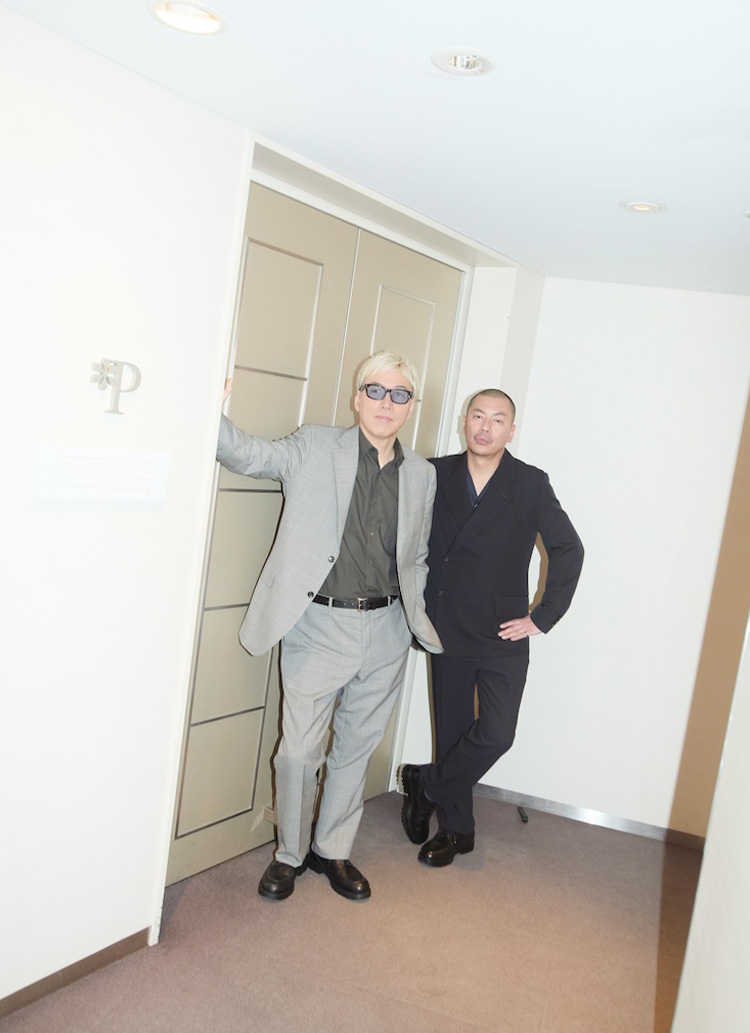
Born in Tokyo in 1974, he started silk-screening under the name "FORTY PERCENT AGAINST RIGHTS®" with friends in 1993, mainly for "NOWHERE" and "NEIGHBORHOOD" when they first opened their store, and in 1996 started "WTAPS" as a more serious apparel line. In 2015, he launched DESCENDANT, a line of universal items based on the theme of the connection between the present and the next generation, and currently serves as the director of these three brands.
Instagram:@tetsu_nishiyama
No matter who takes the picture, it will never be the same. That is the charm of Leica.

-I was a little surprised that Mr. Nishiyama chose a Leica camera for the theme of "Essentials.
Nishiyama: Yes, I know. I am sure I don't look like I have much connection with the camera.
-Did you like cameras before you started working with them?
Nishiyama: At first, I just thought I'd give it a try. I had always liked cameras as objects, but the act of taking pictures with a camera requires a certain sense and knowledge. So it took me a while to get used to it, but even though I was unfamiliar with it, I liked taking pictures.
The M9, Leica's first full-frame digital camera, was introduced in 2009 (photo at right), and the M11, the latest model in the M-type Leica line (photo at left).
-When and how did you come into possession of these two Leica cameras?
Nishiyama: I got my first Leica in 2009, and it was the M9. I chose this model because it was the first Leica digital camera with a full-size sensor, and also because I had a baby at that time.
-It has been more than 15 years since you got the M9.
Nishiyama: This summer, I took it to a photo shoot for "STUMP MAGAZINE" that I was directing this summer. However, when I went back to the hotel and looked back at the photos I took, I found that all of them had something like spots in them. It seemed that it was time to replace the sensor, so I couldn't use the photos after all. I was so frustrated that I bought a second "M11" (laughs).
-What are your reasons for sticking with "Leica" when there are other options available?
Nishiyama: It is not that I only use Leica, but sometimes I use Sony's "α7" for "STUMP magazine, I sometimes use Sony's α7. I often go out to sea and shoot on boats. I often go out to sea and shoot on boats, and even in such a difficult environment, the camera automatically focuses on the subject and allows me to take pictures sensitively. I sometimes rely on this convenience, but Leica has its own advantages because it is not convenient.
What do you mean by "-"?
Nishiyama: Because of the manual focus, no matter who takes the picture, it will not be the same, so there is a sense of being able to make it your own. I enjoy that. Conversely, perhaps it is precisely because it is inconvenient that I get that feeling.
-We now live in an age when it is easy to take pictures with a smartphone, but is the same reason why people go to the trouble of taking pictures with a camera?
Nishiyama: Yes, I agree. When I see everyone else with their smartphone cameras out, I feel a little bland. I can take the same pictures with the same angle of view, so I think, "Well, I'm fine with that. On the other hand, with a camera, you can take pictures from your own perspective and with your own senses. Also, while it is not mainstream to take pictures with a camera nowadays, I dare to choose to do so.
AGRIS is Nishiyama's code name. The camera strap was specially ordered by "Double Taps" for "Artisan & Artist" in 2009. This small detail shows that Nishiyama is trying to make the camera his own.
-So, when you have a Leica with you, is it a time for you to face your shooting?
Nishiyama: That was the case at first. I used to carry it around with me all the time, trying to take pictures of something, but now I don't have that kind of obsession anymore.
-What kind of situations do you carry a camera with you now?
Nishiyama: I keep it in my car so it's always around. However, I don't always take pictures. Photography is about getting in between people, so I can't always be so brazen about it. I release the shutter while keeping an eye on the distance between me and the person I am photographing, so I am not trying to force the shot. Now I hope to be able to point the lens naturally when I feel like taking a picture.
Photo_Tetsu Nishiyama
This photo was taken by Mr. Nishiyama with his "M11" when he went fishing in Miura with his friend and his son.
-What is the appeal of the design aspect of "Leica" from your point of view?
Nishiyama: If you work with "Laika," it's a work tool. However, when I use it on a daily basis, it is a hobby, and the way I use it is more casual and casual. The same is true of clothing; depending on how a person wears it, formal clothing can look casual, or workwear can look formal. In this way, depending on the person who uses the camera, the impression may change, and I think this is because Leica cameras are standard products. Leica cameras have a long history and are very well known. In that sense, before talking about what is essential for me, I would say that the existence of this camera itself is essential.
-I think Leica's M series has a universality similar to that of Levi's 501 or Porsche's 911.
Nishiyama: I also think the workmanlike robustness is appealing. When I received a standard film model called "M3" from a friend, the case was beat up. But it was beautiful the way it had been used. You don't get that feeling with other plastic cameras.
-The scratches on the "Leica" look cool.
Nishiyama: The surface of the warship part will peel off the paint and reveal the underlying brass after long use, but only with "Leica" can you experience this kind of change over time. For me, a "Leica" becomes more and more attractive as I continue to use it, rather than just keeping it clean.
- 1
- 2