I come across a legendary pottery piece that cannot be recreated with today’s technology.

The next day, we took a ferry to Iriomote Island. After dropping off our luggage at the inn, we headed straight for the beach. Mangroves stretched right up to the water’s edge, and beyond them lay the vast blue sea.
As I was gazing blankly out at the sea, Mr. Tanaka discovered what looked like a fragment of an earthenware pot.
This is likely a Panari pottery piece. It is a legendary type of pottery passed down in the Yaeyama Islands, believed to have been in actual use until around the 19th century. Its most distinctive feature is that it is fired after being kneaded with fragments of coral and snails, along with pieces of meat. There are various theories surrounding this, and numerous legends and anecdotes remain that suggest it also contains pig’s blood.
As a result, these vessels were designed to be less permeable to water than ordinary pottery. It is believed that items placed inside them did not rot and were preserved well, so they were used for storing water—a precious resource at the time—as well as for holding cremated remains. A song has survived that tells of a man who traded a Panari pottery vessel for his daughter, suggesting that these items were highly prized even back then.
The method of production had been passed down solely through oral tradition, but at some point it was lost. It is said to be difficult to recreate even with modern technology, making it a true "lost technology"—or, as it were, an "out-of-place artifact."
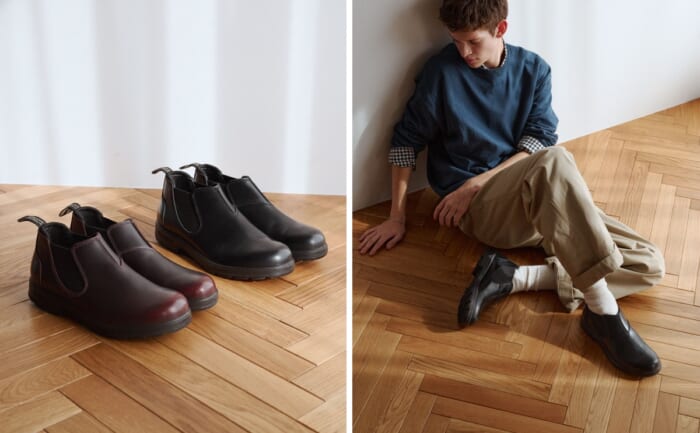
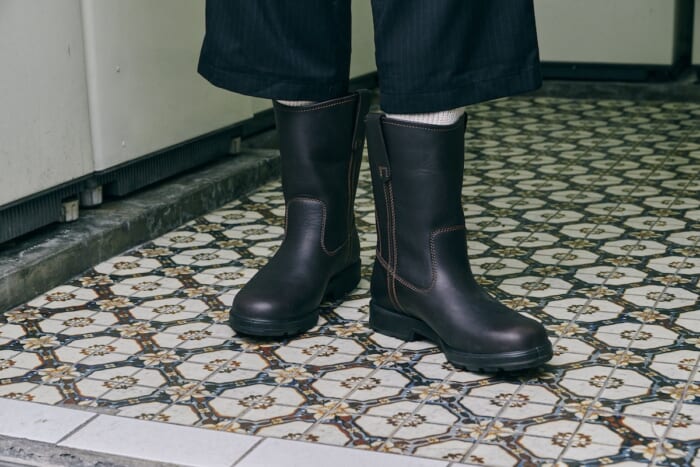
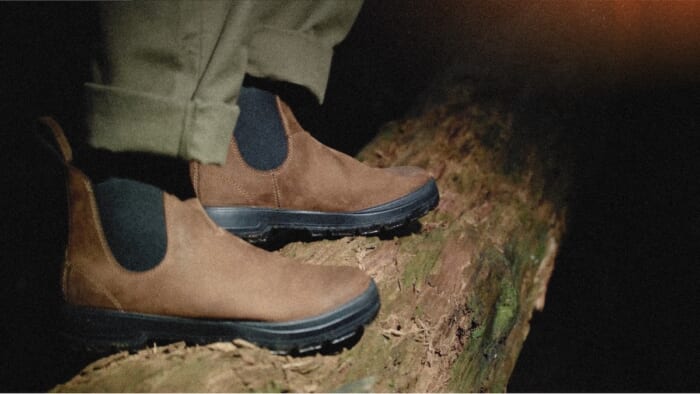
Mr. Tanaka sometimes walks through waterways like this while traveling, and other times he treks through the jungle. That’s why his shoes are one of his most important tools of the trade.
"In that regard, *Brandstone* is the best. Water doesn't seep through, and you can walk on it without worrying about the stones or coral. And, well, I guess it's the firmness that's great. It just makes you feel protected, I suppose."
By the way, Mr. Tanaka found a nut on the beach that looked just like Ultraman. “Maybe I’ll sign this and sell it,” he said with a mischievous grin. He’s got a real knack for business.
"Seriously, I heard from a shaman that when natural objects start to look like animals or human faces and take on special meaning, they can become cursed objects. There are many beliefs in natural objects in Japan, too."
After that, we also visited an Utaki. An Utaki is a sacred site and place of worship that has been passed down since ancient times on the islands of the Ryukyu Archipelago. Sometimes they appear suddenly in the middle of town, while other times they stand quietly in the forest. Since it is a sacred place, we did not enter but bowed in respect, and then we saw light streaming into the Utaki. “There’s still so much of Okinawa we don’t know about, isn’t there?” said Mr. Tanaka with a satisfied smile.
"Takemori Ryokan Bettei ~SHINMINKA VILLA~," which I found near Mr. Tanaka's lodging. I hear there are more and more lovely villas like this popping up in Okinawa these days.
That night, one of the team members suddenly came down with a high fever and had to drop out. Even though he had been fine just the day before...