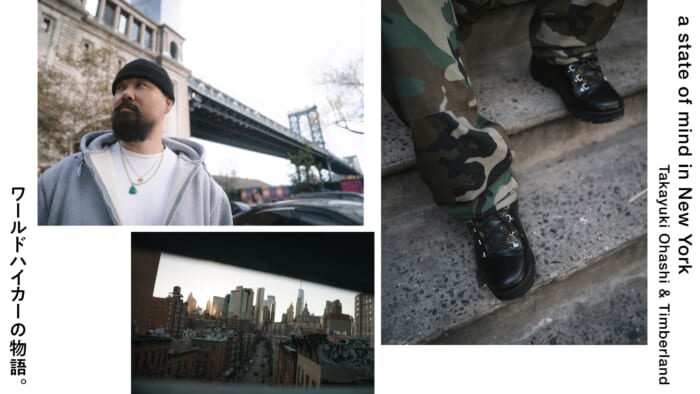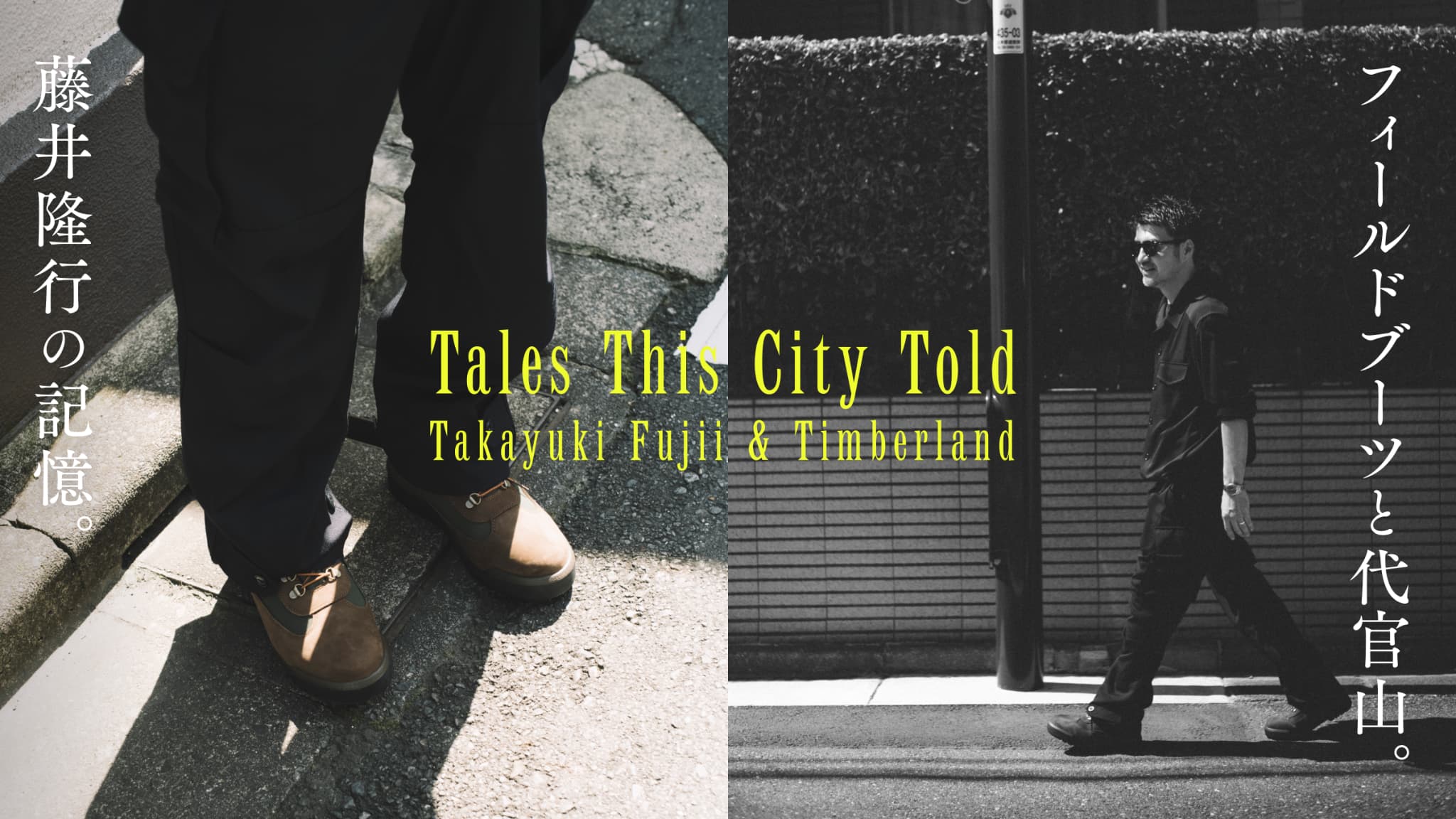
I wanted to see what it was like on the ground.

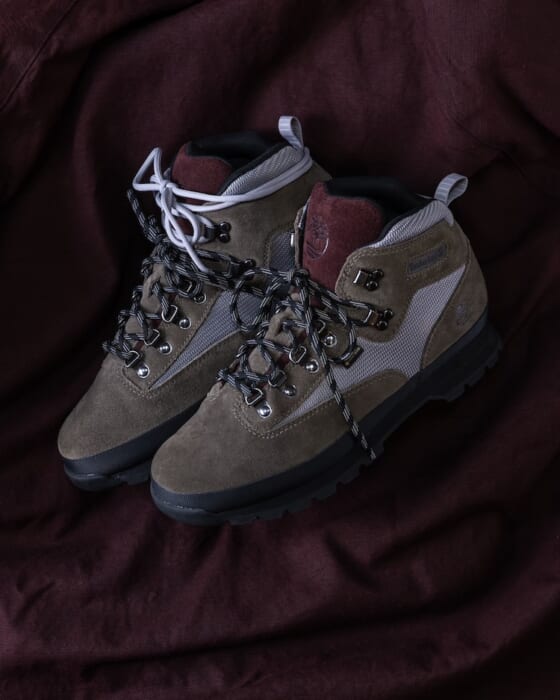
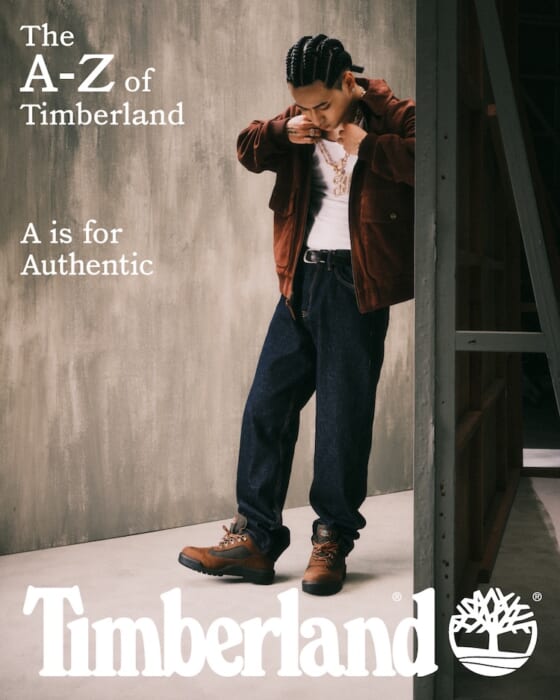
Field Boots ¥25,300
—Huh? But come to think of it, didn’t Mr. Fujii join *Non-Native* back in 2001?
Fujii:That's right. In 2001, I went on my first business trip to the U.S. with Sato (the representative of “TNP”) to buy vintage clothing to use as samples for our clothing line, and that was right around the time of 9/11.
—That’s amazing timing. Did the purchase go well?
Fujii:Yeah. But Satoshi probably just didn't like looking around at clothing stores. So I'd go look for clothes while he was asleep. And when I'd get back to the hotel, Satoshi would still be asleep.
— (laughs). When did Mr. Fujii and Satoshi first become friends, anyway?
Fujii:That was the “Cyrus” era, all right. Back then, the “TNP” office was on the sixth floor of the “Cyrus & Maria” building, so Satoshi would often drop by the “Cyrus” shop. That’s how I ended up joining “TNP,” too—though back then, even though there were three of us on staff, we only had one computer (laughs). Had Morley just started his own business around then?
Morimoto:I was there in ’99, so it was a little before that. I think I might have even taken some photos at that office in Daikanyama.
Fujii:That's true. (Taro) Mizutani and others were like that too, but Satoshi was also at the peak of his modeling career, and people of that generation—who were close in age—already knew each other, didn't they?
—Even before you joined “TNP,” were you already designing fashion, Ms. Fujii?
Fujii:Exactly. I did go to art school, but I dropped out after two years. Still, I still feel this way: whether it’s photography or fashion design, there’s definitely a difference between school and the real world. Learning is great, of course, but no matter how neatly you can draw a pattern, that doesn’t necessarily mean you can make good clothes. I wanted to experience the real world.
—Mr. Fujii, was making clothes really hard for you when you first started, too?
Fujii:I was really, really terrible at it (wry smile). How can I put it? I could only make clothes that looked like they’d jumped right out of a drawing. Of course, I’d seen plenty of great clothes that served as models, so I had a clear vision in my head, but the actual samples I ended up with were completely different—it was quite a shock. So, back then, I was going to a pattern-making shop every day.
—And why is that?
Fujii:At the dressmaking shop, there were both fabric suppliers and patternmakers, so I worked my hardest, learning how to make clothes from the people actually working there.
—Since you started making clothes, how long did it take before you were able to create pieces exactly the way you envisioned?
Fujii:I’d say it’s been about 10 years. But it’s still tough. I’m not as focused on staying true to the samples as I used to be; instead, I’m thinking more about how to design the pieces. Since there’s no clear end goal, it makes it even harder. Ordinary people might think my clothes look good, but I still want them to say, “That’s a Non-Native piece,” even when there’s no logo or anything on it. I think that goes for photos, too.
Morimoto:Yeah, I guess so.
—Are the challenges the same when it comes to collaborations?
Fujii:It depends on the situation. It all comes down to what the other brand or manufacturer is looking for. Generally, we tend to receive offers, and we don’t usually reach out to them ourselves. That said, our second collaboration with Timberland was actually our idea. The first time, it all started when Mr. Fujihashi, a buyer at “B&Y (Beauty & Youth),” reached out to us and asked, “How about doing something together with Timberland?”
—The first model was 6 inches, right?
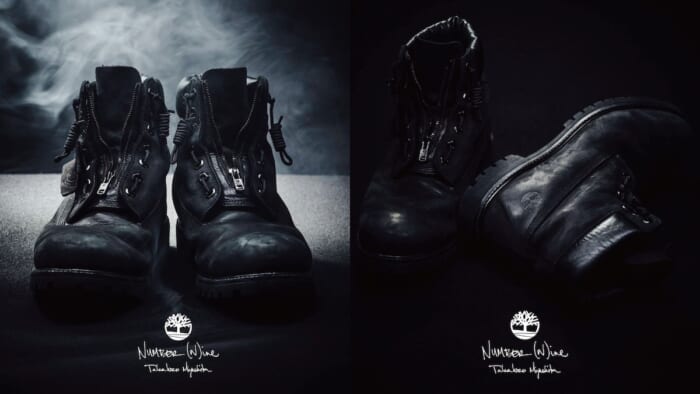
Fujii:That’s right. I came up with the idea because I wanted to create a pair of Timberlands that weren’t “hip-hop-y.” I think I was able to pull that off. I also believe that’s part of cherishing the vision of Timberlands embodied by projects like “(The) Apartment.” After actually being involved in the production process, I realized once again that Timberland is essentially a sneaker-like boot. And I really like that.
—For the second collaboration, four styles were released over the course of a year, right?
Fujii:It was something I just came up with on my own, and once I suggested it, they actually let me do it (laughs). In fact, I really wanted to try out those “Euro Hiker” shoes that Teruki was wearing back then, too.
—So that formative experience had always been somewhere in the back of your mind, hadn't it?
Fujii:Oh, right. So, I sent Kiki a pair of the finished “Euro Hiker” collaboration shoes and talked to him about those days, but he was like, “Did I really do that?” (laughs). But it really made me realize that even with the same shoes, how you wear them and what pants you pair them with changes as times change. Nowadays, you’d probably wear wool slacks with “field boots,” but back when we were working with *Cyrus*, it was pretty much just jeans, chinos, and sweatpants.
—Just looking at these shoes like this really brings back all sorts of memories from back then.
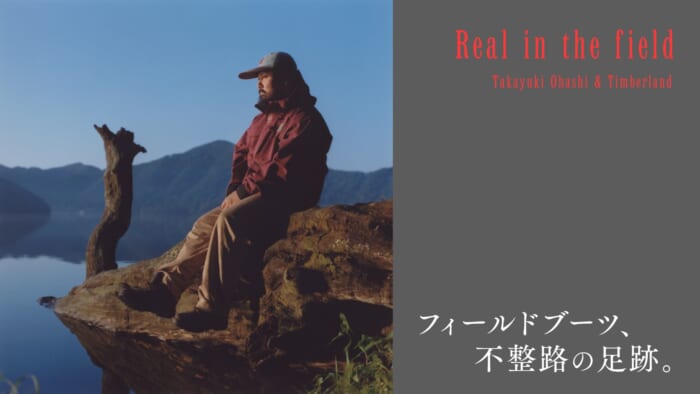
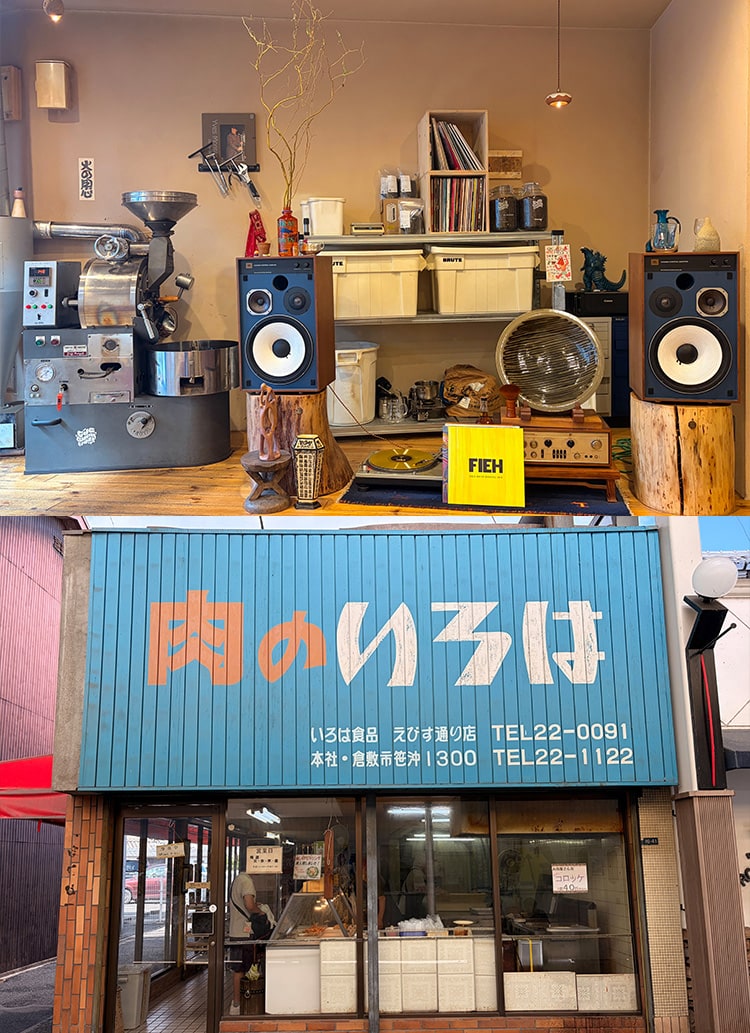
Fujii:That's right. Today, I was on a photo shoot with Morley, visiting places that hold those memories.
PROFILE
designer
Born in 1976 in Nara Prefecture. He joined , founded by Sufen Satoshi in 1999, as a designer in 2001. Through his clothing, he has projected onto his characters a beauty found in everyday life—one that is often overlooked—as opposed to flashy, ostentatious styles.
Instagram:@nonnative @takayuki_fujii_
- 1
- 2