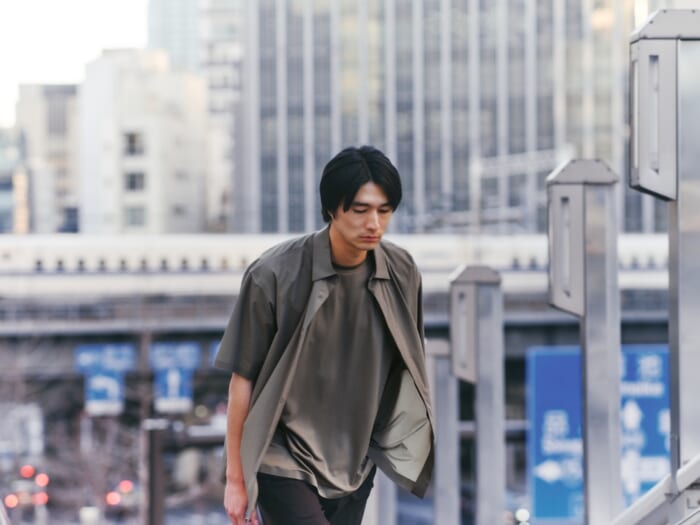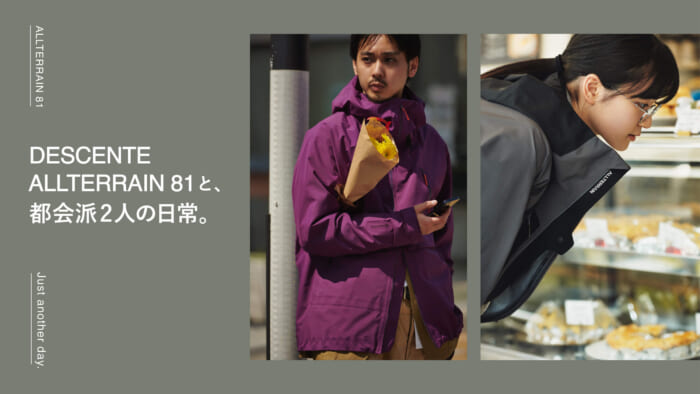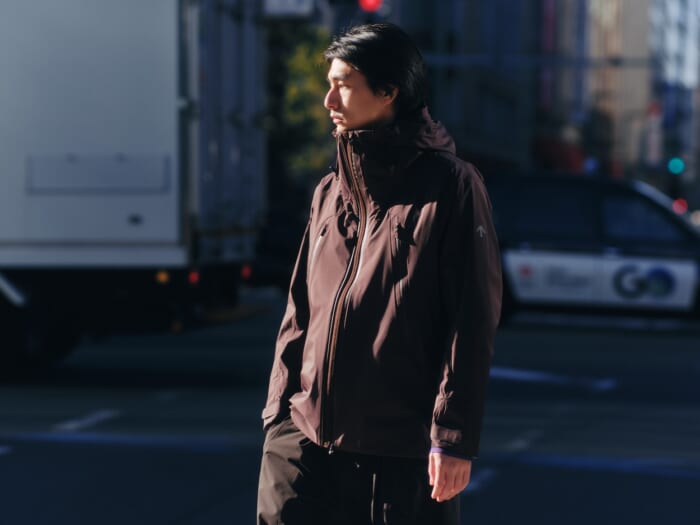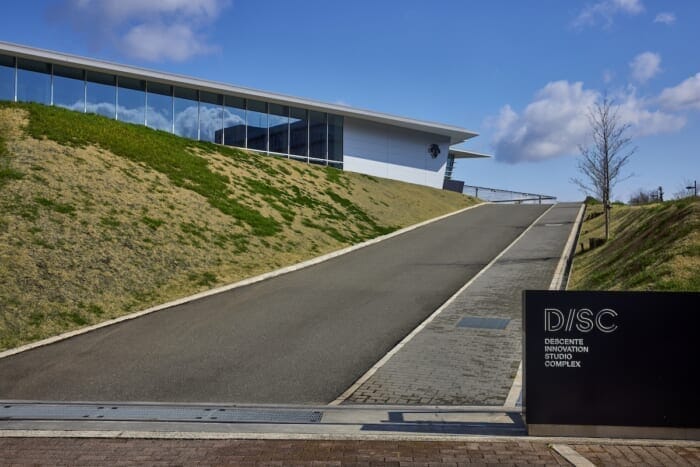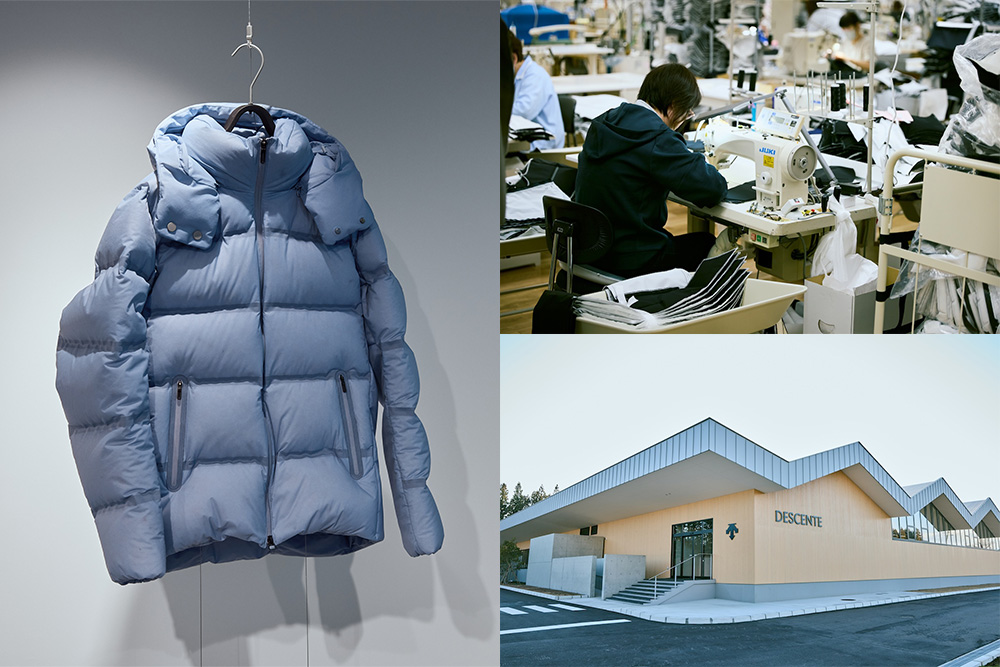
DESCENTE's "Mizusawa Down" is known as a synonym for high-performance down. The name "Mizusawa Down" is derived from the Mizusawa Plant, which is responsible for its production. Located in Oshu City, Iwate Prefecture, the factory has produced a variety of products, including baseball uniforms and ski wear, since it began operations in 1970. In July of this year, Descente undertook a large-scale renovation of its Mizusawa Plant. The investment was a staggering 3 billion yen. We went undercover at the new Mizusawa Plant, which is filled with such extraordinary determination.
- Photo_Yu Nagai
- Text & Edit_Kazuki Sakaguchi
Mizusawa Down is produced in the city of Nanbu Tekki and Shohei Otani.

Two and a half hours on the Tohoku Shinkansen from Tokyo. The editorial department arrived at Mizusawa Esashi Station in Oshu City, Iwate Prefecture. The Mizusawa Plant is located about 20 minutes' drive from the station. Oshu City is also known as a production center of Nambu ironware, a traditional handicraft. You can see objects with "Nanbu Tekki" motifs in front of the station and on the streets.
Baseball fans may have heard the name as Shohei Otani's hometown. A manhole with an Otani motif was placed near the station. At the Oshu City Hall, the 17th of every month is "Otani Day," and employees wear cheering shirts and uniforms to work.
Mizusawa Down was originally developed for the Japanese delegation to the 2010 International Winter Games. Vancouver, the host city, is known for its extreme cold, rain and snow. Therefore, it was necessary to provide both warmth and waterproofness. In terms of heat retention, there is no way to avoid using down, but when it gets wet, the down collapses and cannot form an insulating layer of air, resulting in a loss of heat retention. The conventional method of creating a partition by stitching to prevent the down from being unevenly distributed was not suitable for Vancouver, where it rains and snows a lot, because water could enter through the seams.
To solve this dilemma, Mizusawa Down was created with as few surface seams as possible. Instead of sewing, a unique process called "Thermal Adhesive Non-Quilt Processing" is used to prevent water from entering. In addition, the reduced number of seams makes it more difficult for heat to escape and improves heat retention. In areas where sewing is required, such as sleeves, seam taping is applied to the reverse side to ensure waterproofness and water resistance. This means that it is the strongest down that is resistant to wetness and warm.
A new factory full of ingenuity.
Since commencing operations in 1970, the Mizusawa Plant has produced highly functional and complex structured products such as baseball uniforms, ski wear, and protective vests for JRA jockeys. Skiwear, one of DESCENTE's most popular items, requires a wide range of functionality to adapt to harsh environments and is a typical example of a product that is difficult to produce because of the number of parts and complex processes involved. The Mizusawa Plant has the facilities and skilled craftsmen to meet these demands.
The first thing that greeted us at the entrance hall was a typical Mizusawa Down model, "MountaineerPattern board with 163 parts of all the models that make up the "MYSTERY" lineup. Despite its minimalistic appearance, so many parts are used in one garment. The number of processes is 280, which is about four times as many as for a typical outerwear. Some of the processes test technical skills, such as sewing curved parts, crimping seam tapes that cannot be redone, and processing difficult materials, but most of them are done by hand. The bottom 50 shows the number of operators involved in the production process. Behind the creation of a single piece of down is a large number of craftsmen with solid experience and skills.
The major change with the new plant was the layout. The old factory was divided into eight buildings, which made for poor flow lines and work efficiency. Therefore, in the new factory, the facilities were consolidated into one building, and the floor space was increased by 1.5 times so that all processes could be completed on a single floor. The fabric warehouse, cutting booths, sewing booths, and inspection booths are arranged in a U-shape in process order, minimizing the distance required to transport items and improving efficiency.
And newly established is the down inspection room. Until now, we have been using down supplied by suppliers as is, but by conducting inspections, we are able to responsibly confirm that the quality is good enough to be used in "Mizusawa Down. There are many types of down, including duck, feather, and fiber, but only down from ducks with excellent heat retention and lightweight properties is used in "Mizusawa Down. We spend hours checking for other types of down, broken feathers, garbage, and feathers from land birds, separating them with tweezers to make sure they are not mixed in.
After inspecting for foreign matter, it is essential to check fill power. After the down has been relaxed and inflated for 48 hours in a room with a room temperature of 20 degrees Celsius and a humidity of 651 TP10T, it is loaded and checked to see if the bulkiness has reached the specified value. This process is the only way to ensure the quality worthy of the "Mizusawa Down" name.
Other features are scattered throughout the room to ensure a comfortable and efficient work environment. The overhead wiring cover is designed to allow power to be drawn anywhere on the rails. There is no need to move to accommodate the plugs, and it can be flexibly adapted to layout changes within the factory. The outside is made of wood from Iwate Prefecture, giving it a warm impression that does not look like a factory. Since more than 90% of the employees are women, it is set up in a low position.
The carts are smooth-moving and can easily carry heavy loads, even for those with limited strength. The tires are made of silicone, so they do not leave tire marks on the floor. They spent a lot of time looking for the best carts to choose from. You can sense the spirit of making the factory easy to work in every detail.
The air conditioning and heating system, which keeps the temperature inside the factory at 25°C at all times, is radiant. Because the temperature is controlled by heat conduction, the wind does not cause sewing machine threads to sway or down to dance, and there is no discomfort from direct wind exposure.
A new journey that begins with a new plant.
LUCENT. ¥198,000
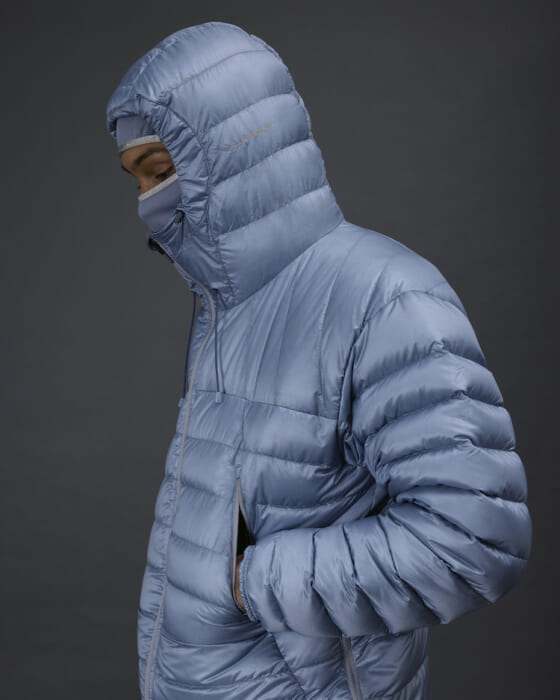
The limited edition "LUCENT" model commemorating the completion of the new factory we introduced is now on sale. It is based on Mizusawa Down's first model "ANCHOR. It is finished in colors inspired by the breath of the magnificent nature of Oshu, and is available in two colors, Filmy Blue (see photo) and Pale Khaki. The most distinctive feature is the use of a 12d translucent fabric for the outer fabric. By making it skeletonized, the efforts of the craftsmen and developers can be seen in the previously hidden inner structure and the beauty of the details. Even though it is thin, it is perfectly water-resistant, boasting a water pressure resistance of 20,000 mm.
The down pack is filled with lightweight, bulky 1000FP down for airy comfort and warmth. The lining is lined with a heat-retaining material that converts light into heat.HEAT NAVI®.The "Sleeveless" fabric is also warm and comfortable to wear. In addition, the back portion is pleated to increase the surface area that absorbs light and promote heat retention. Although it may seem over-specified at this point, you can rest assured that any uncomfortable heat or moisture can be released through the dual front zips and underarm ventilation.
Mizusawa Down is already experiencing shortages in some models and sizes, so check them out before the cold weather sets in.
Finally, we asked Mr. Tousuji, the plant manager, about the future outlook.
The capital investment had increased production efficiency. That said, we had no desire to increase down production. We would like to use the leeway created by increased efficiency to take on more difficult challenges, develop new products, and pursue higher quality with greater care.
He also spoke about the comments left by President Koseki at the unveiling of the new factory on October 29, as words filled with Descente's thoughts.
There are 3.5 billion items of clothing distributed in Japan annually, of which 98.61 TP10T are said to be imported. With the remaining 1.41 TP10T of domestically produced products expected to decrease in the future, we made the decision to rebuild our domestic sewing factory with determination. This is because the "Mizusawa Down" produced at the Mizusawa Plant is a symbolic product of Descente, and we have a strong desire to continue to grow the "Mizusawa Down" brand. When it came time to rebuild, we decided not to do anything halfway, but to build the best factory, the best factory in the world that we could think of today. The Mizusawa Plant has been rooted in this location for 55 years. In rebuilding, we were particular about the content of the building, using building materials produced in Iwate Prefecture and commissioning local contractors to do the construction. The staff working at the plant are all people with local roots, some of whom have supported the plant for two or three generations, parent and child. With the new factory, "Mizusawa Down" will evolve into a more functional and beautiful product. The number of processes is 280 now, but it may increase to more than 300 in the near future. We will continue to lead the world's sports apparel industry and challenge ourselves to reach even greater heights. The new Mizusawa Plant will be a great strength to achieve this goal.
The history of the new Mizusawa Plant has just begun. We are looking forward to seeing what kind of down jackets will be created here in Mizusawa in the future.