In the 1990s, the term "vintage" was used to describe vintage clothing that did not meet the definition of "antique," but still had value, as opposed to "antique" clothing that was 100 years old. Nowadays, there is a movement to find new value in "new vintage," even in old clothes from the 1980s onward, which used to be called "regular" vintage clothes. In this project, four vintage clothing stores with different styles propose new ways to enjoy vintage clothing. Each of them will talk about the charm of vintage clothing with their own sense of style.
Before we knew it, this series has entered its 18th season, and we’re bringing you this installment from a new shop. For the 143rd installment, we’re back for a second visit to “EFK” in Ikejiri-Ohashi. So, what kind of new vintage finds will the owner, Mr. Hosokawa, introduce to us!?
Text_Tommy
Edit_Yosuke Ishii
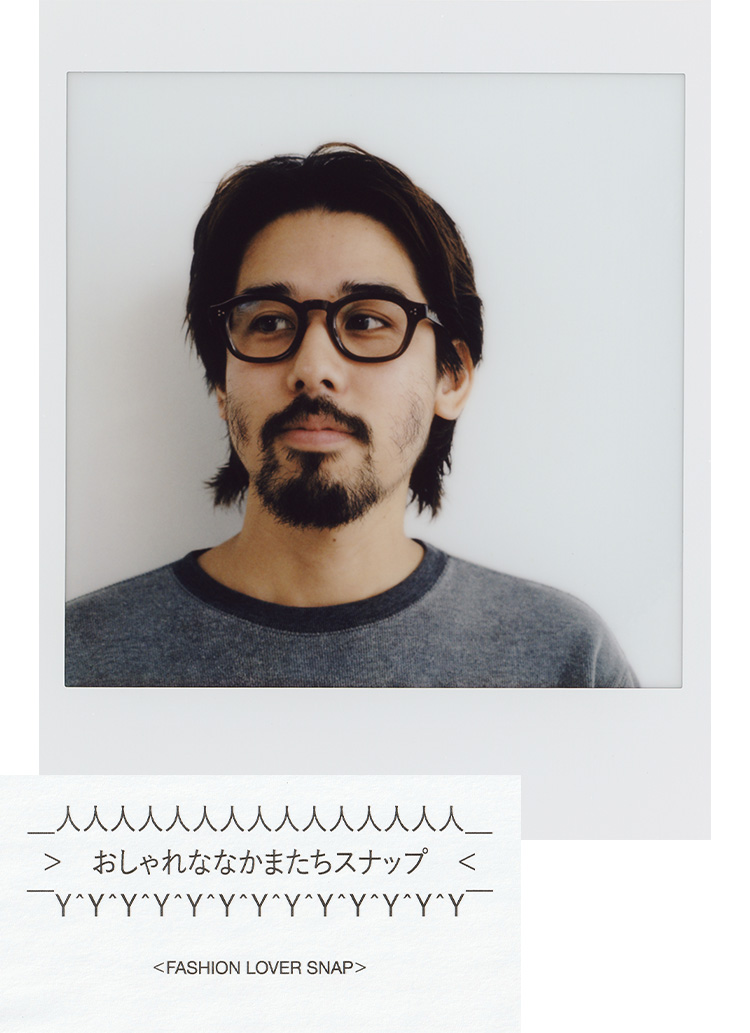
Mitsuhiro Hosokawa / Owner of EFK
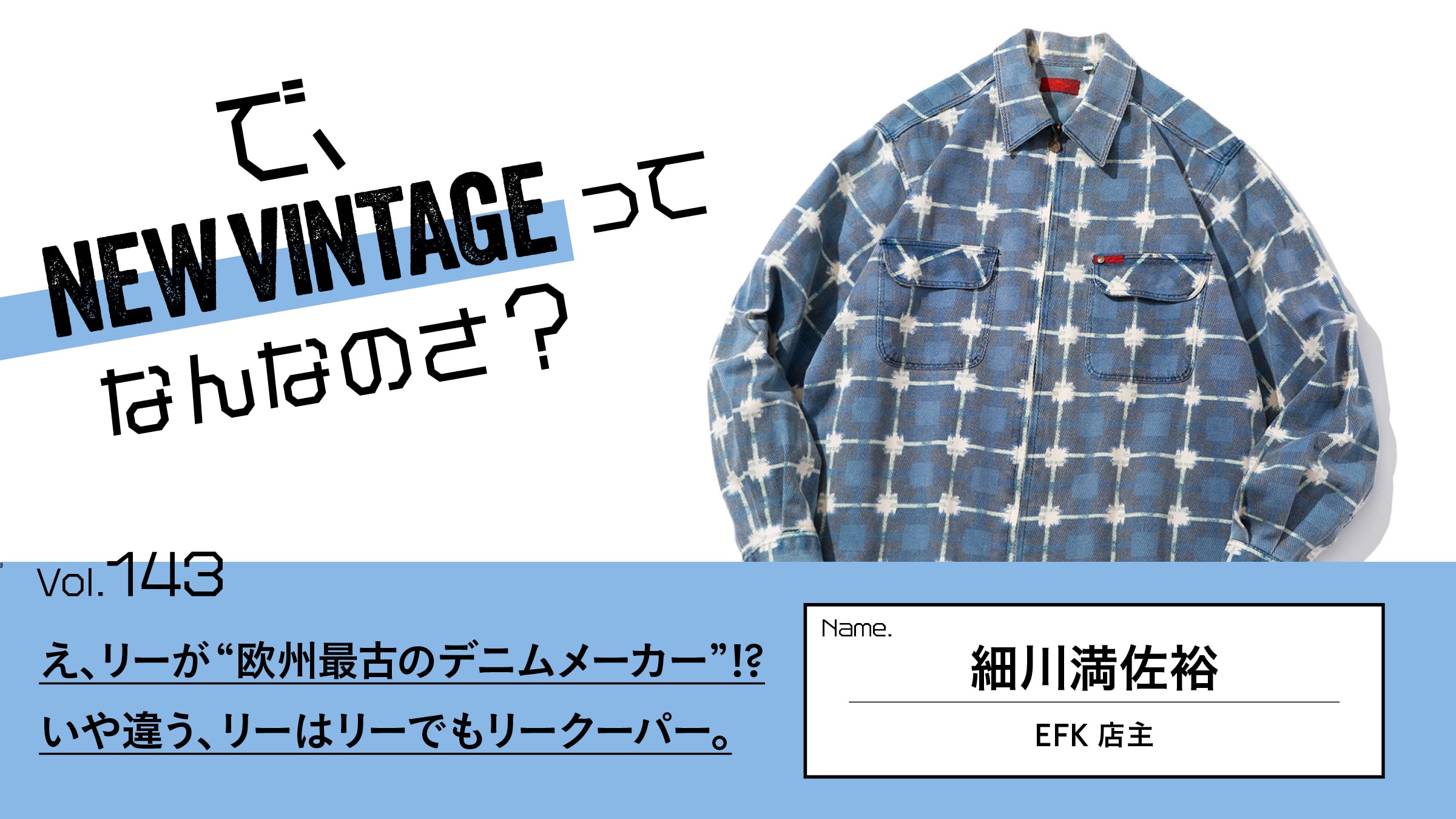
Vol. 143_Lee Cooper's Zip Jacket
—Let’s get right to it: What’s the new vintage you’ll be introducing this time?
last timeSince I previously shared my definition of “New Vintage” as “niche items that haven’t gotten much attention yet but have a certain charm,” and highlighted 〈WEK CLOTHING〉 as a mysterious, niche American brand, I thought I’d go with a European theme this time. The item is a zip-up jacket from 〈Lee Cooper〉, a brand known to some vintage enthusiasts.

Lee Cooper Zip Jacket ¥ 10,780(Ifuku)
—Following up on our previous post, this is another brand name you might not be familiar with… What is “Lee Cooper”?
To be honest, I didn’t know much about this brand myself until I bought this item, so I looked it up online (lol). Even though “Lee” is in the name, it has nothing to do with the well-known brand . It was founded in London, England, in 1908. Apparently, it’s Europe’s oldest denim manufacturer, boasting a history of nearly 120 years.
—Oh, really?
The company originally began by manufacturing workwear, and during World War I and World War II, it supplied large quantities of military uniforms and overalls to the British Army, growing to become the country’s largest military supplier. From the 1950s to the 1960s, the brand forged stronger ties with music culture and gained a following among young people—including Teddy Boys, Hippies, Mods, Rockers, and Punks—and began focusing on mass-market fashion items around the 1980s. Incidentally, the brand is still in business today. With a presence in 88 countries worldwide and annual sales of 5 million pairs of jeans, it’s not just a brand known to a select few—it seems to be “known to everyone” in those regions.
—Would you say it’s similar to the position of “Carhartt” in the U.S.?
That's true. Even in apparel, the lines are divided into casual wear and workwear. On top of that, they have collections of watches, bags, sunglasses, and more, and with their support of The Rolling Stones' tours and collaborations with The Beatles, they might come across as having a close connection to music culture.
—I wonder how well-known it is in Japan.
What do you think? Since they used to have company-owned stores in Japan for a while, I imagine there are a fair number of them on the Japanese vintage market, but as for shops that actually recognize the “Lee Cooper” brand and actively stock it… there probably aren’t many. Or rather, it’s just easier to stock “Carhartt” in the first place—you get a wider selection, and it sells better (lol).
—That’s true (laughs). The items you introduced this time really have a modern fit, don’t they? They’re roomy across the shoulders, have wide armholes, and a moderate length that creates a boxy silhouette. The texture of the fabric is lovely, too.
Here’s the thing, though… it actually looks like it’s been resized. If you search online, you can find images of what appears to be the same model, but it seems the original version had a longer body length and was more in the style of a coverall. As for the fabric, it’s cotton. It has a textured knit similar to a thermal shirt, with a shadow-check-style pattern printed on top. These exquisite color tones are the result of aging, and I’d guess it belongs to a casual line.
—Since the front has a zipper, it looks like quite a bit of work went into resizing it.
I guess they removed the zipper, cut it shorter to fit the front panel, and then sewed it back on. This transformed it from a slightly frumpy-looking coverall into a trendy, lightweight zip-up jacket. The care tag on the inside of the body feels like paper, and considering the fit of this size S, I’d guess it dates back to the ’90s. However, the overall vibe of the design has a Y2K feel to it, and you can really sense the teen spirit of that era.
—The zipper pulls and buttons are all original, and the red label on the chest is really stylish. You can’t underestimate !
The accessories are meticulously crafted, yet the pattern matching on the pockets is sloppy and cheap. That balance makes it exquisitely tacky—but that’s what makes it great! That said, not every item from *Ricooper* is a winner, and it’s possible this particular model just happened to be a design hit. Since the items have been resized anyway, I think you’d need to see a few more pieces to really understand this brand’s true value. Well, enjoying it freely—flaws and all—is part of the “New Vintage” experience. If you’re interested, be sure to dig around and check them out.
Mitsuhiro Hosokawa / Owner of EFK
Born in 1979 in Osaka Prefecture. He developed an interest in clothing from an early age, immersed himself in fashion throughout his childhood and teenage years, and later moved to Tokyo. After a series of twists and turns, he opened his own shop, “EFK,” in November 2020, located near Ikejiri-Ohashi Station on the Tokyu Den-en-toshi Line. The shop features a selection of items with “that certain something,” focusing primarily on vintage clothing from the ’90s and beyond.
Instagram:@EFK.official