The Current State of Shimokitazawa, a Changing Neighborhood.
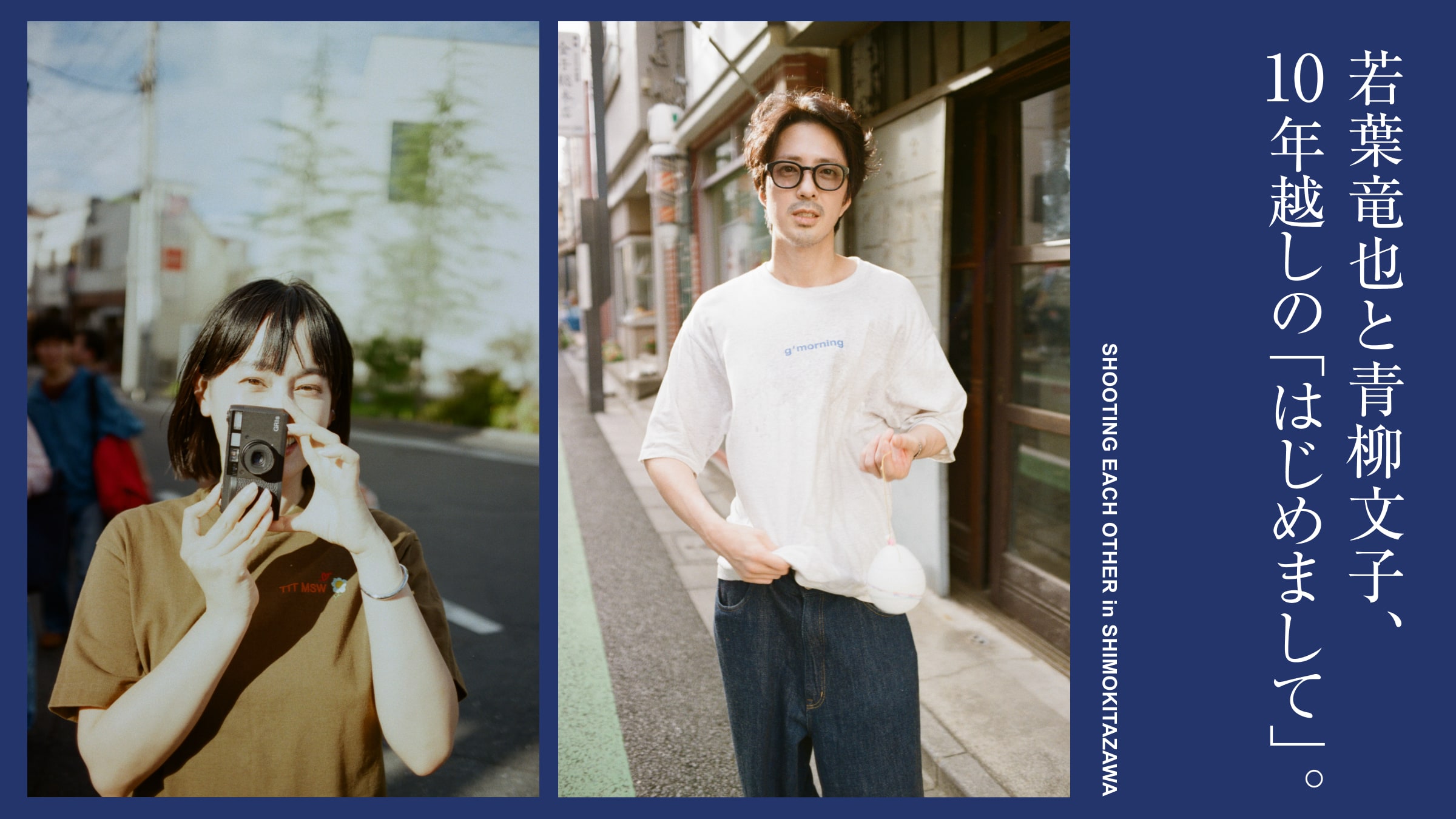
—What kind of town is Shimokitazawa—the setting for this play—for the two of you?
Aoyagi:Back in the day, I used to wear vintage clothes and had my bangs cut straight across, so people often told me, “You look like someone who’d hang out in Shimokita.” But actually, I didn’t go there that often. I’m not a fan of crowded, cramped places. In fact, I even used to think, “Maybe I should go to Shimokita too.” Later, I started appearing in stage plays and began rehearsing in Shimokita. Those are the memories that stick with me the most.
Wakaba:Since I lived in Koenji throughout my college years, I always thought of Shimokitazawa as a neighborhood where theater people and actors would get together for drinks. It was like Koenji was full of musicians, while Shimokitazawa was full of actors.
—The town itself has changed a lot, but what are your thoughts on Shimokitazawa today?
Wakaba:By the time I shot the movie *On the Streets*, which is set in Shimokitazawa, urban development had already begun, so I don’t really feel that much of a difference compared to how it is now. Everyone says, “It’s changed, it’s changed,” but to me, it hasn’t changed much.
Aoyagi:I think it’s become so much easier to use, and I have fond memories of Shimokita back when it was still under construction. Once, when something really sad happened and I was on the phone with a friend, a certain musician just happened to be standing right next to my friend on the other end of the line. He sang “Bun-chan, it’s going to be okay” a cappella for me. Listening to him over the phone while standing on a station platform that was still under construction, I just burst into tears. It was like something out of a movie. While I was crying, I kept thinking, “I wonder if I can record this phone call” (laughs).