That feeling of being mentally prepared is everything.

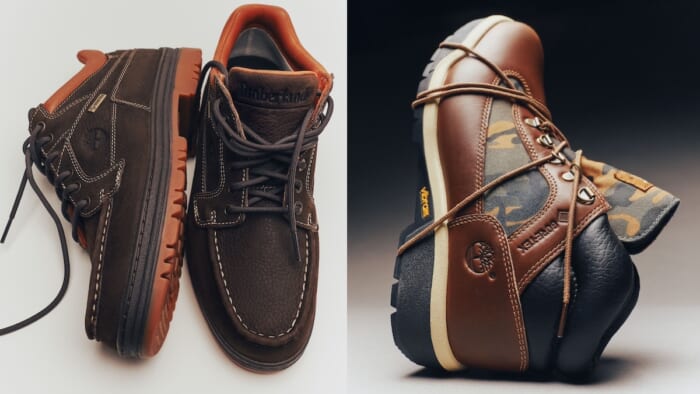
—My field boots, which had gotten dirty naturally, felt incredibly fresh.
Ohashi:I don’t know how to put it, but I think Japanese people tend to think about all kinds of things in terms of text. Since literacy rates are high and people are smart, they tend to think about things logically, right? But because of that, I feel like there are quite a few people who think things like, “I have to wear it this way.” I think this is true even with vintage clothing or hip-hop fashion—there’s this growing trend where people feel like things “have to be a certain way,” isn’t there?
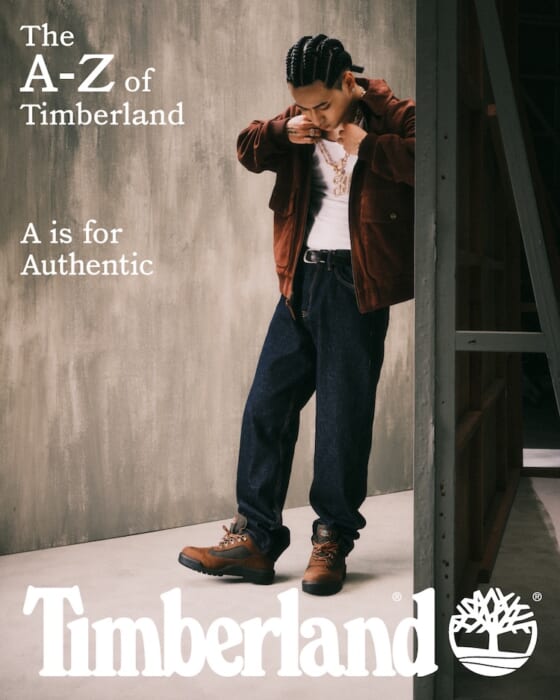
For example, wearing “Cortizes” with a “Yankees” cap is a no-no, or that the “right” way to wear Timberland boots is to wear them brand-new, with the feathers and tongue standing up. I think even people like us, who say, “This is part of the culture,” are inadvertently contributing to that trend to some extent. But I believe that “field boots” are something you can wear without any regard for that context or the items you pair them with, and they’re still incredibly appealing. When you enjoy them that way, you actually grow to love them more and more.
—Even if there are theories, we shouldn't feel bound by them.
Ohashi:I think it’s way cooler to wear brand-new Timberland boots with the tongues standing straight up! I think it’s actually cooler when someone buys them simply because “I like the color”—regardless of trends—and wears them 365 days a year, so that the whole boot is worn in, the sole is worn down, and it’s developed a unique character. After all, I think what really matters in the end is whether you’ve truly made them your own.
I went fishing today, but I think these would look great worn around town, too—and they have absolutely nothing to do with hip-hop or anything like that. I think they’d be perfect for going camping or hiking in the mountains as well. And if you wear them out and end up buying the same pair again, by then I think those boots will have become something that’s uniquely yours—something you’ve broken in yourself.
—It’s frustrating that the more interested in and respectful of culture people are, the more likely they are to get caught up in those stereotypes, isn’t it?
Ohashi:For me, it’s not about the details or the background—it’s all about whether wearing them lifts my spirits. I still remember the very first time I wore Timberland shoes; back in high school, I used to wear them to school. Before that, I’d worn loafers or sneakers to school, but when I wore Timberlands—stomping down on the asphalt with those rugged soles while listening to Mobb Deep on my way to school—it felt like I was arming myself; it really got me hyped up. I really think that feeling is everything.
Shoes are kind of like a mode of transportation, and you can really feel that, can’t you? I certainly think it’s interesting to hear about the story behind them—like, “Here’s the background…”—but that’s just an added bonus. What really matters, I think, is that exhilarating feeling you get when you open the box of a brand-new pair, slip them on, and take that first step out the front door. I think Timberland boots are even more fun when you enjoy them with that sense of freedom.
—Hip-hop stories and the culture of buying brand-new items are so memorable that it’s easy to get swept up in them, isn’t it?
Ohashi:Of course, I think it’s fine to have things like that. But—though it might be a bit of a misrepresentation to say this—there’s this idea, for example, that people in the U.S. throw away white T-shirts after wearing them just once. I don’t think that mindset is very common on the East Coast; I think it’s more of a West Coast thing. But that’s really about $5 T-shirts—those people can’t exactly afford $100 T-shirts, so they’re really focused on making their cheap T-shirts look fresh, which is why they iron them and stuff, right?
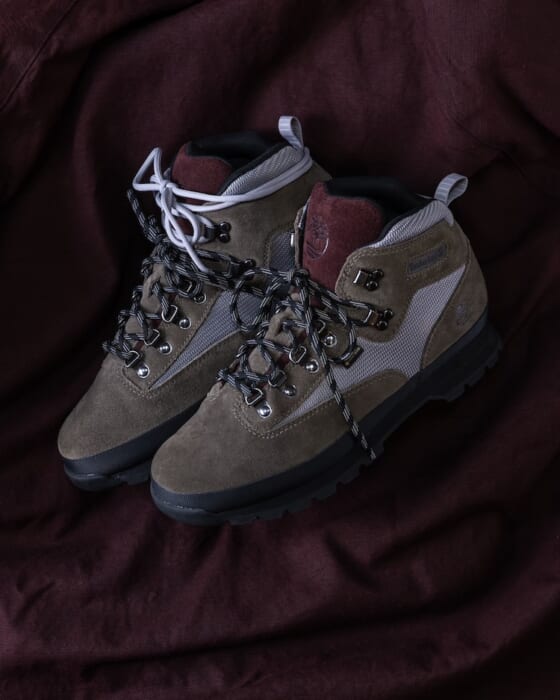
I, too, want to keep things like inexpensive white T-shirts and tank tops, as well as my underwear and socks, fresh at all times, but when it comes to boots like these, I don’t really feel the urge to keep buying new pairs all the time. I’ve lost count of how many times I’ve worn this pair of field boots—I wear them until they fall apart, and then I buy a new pair. Since they’re boots, if I wear them constantly, the soles will eventually wear down or break, but the uppers develop a great patina and look even better over time—so much so that I actually wish they’d never break at all.
Field Boots ¥25,300
—If you’re too set on buying brand-new items, you’ll miss out on those experiences and the journey that leads to them, after all.
Ohashi:Yes. For example, don’t people wear out their shoes or clothes? When that happens, if you really like them, I think it’s a good idea to buy the same thing again. When you do that, the second time around, they tend to fit your body and lifestyle even better than the first time. By the time you’re on your second or third round, I feel like they truly become a part of you. I truly believe that shoes and clothes only become truly “theirs” after they’ve been worn that much, and I strongly feel that people with a distinct sense of style are exactly like that.