What Hip-Hop Taught Me
“It’s a little embarrassing to admit, but I think I probably have more personal rules than most people. In particular, there are a lot of things I absolutely refuse to do. Above all, I don’t want to do anything that makes me look bad. I don’t know if it’s society, the heavens, or something else I’m trying to please. But I have this feeling that someone is watching me. Most of all, I suppose, it’s myself.”

That’s why he values people—not just his family, friends, and peers, but also the people he meets on the street. It was hip-hop that taught him to show respect and appreciation for everyone around him.
“I really like Naz. I think Naz loves hip-hop more than he loves himself—I think it’s really important to him. It feels like hip-hop comes before himself. When it comes to Bootcamp Click, my favorite is Tech from Smif-N-Wessun. When I thought about why that is, I realized that Bootcamp Click has this mindset of ”for my clique”—doing things for their own crew—and I felt that Tech is the one with the strongest sense of loyalty to that. “I like people who are like devout believers—people with deep faith. And that’s not limited to religion; I like people who have that same sense of devotion toward culture, and I want to be like that myself.”
“I am part of a larger current—what can I give back to the things that have supported me?” This value system is deeply embedded in Ohashi’s guiding principles, and hip-hop culture is at the very heart of it. He says that until then, he had thought of hip-hop as nothing more than music for dancing in clubs, but he realized there was another side to it when he discovered Nas’s *Illmatic* in middle school. Why did he become so devoted to this culture? The reason lay in his upbringing.
"For example, the house I lived in when I was old enough to remember didn't have a bathtub. We later moved from that apartment without a bath to a public housing complex—the kind run by the city government with income restrictions for tenants, where the rent was around 30,000 yen. It was a place with terrible condensation where the walls were crumbling to pieces. We didn’t have a car or a Famicom, and as an elementary school student, I was so embarrassed by that I couldn’t invite friends over.”
Even though he wanted a bicycle, his parents wouldn’t buy him one, so his father repainted a pink bicycle—which a neighbor’s older sister had given him because she’d outgrown it—light blue and gave it to him. As he rode it, the paint peeled away, and when the pink underneath was exposed, the older boys laughed, saying, “Look at him—he’s riding a girl’s bike.” That was more than enough for him to realize how poor his family was.
“When I started middle school, even though I started having crushes on girls, I felt self-conscious about it and was always embarrassed. But that’s when I came across *Ilmatic*, and when I looked at the inner sleeve, there were Naz’s hoodies lined up all over the housing project. Huh…? Could it be that this is cool precisely because the guys living in these public housing complexes are doing stuff like this…? That’s how I felt, and that was my first encounter with the world of hip-hop. So places like these public housing complexes are part of New York, too… I thought to myself, ‘If I’m part of this mindset, maybe all the things I used to hate about myself won’t be something to be ashamed of after all…’”
And to this day, he has been saved and sustained by the philosophy and values of hip-hop. For Ohashi, hip-hop—which is neither about indulging in extravagance beyond one’s means nor about condoning violence or danger—has simply served as a guiding principle for living an honest life.
“Back in my 20s, I definitely had this feeling that I wanted to become someone. But I don’t think it was about wanting to be famous or rich—I just wanted a place where I belonged. In that sense, once I turned 30 and acquired the title of ”clothing store owner,’ I felt I had reached my final form, and I never even thought about what might lie beyond that. Maybe that’s what created a positive momentum for me.”
By keeping a distance from the pursuit of fame and ambition and simply engaging with the people they meet and the opportunities that come their way—it is precisely because Ohashi and his colleagues never wavered from this approach that The Apartment has established its unique character and position today.
“Back when we were in our 20s, hanging out on the fringes of the hip-hop scene, all we ever did was get together for a monthly event, watch live performances and DJs, drink until we were completely wasted, and then head home on the first train. For me, that was enough. But then trouble started happening, and some guys disappeared, so I realized things couldn’t go on like this forever. Even though having that time together should have been enough, there was always a part of me thinking, ‘I have to do something to keep this time with my friends going…’ I guess that’s why I felt I had to move up in the scene.”
Having gained global influence and become the center of attention, Ohashi’s expression—which should be nothing but one of smooth sailing—is clouded by a certain shadow. Despite achieving success far beyond his wildest dreams, he murmurs with a hint of bewilderment, “Somewhere deep down, I feel like this wasn’t supposed to be how it turned out.” For him, the ultimate goal was those times spent eating cheap boxed lunches under the eaves of the shop with the friends who ran the place alongside him.
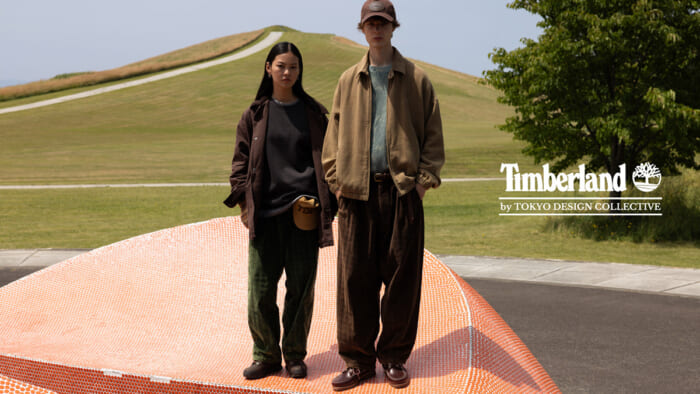
“When the photo shoot with Sue was over, I told her in my broken English, ‘You’re a New York legend, a hip-hop legend, and having you take my picture was like a dream come true for me.’ But it wasn’t a dream I’d always wanted to fulfill—it was more like a daydream that felt somehow unreal. The same goes for our collaboration with Timberland. I’m truly happy about it, but since I never imagined something like that would actually happen, it doesn’t really give me a sense of accomplishment. For me, happiness comes from having relationships with the people I care about and being part of that circle. On a small scale, that means family and friends; on a larger scale, it means society. If I can do something for them within that circle, I feel completely happy.”
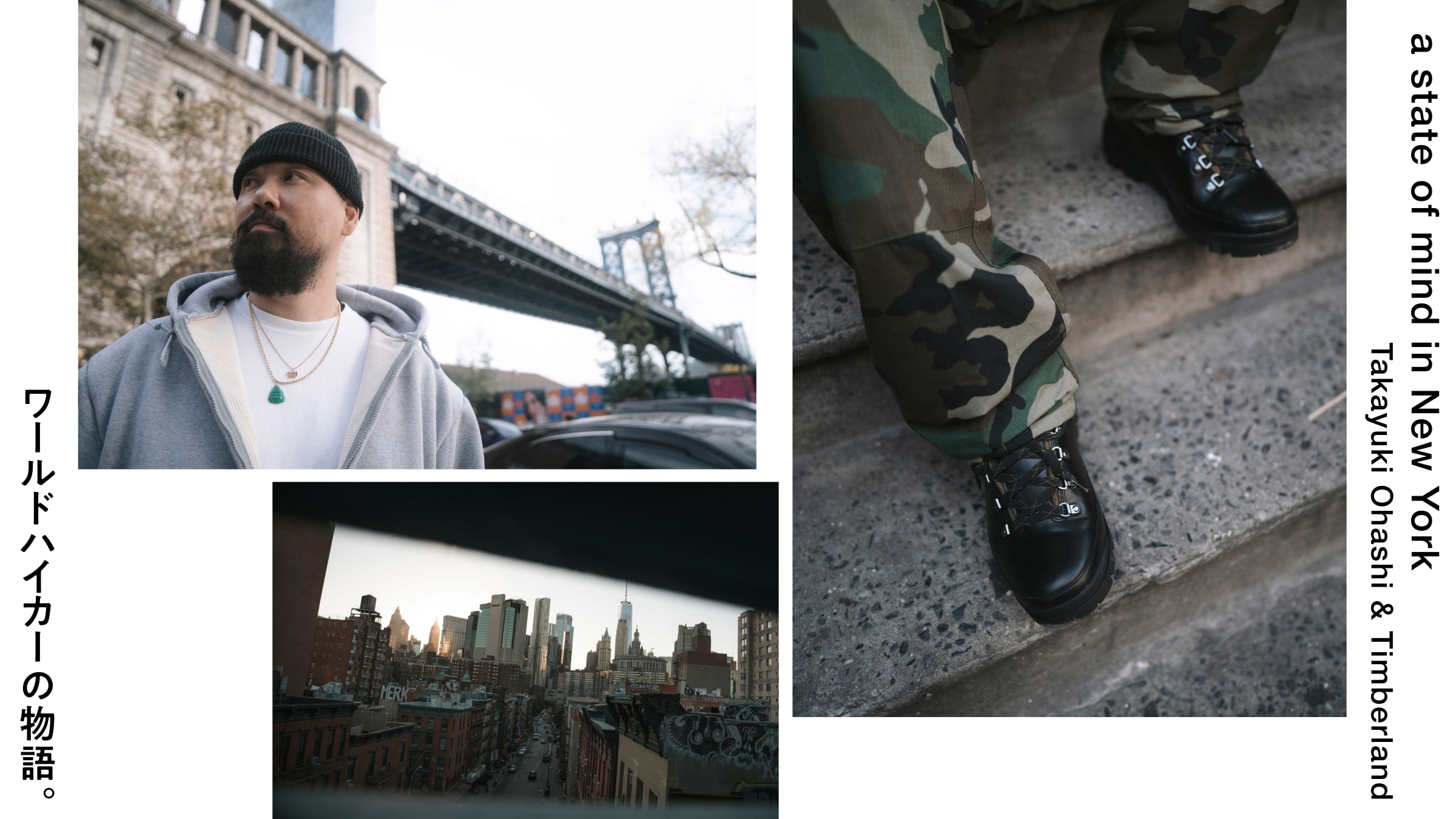
His attitude and outlook on happiness—and the clothes he wears—remain just as they were back then. Only the world around him has changed. Yet he lifts his head, looks ahead, and slips his feet into his brand-new boots. There are surely as many stories of joy and sorrow as there are people passing by there. Taking all of that in, everyday life in New York goes on as usual today. What he has learned from this tough city, and the bonds formed with the people born here—I simply cannot help but hope that these things will continue to watch over the genuine happiness of Takaho Ohashi and the people he cherishes.
PROFILE
Born in 1979 in Itabashi Ward, Tokyo. In 2009, he opened the select shop “the Apartment” in Kichijoji, where he shares with the world the New York culture that has inspired him and the energy it embodies.
Instagram:@theapartment_tokyo
- 1
- 2