When I brought water to the desert, 300 people lined up.
—From an outsider’s perspective, it seems to me that Jamita has a genuine sense of resolve and the strength to see things through. Was it really during your time in Yamanashi that you developed that mindset?
Furuya: Part of it was that my family members were all quite unique, and my father, who was an architect, was also quite eccentric. Since I’ve had to contend with the judgment of those around me for so long, I think my childhood environment had a significant influence on me.
—Did you move from Yamanashi to Tokyo after graduating from high school?
Furuya: That’s right. Back then, my uncle was running a sushi restaurant in Los Angeles, so I figured I’d go to the U.S. after graduating from high school. But my uncle passed away right around that time, so I ended up enrolling in the “Setsu Mode Seminar.” That’s where I started my music career, met lots of cool upperclassmen, and took on all kinds of jobs. Through all that, I also learned what love really is.
—It was the early 1990s. When I think of the musical pioneers of that era, I imagine they were all people with a real sense of determination.
Furuya: Those seniors only ever tell the truth. They’re completely straightforward, a bit clumsy, and really cool. I am who I am today because of their influence, and one of the things that drives me is the desire to prove to those seniors from back then that “Hey, I’m actually doing a good job.”

—After that, you spent some time in England and Italy before moving on to Mexico, right?
Furuya: After 3.11, a lot happened, and after traveling to Europe and Asia, I went to Mexico.
—So, was that when you first discovered the taste of tacos that we still enjoy today?
Furuya: While living in Mexico, I often found myself having to cook on a daily basis, and through that experience, I learned about Mexican tastes and how families who weren’t particularly well-off prepared their meals. I learned how to make delicious meals with just the bare minimum of ingredients. Our red salsa is also based on the method I learned there.
—You lived in Mexico for three years before returning to Japan in 2018, right?
Furuya: I returned to Japan to care for my parents.
—So you started your taco shop right away?
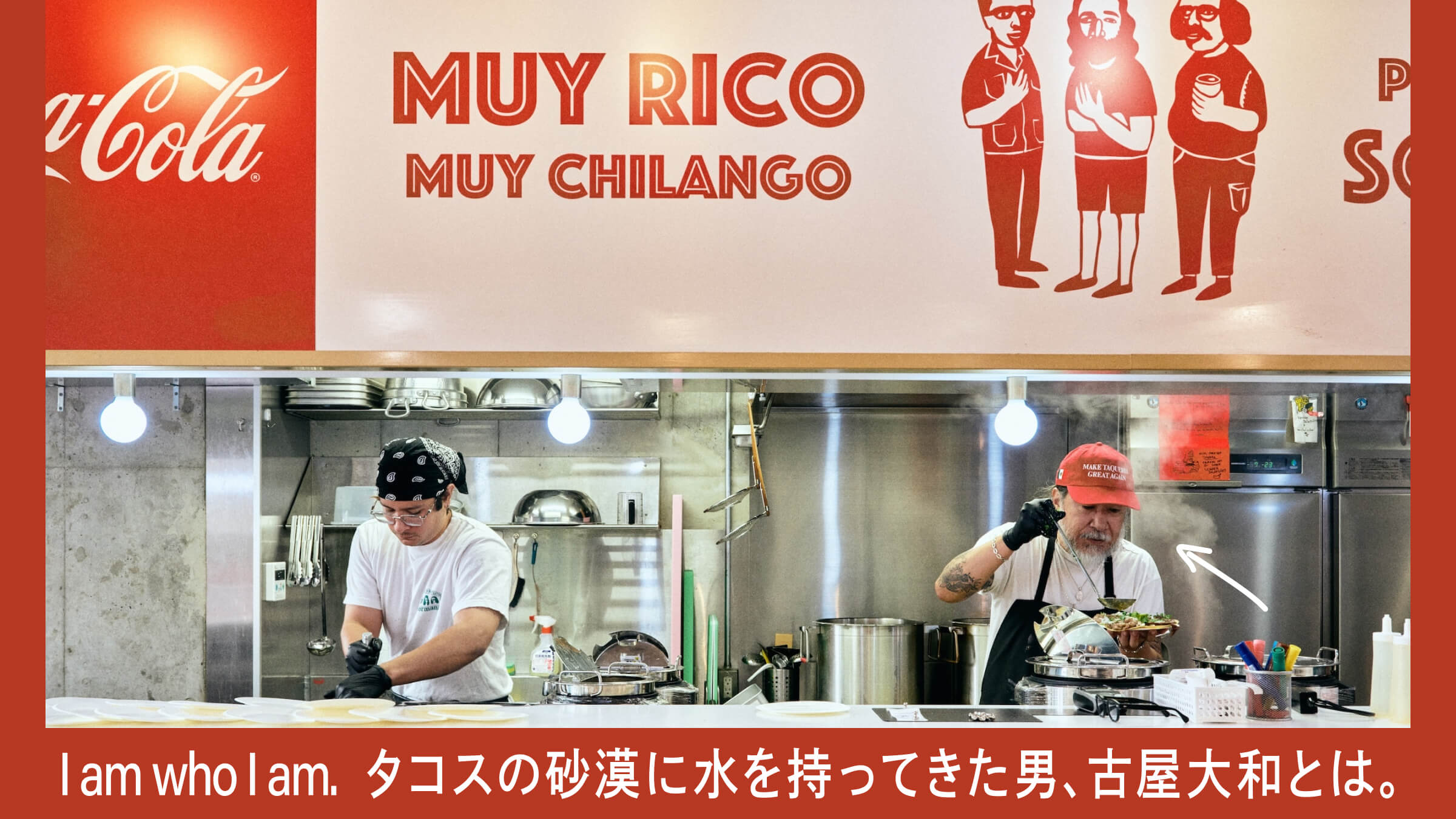
Furuya: I first started an “Airbnb” in Yamanashi. Since my mom’s parents’ house was also a hot spring resort, and because I’d gained firsthand insight into Japan’s unique appeal through my time living abroad, I attracted plenty of international guests—just as I’d expected. My friends from Mexico started coming to visit, too, and one day when I made some tacos for them, they raved, “These are delicious!” From there, I started serving them at bars near Mount Fuji where foreigners gathered, and word gradually spread. Then, when COVID-19 broke out and foreign guests could no longer visit, I decided to start a taco food truck.
Furuya: Once we opened, word spread quickly among the local Mexican community, and people started lining up—sometimes there were over 100 people in line. Also, there’s a community of Mexicans living in Japan on social media, and they often get really excited discussing whether “this or that taco place is the real deal or not.” Things really took off after we were featured there. At our peak, I was commuting from Yamanashi to Tokyo 25 times a month, and there was a line every single day.
—You said you went there almost every day for a month.
Furuya: After all, we're selling water in the desert here. From a Mexican's perspective, Japan is a "taco desert."
—Did you have any concerns when you actually opened the store?
Furuya: Not at all. I value and put into practice the philosophy of “doing one’s best and then leaving the rest to fate,” so I was absolutely convinced that a path would open up for me. Besides, when I was running a food truck—whether I was deep in the mountains or parked right on a corner in Ginza—Mexicans would still come looking for me. No matter where I was, I was confident that I could reach the people who needed me.