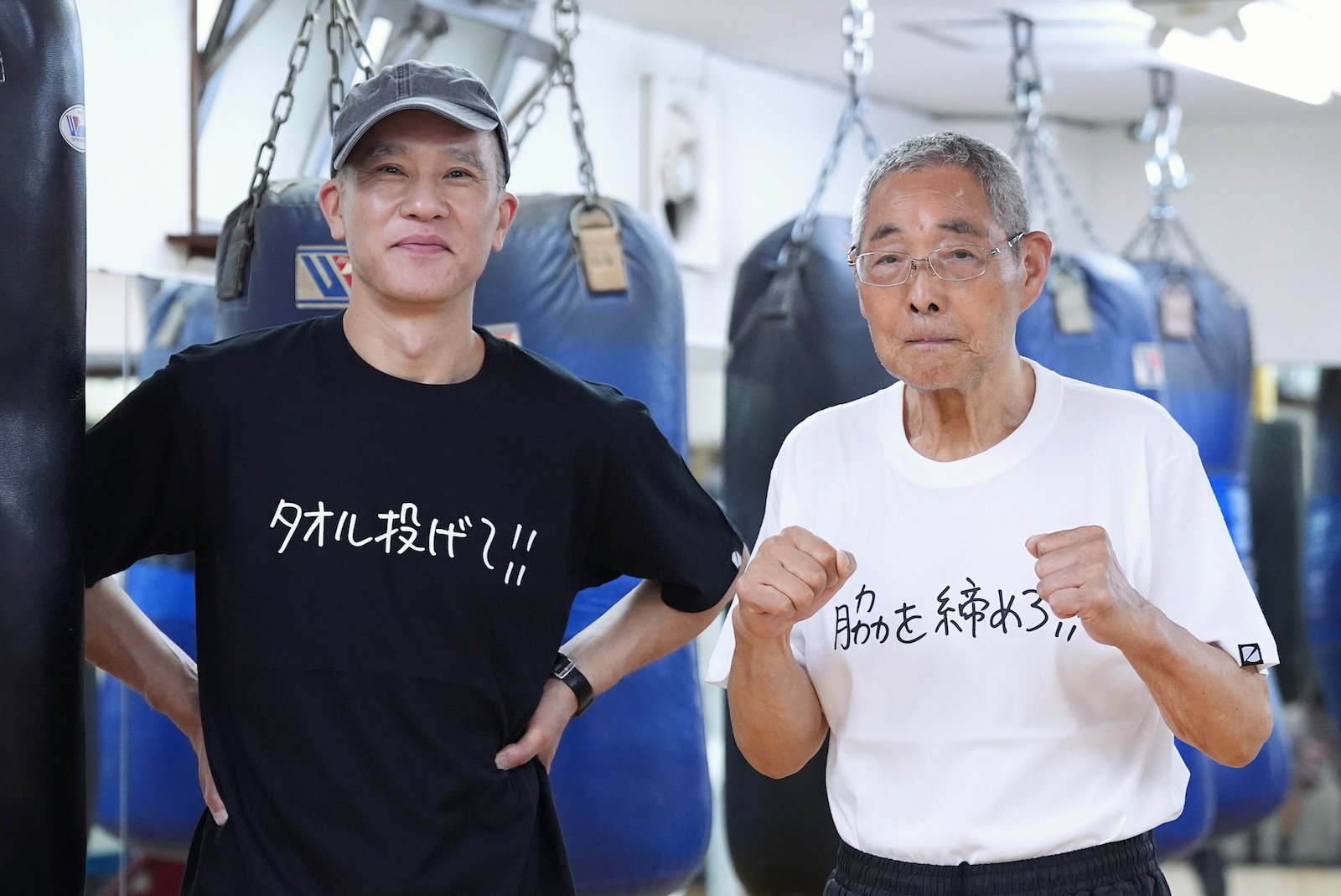
Boxing is a legitimate sport, and its history is marked by countless trials and triumphs that have given rise to many legends. RAZOR focuses on this culture and expresses it through its products. The brand has collaborated with various artists and brands in the past, and this time, it has teamed up with contemporary artist Ken Kagami.
Using the familiar “Kagami Font” and graphics, we capture this world from a unique perspective. For this issue, we held a roundtable discussion featuring Takahiro Okazawa, who handles the brand’s design, along with former world champion Yoshiaki Numata. They shared their perspectives—from the worlds of art and martial arts, respectively—on this collaboration and the appeal of the sport.
Yoshiaki Numata
Born in 1945 in Monbetsu Town, Saru District, Hokkaido (now Hidaka Town). In 1967, he defeated Flash Erlode to win the WBA World Junior Lightweight Championship, becoming the fifth Japanese boxer to hold a world title. Known as the “Precision Machine” for his meticulous technique, he won the WBC World Junior Lightweight Championship in 1970 and successfully defended the title three times. He is one of the most renowned champions in Japanese boxing history. He currently serves as chairman of the Numata Boxing Gym in Kiyose City, Tokyo, where he mentors the next generation of boxers.
Ken Kagami
Born in Tokyo in 1974. Contemporary artist. He has released works such as drawings and sculptures and has exhibited in numerous art shows both in Japan and abroad. At “Strange Store” in Daikanyama, which he runs, he sells merchandise such as T-shirts featuring his own designs.
Instagram:@kenkagami
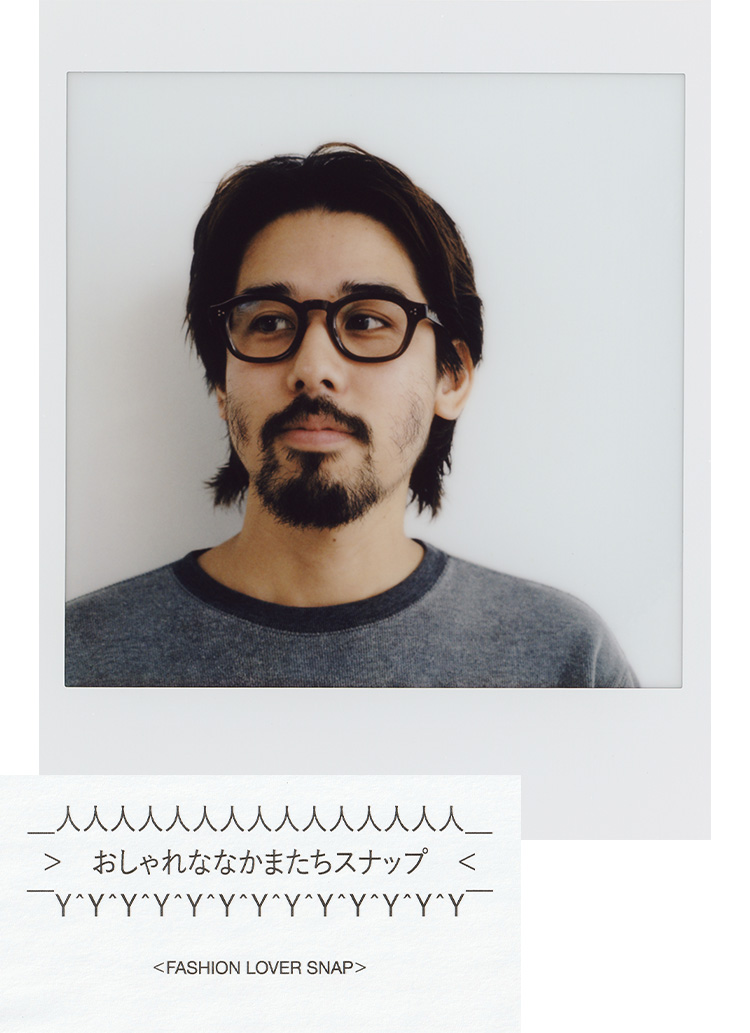
Takahiro Okazawa
Born in Shinjuku Ward, Tokyo, in 1975. After working as a model both in Japan and abroad, he began his career as a designer in 2000. He launched the brands 〈CYCLE〉 and 〈CLS〉 and has been involved in fashion, product design, and art projects. He is currently active as a designer for 〈CLS〉 and 〈RAZOR〉.
Instagram:@takahirookazawa410
Even if I became world champion, I wouldn't feel happy or anything.

—So, this time, we’re going to talk to Mr. Numata about the world of boxing.
Okazawa:He won the world title in 1967, becoming the fifth Japanese fighter to become a world champion. He’s a true legend. Back then, there weren’t as many weight classes or organizations as there are today, so he’s truly a rare figure.
Numata:In 1965, he defeated Larry Villafrano to become the Oriental Junior Lightweight Champion, and later went on to become the Oriental Lightweight Champion as well. He also defeated Flash Erolde, becoming a two-division champion in the Orient.
In 1967, I fought Erolde for the world title, but strangely enough, I never felt like I was going to lose. He was a southpaw with a short reach, so he was the easiest type of opponent for me to handle. So I won by decision and became the world champion.
—Mr. Numata, you’ve always liked baseball, haven’t you?
Numata:I was born in the countryside in Hokkaido. I grew up playing baseball, but to become a pro, you have to graduate from high school and college and get noticed by scouts. I figured I couldn’t make it big without that, so I gave up.
Numata:I started boxing when I was 16. On the way back from a public bath with a friend, he said, “Numata, why don’t you try boxing? TBS is holding tryouts.” So, he went ahead and signed me up without asking (laughs).
A few days later, I took an aptitude test in Sapporo, and after I’d just started training a little, Chairman Odaka of the Kyokuto Gym asked me, “Can you come to Tokyo?” My parents were against it, but I pushed through their objections and came to Tokyo. There were about 7,000 applicants from all over the country, and 20 of us were selected. I joined the Kyokuto Gym, which was located in Akasaka.
Back then, boxers were mostly just small-time thugs, so I convinced my parents that “it’s okay because TBS is organizing it,” and that’s how I ended up leaving Hokkaido.
Kagami:I passed on my first try. That's amazing.
—But practice is still pretty tough, isn't it?
Numata:It was absolutely brutal. No sooner had I arrived in Tokyo than they suddenly took me to a training camp at Lake Yamanaka. I was trained like a dog there for a whole week. After that, we went back to the gym in Tokyo, but even though there were 10 of us at the start, only three of us made it through. Those three were me, Rokuro Ishiyama, and Hiroshi Mori—and we all went on to become Japanese champions.
Ishiyama was the one everyone had the highest hopes for. He had talent. But Ishiyama got hooked on drinking, and Mori got hooked on women. They never made it to the world stage.
—What did Mr. Numata enjoy doing?
Numata:My only pleasure is eating anmitsu at an anmitsu shop after practice and smoking a cigarette. I smoke about 10 a day. But two days before a match, I’d quit cold turkey. That would clear my head and refresh my body, and I could easily go 15 rounds.
Kagami:Did you have any goals back then?
Numata:Nothing. I never once found boxing fun. All I ever got was nagging and lectures from our club president. And he didn’t even have any boxing experience himself. If I ever tried to talk back, I’d just get another lecture.
Okazawa:It's a time of austerity, isn't it?
Kagami:It’s hard to imagine that happening today, isn’t it?
—But were you happy when you became world champion?
Numata:It doesn't make me happy or anything.
Kagami:(Haha). Really!?
Numata:It's true. I have to fight other opponents again, and I'll have to listen to a lecture from our club president, too. That's what's on my mind right now. I'm not happy about it at all.
Okazawa:So you had two opponents… (laughs). When we spoke the other day, I asked you, “When were you happiest?” and you said, “I was happy when I beat the opponent I’d lost to once before (Xu Qiangyi),” didn’t you?
Numata:Oh, that’s true. But if we don’t fight the way the chairman says, we’ll get a lecture no matter whether we win or lose. Other than that, I felt really happy when I had a week off and could eat and drink whatever I wanted.
Okazawa:When it comes to Numata, his title defense against Raul Rojas really stands out, doesn't it? That final uppercut from Numata was truly shocking.
Numata:People often talk about that uppercut I threw against Raúl Rojas, but it wasn’t actually a punch I’d practiced. It’s because I’d been doing farm work at my family’s inn since I was five years old. Day in and day out, I’d be digging up the soil with a shovel. That motion—where you push the shovel back up from below with a sharp jerk—must have become second nature to me. In the fight against Rojas, after taking a hard body shot and finding myself in a really dangerous spot, that uppercut just came out reflexively.
So, I don’t think I threw that punch on purpose. It was just a movement that had been ingrained in me since I was a kid, coming out naturally. That’s why boxing isn’t something that’s created solely in the ring. Everything you’ve lived through up to that point comes out in moments like that.
—You were letting your guard down toward the end, weren't you?
Numata:I like boxing without a guard. It’s the easiest way for me. But if I did that, I’d be in big trouble. I’d get lectured for two hours. The chairman would say, “What are you doing, not listening to me?!”
Okazawa:No matter how many times I watch this video, it's amazing.
Numata:At that time, I’d decided to quit regardless of whether I won or lost. So I just did things my own way. If I hadn’t done that, the outcome would have been different.
The only way to gain understanding is to become stronger.
—Did you watch boxing, Mr. Kagami?
Kagami:My dad loved it—he’d come home from work and always watch it on TV. Since there was blood and stuff during the matches, my mom would say things like, “Turn it off already!” (laughs).
Okazawa:Are Kagami-kun's dad and Ms. Numata about the same age?
Kagami:We're the same age! You're 81 this year, aren't you?
—What was the general public’s perception of boxers back when Mr. Numata was still active?
Numata:I guess I really was an outsider. I think that changed little by little, though. Even when I retired and moved back to the countryside, people didn’t think much of me. Because I had a bad reputation.
Okazawa:But to the general public, he was a superstar, wasn’t he? Take Yoshio Shirai’s world title fight (in 1955 against Pascal Perez), for example—it had a viewership rating of 96.11 TP10T, which really shows just how much the nation was paying attention. Times are different now, so it’s not really fair to compare, but it makes me think, “Those were the good old days.”
Numata:No, no—it wasn't a good time at all. I would have been happy if just one out of every ten people had understood me.
Okazawa:But I think people who became world champions in 1967 and competed against the world back then are truly rare.
Numata:Back then, I just practiced relentlessly—winning was the only thing on my mind. Because if I lost, I’d be in real trouble.
Okazawa:Social structures were different back then, weren’t they? As Mr. Numata said, things were imposed from above back then, but I think many athletes today have much more freedom in their training. So the way they build mental toughness has changed, hasn’t it? Still, when you look at fighters like Naoya Inoue, who’ve been receiving coaching and doing independent training since they were little, their technical progress is simply incredible.
Numata:That’s completely different. It’s because I’ve been doing it since I was a kid.
Okazawa:I’m sure the fear of stepping into the ring is different these days, too. Of course, today’s boxers must feel fear as well, but I also get the impression that they’re enjoying themselves while getting stronger. What was it like back in Mr. Numata’s day?
Numata:Everyone’s situation is different, but in my case, I left my rural hometown in Hokkaido despite opposition from my parents and relatives. Plus, I received a going-away gift when I left. So I had no choice but to become strong, no matter what.
Okazawa:So you were doing it for your hometown, weren't you?
Numata:That’s right. That’s really all there is to it. It’s the countryside, and people probably have a negative impression of boxers. I came to Tokyo knowing that people would think that way—I couldn’t help it. I’ve got nothing left to lose. So, the only way to gain their understanding is to get stronger. The only path left for me is to prove myself.
Okazawa:That's really primitive, isn't it?
Numata:The faces of the people in the countryside were what kept me going. If it weren't for that, I would have quit a long time ago.
Even now, my body still remembers the basic technique.
—All of the items in this collaboration really showcase Kagami's signature style.
Kagami:When Okazawa-kun approached me about it, it immediately came to mind.
Okazawa:I wanted to depict a “relatable” scenario that would immediately make people think of Kagami-kun. I’m happy that everyone—whether they’re into boxing or not—gets a little chuckle and asks, “What’s this?”
—What about Mr. Numata? It says, “Tuck in your sides!!”
Numata:This is interesting, and it's just right.
Kagami:So, is keeping your elbows close to your body really that important?
Numata:It's important. Don't open it. Our chairman used to tell me all the time, "Your guard is down because your personal life is a mess!"
Okazawa:I know Mr. Numata is an exception, but I wonder if coaches back then also had the role of reforming delinquent youths. I imagine these days, they mostly focus on teaching technical skills.
Numata:Back in the day, we were taught the basics thoroughly, and it took a while to get to the punch, but now we practice the one-two in two or three days, and then move right on to the hook. If we don't do it that way, everyone gets bored and quits right away.
Okazawa:That’s right. Back when I was a student and going to the gym, I was drilled on jabs and footwork for weeks on end. It wasn’t until a month later that I was able to throw a one-two. I guess by sticking with it, you start to develop your own style.
Numata:No matter what sport you play, the basics are really important. The basics are often boring, but you won’t get any better if you don’t practice them. Learning the steps, the jab, and the one-two thoroughly and making them second nature is what leads to strength. Even now, I still have the basic punching techniques ingrained in my body, and I can move accordingly.
—It’s incredibly convincing when a former world champion says, “The basics are important.”
Kagami:I was hitting the mitts a little while ago, and it was amazing.
Numata:I'll do it as many times as you like each day.
Kagami:It's amazing—and he's over 80!
Okazawa:But it’s really true that the basics are important, isn’t it? I wonder if that’s true not just in sports, but in the world of art as well?
Kagami:That's true. Expressions that are thought through with an understanding of context and history really do have more impact. You can tell that right away. It's not just about being a good artist or anything like that.
—Finally, is there anything you’d like to ask Mr. Numata, Mr. Kagami?
Kagami:How was the fight purse?
Numata:I don't know. The president just told me, “I’ll save it for you,” and that was it. If I even bring up money, I’ll get a two-hour lecture—even the day before a match.
Kagami:I knew it (lol).
Numata:It's nothing but lectures these days. I said I wanted to box without any defense, but I really wanted to practice that way just once—go all out, step into the ring, and have a real fight. I still feel that way today.
COTTON S/S T-SHIRT by Ken Kagami ¥6,050
DRY S/S T-SHIRT by Ken Kagami ¥ 5,500
Photo_Naoki Fukuda
Text_Tsuji