I want to listen to music at full volume through a high-quality sound system. But clubs are a bit too intense. I’d rather lose myself in the music in a more casual, relaxed setting—and still enjoy conversation and drinks. A record bar is the perfect fit for that kind of mood right now. We live in an era where we can listen to as much music as we want via streaming services, but vinyl still has superior sound quality and is packed with charms unique to analog media—from the album cover art to the ritual of dropping the needle onto the record. In this series, we’ll visit the record bars that catch our eye and explore each one’s unique character and appeal. In Part 2, we’ll look at “Studio Mule (STUDIO MULE)".
- Photo_Mikito Hyakuno
- Text_JAY
- Edit_Kazuki Sakaguchi

PROFILE
While working as a DJ both in Japan and abroad, he has also been running the electronic music label “MULE MUSIQ" was launched. To date, it has released over 500 tracks, primarily in the house genre, and is highly regarded worldwide as one of Japan’s leading labels. In 2020, the label opened the music bar "Studio Mule," which serves carefully curated, high-quality music and natural wine. He is an unparalleled lover of Shiba Inus; his dog’s name is McEnroe.
Instagram:@mulemusiq
From fashion to the world of music. The origins of Mule Music.
—Mr. Kawasaki, you’re not only the owner of “Studio Mule,” but you also run the music label “Mule Music,” right? First, could you tell us a little about what kind of label “Mule Music” is?
"Mule Music" was originally a Sapporo-basedKuniyuki TakahashiThis label was founded in 2004 to release music by this artist. Since then, we’ve been releasing tracks centered around house music—songs that work well as dance music in clubs but can also be enjoyed at home. We make a conscious effort to curate an elegant selection of tracks, avoiding anything that’s too hard-hitting or overly emotional.
—Was Kuniyuki Takahashi’s music really that special?
That's right. When I first heard his music, I was blown away by how far it surpassed the typical standard in Japan. Even now, I still think he's the greatest artist in the history of Japanese club music.
Back then, major labels both in Japan and abroad were all vying for his attention, and there was a fierce competition over which one would be the first to release his album. I was a relative unknown compared to the other labels, but my enthusiasm was just as strong. I kept at it—calling him almost every day and making trips to Sapporo—until we finally decided to work together. “Mule Music” was launched alongside the release of his music.
—To begin with, what made you decide to start a label?
I’ve been in the apparel industry since my teens, working at select shops like “BEAMS,” “SHIPS,” and “n°44.” However, I felt like I’d done everything I could in fashion and was looking for the next challenge. Basically, I’d just gotten bored. Since I’d been involved in the label business at “n°44,” I had the know-how and connections, and since I was DJing as a hobby, I figured if I were to do something new, it would probably be music. That’s when I met Kuniyuki.
—The music of “Mule Music” has been particularly well-received overseas. Did you have international expansion in mind from the very beginning?
When I first started my label, CD sales in Japan were plummeting. So, to be honest, I had no intention of selling in Japan; I was focused on figuring out how to distribute my music overseas.
At a time like that, the DJ I invited to perform at a party I hosted—Michael Mayera German “Compact (Kompakt)"When I found out that the label also handled distribution. Back then, it wasn't as easy to communicate with people overseas as it is now, so we tried every possible means—letters, word of mouth, and so on—to stay in touch, and we somehow managed to seal the deal."
—You can really tell that a lot of care has gone into the artwork for all of the released works.
That’s because I consider the album—including the cover art—to be a single work of art. No matter how wonderful a song may be, I won’t release it if the direction of the artwork doesn’t align with the artist’s vision, and in fact, there have been several times in the past when I’ve decided not to release it.
Joaquin “Joe” Claussell, *Storm*
Released in June of this yearJoaquin "Joe" Claussell's "Storm" (featuring a remix by Kuniyuki Takahashi on Side B) features artwork byYoshirottenWe used artwork by [Artist's Name]. I didn't know anything about him at all, but when we met and talked, we hit it off, and he was the one who offered to do the artwork. He also likes Kuniyuki's music, and since we felt a connection, I asked him to do it.
Young people these days, like Joe and “Body & SOUL"I think there are a lot of kids who don't know about [...]. By featuring popular artists on the album cover, I hope we can share the great music we've grown up with with a new generation."
Music and natural wine—a testament to refined taste.
—What led you to open “Studio Mule”?
“Studio Mule” was actually the name of the restaurant I had originally planned to open. I was planning to run it with a Japanese chef I’d met in Paris and fallen in love with, but he didn’t return to Japan, so the plan fell through. However, at that point, I already had about 2,000 bottles of wine in stock. I was wondering if there was any way to make it work when I came across this space, so I opened it as a bar.
—Where does the store's name come from?
“STUDIO” can mean a music studio, but in France, it refers to a studio apartment. Since this building itself is an apartment complex, I thought it was a perfect fit.
“MULE,” which is also used in the label name, means "refined" in French. I love perfume, so I was looking for a name that sounded like a perfume name and was easy to say in a single word. Personally, the former "SOPH.The "Mr. KiyonagaI’ve been on good terms with them, and the origin of the brand name actually comes from the word “sophisticated.” Since we strive for sophistication in the music we release, I looked up the French translation and found it was “MULE”—and the sound of it was just perfect.
—Was there a reason you chose Shibuya?
Back when I was in my early 20s, I used to come to Shibuya every day to buy records. At the time, there were about 90 record stores in Udagawa-cho alone. That was the heyday of Tokyo’s record culture. It wasn’t exactly my favorite neighborhood, but it was kind of like my roots. I used to think that if I were to start something new, Shibuya was the place to do it.
Also, most of the people who listen to “Mule Music” are from overseas. So, I figured our customers would mainly be international visitors, which is why I decided to open a store in Shibuya.
—Your restaurant really focuses on natural wines, doesn't it?
I’ve always loved wine, and I started collecting it little by little whenever I was invited abroad to DJ. I didn’t want people to think this was just another bar started on a whim by someone in the music industry, so I decided to make it the music bar in Tokyo that’s most dedicated to wine. I visited wineries in France that piqued my interest and even bought wine directly from producers I liked.
—What criteria do you use to select wines?
Wines made through natural processes with as little human intervention—such as the use of chemicals—as possible. And among those, wines that adults can truly enjoy, I suppose. A lot of natural wines have quite a funky taste—they can be quite tart or have a very wild character. While that’s certainly part of their unique charm, here I’ve selected wines that are high-quality and easy to drink—the kind you can savor slowly while listening to music.
—What else is on the menu besides wine?
It’s mezcal. About 10 years ago, I started traveling to Mexico a few times a year as a DJ, and that’s where I got hooked on its depth. Mezcal is similar to wine in many ways—there are various types of agave used as raw materials, and the flavor varies depending on the region and production method. It has a high alcohol content, but I also like that it doesn’t leave you feeling rough the next day. Just like with natural wine, I buy directly from producers who focus on traditional production methods that eliminate artificial elements.
Non-alcoholic options include Niseko ginger beer, made from pesticide-free ingredients, and Niigata’s 〈YASO〉We offer non-alcoholic gin and craft cola made from wild herbs by this brand.〉
—What’s the reason for limiting the menu?
I believe there’s a certain beauty in not offering a wide variety of items. Of course, if we served beer or highballs, it would attract more customers and boost sales. But I’ve made a conscious decision not to do that. If I prioritize business, I lose sight of what I really want to do. I believe that limitations are what give a place its unique character.
—The store's interior design is “Case Real (casereal)" is behind it, isn't it?
The President'sFutamata-kunHe’s a longtime friend of mine, and I hear he’s now designing stores for Aésop, but I had no idea he’d become so famous when I commissioned him. What I asked for was that it not have a “Scandinavian” or “Parisian” vibe—I didn’t want it to look like something I’d seen somewhere else. I also wanted it to be a space that would develop character over time, one that would suit me as I stood behind the counter. Other than that, I left everything up to him and didn’t visit the site even once until the project was handed over.
—So they really trusted you. Could you tell us the key points of the interior design?
The key was concealing all the wiring to create a minimalist space. For the shelf housing the speakers, we sent the speakers themselves to the contractor in advance so they could be custom-built to fit perfectly based on precise measurements. The high chairs feature the letter “M”—the initial of the store’s name—embossed on the back.
Another distinctive feature is the merchandise area behind the counter. It’s stocked with records and merchandise released by “Mule Music,” and you can listen to them and buy them there. Futamata-kun calls this space the “phone booth,” and before we knew it, that name stuck.
The only thing I decided on myself was the stone for the counter. I wanted to use stone as an element that would define the shop’s image. But marble gets stained if you spill wine on it. So, I narrowed my search to granite, which doesn’t have that problem due to its composition, and ultimately chose a Brazilian variety with a particularly beautiful color and pattern. Since I love Brazilian music, the fact that it’s from Brazil really resonated with me.
—Please tell us about the equipment you use.
The sound is “Precious Hall"I chose the equipment after consulting with Satoru from 〈". The speakers are from the late '70s 〈Klipsch〉's "Cornwall," the amp is 〈Mark Levinson〉. It’s kind of like a scaled-down version of the sound from “LOFT,” the legendary party David Mancuso hosted in New York in the ’70s. I really like the rich, deep bass of “Cornwall.”
And the turntable is <Thorens〉from the late ’70s. I chose this one because Larry Levan used the same 〈Torrance〉 “TD-125” at “Paradise Garage,” the mecca of gay clubs. When Francois K played at a club called “YELLOW” in Nishi-Azabu, he also used the 〈Technics〉—no, I was actually using the 〈Torrance〉. I also like its stylish look, which doesn’t have pitch control.
—Why do you use vintage audio equipment exclusively instead of modern gear?
It’s because I want to play the music of that era with the sound of that era. Most of the records we play in the store are from the ’70s through the early ’90s, but if we play them on modern equipment, the sound just doesn’t come out the same as it did back then. Even though they require more maintenance, older audio equipment really does offer better sound quality.
—How do you choose the music played in the store?
Most of my collection consists of jazz and Brazilian music. Among those, I’m particularly fond of a genre called “West Indies” music, which originated in the West Indies—specifically in places like Haiti and Guadeloupe, which were former French colonies. It has a melancholic feel, with a blend of Latin, jazz, and reggae that’s really soothing. Many of the records I carry are rare, and I make a point of not playing the songs everyone knows, so I think you’ll enjoy a selection you won’t find at other stores.
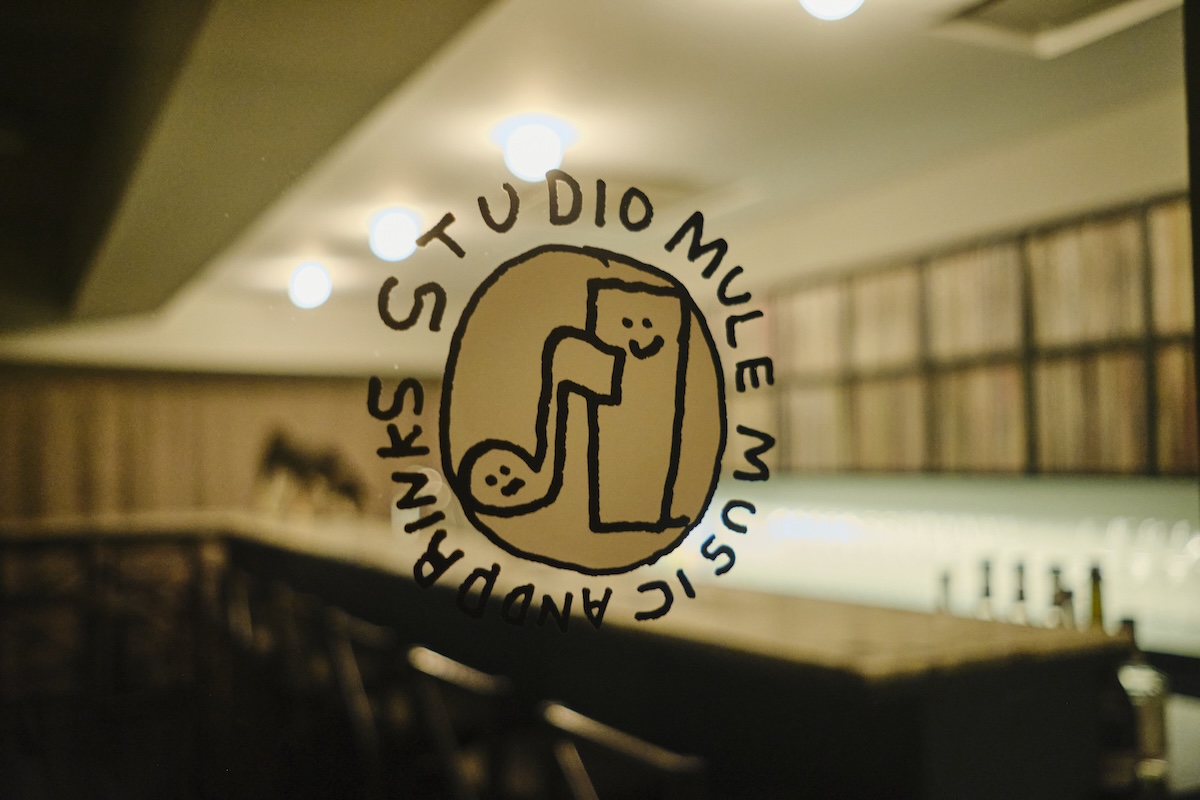
—The store’s logo was designed by the same artist who has created numerous pieces of artwork for “Mule Music”Stefan MarxThat’s why, isn’t it? How did you meet him?
Isoléereleased in 2005, *We Are MonsterThe album artwork for *』* was so great that I thought, “Who is this?” I found out there was a guy in Hamburg named Stefan Marx who was painting on skateboards, so I got in touch with him right away. We hit it off and started working together. So, we’ve actually been friends for about 20 years now. Since he handles not only the logo but also the album covers and merchandise, I think the image of “Mule Music” being synonymous with Stefan Marx has really taken hold.
—Which of Stefan’s works is your favorite?
"Mule Music" compilation series, *I'm Starting to Feel Okay"That's the album cover, right? Stefan and I came up with this title together."
I actually think the fashion industry suits me better than music, but a few years after I started my label, when I told Stefan that I felt like I was starting to get the hang of things, he sent me the phrase “I’m Starting To Feel Okay.” It just really resonated with me. Because of that, this artwork is the one I’m most attached to.
—What kind of store do you envision “Studio Mule” becoming?
I really like hotel bars. I especially like the “Orchid Bar” at the “Hotel Okura.” It’s a bit pricey, but the high-quality atmosphere and top-notch service make it well worth the cost. I think that’s how it should be.
"Studio Mule" serves high-quality wines, so the prices are a bit on the high side, but we’ve created this space with the goal of offering something truly exceptional. We hope you’ll enjoy our unique music selection, the high-quality sound system, and our carefully curated wines.
—Finally, could you tell us about your future plans?
I’d like to find something that takes me to the next level—something I can’t do unless I put in even more effort—and give it a try.
One of the Japanese people I respect the most is an architect named Shinichiro Ogata. He produced “OGATA Paris"We held a 'STUDIO MULE' pop-up at a space called ' ' in Paris's Marais district during Fashion Week this past March. We brought wine and merchandise, and the response was overwhelmingly positive. I hope to build on these experiences and discover new opportunities to look forward to."
STUDIO MULE
Address: Villa Metropolis 3E, 16-4 Kamiyama-cho, Shibuya-ku, Tokyo
Time: 8:00 p.m. – 1:00 a.m.


![[Series: 【Vinyl Bar Diaries] Vol. 4 LISTEN](https://www.houyhnhnm.jp/wp-content/uploads/2026/09/DSF6257-700x467.jpg)
![[Series 【Vinyl Bar Diaries] Vol. 3: Mizo](https://www.houyhnhnm.jp/wp-content/uploads/2026/07/DSF0001-1-700x467.jpg)
![Serialized 【Vinyl Bar Diaries] Vol. 1 Kompakt Record Bar TOKYO](https://www.houyhnhnm.jp/wp-content/uploads/2026/05/DSF4016-700x560.jpg)