A comfort that only natural materials can provide.
After dropping Rita off at her owner’s place, I headed to Hatagaya, a neighborhood in the northern part of Shibuya Ward also known as “Kita-Shibuya.” I heard that Rintaro used to live here.
"There are lots of great restaurants, and it’s pleasantly quiet at night. The vibe of the people here and the fact that there are so many parks—it reminds me a bit of my hometown in Kansai, so I can really relax and take it easy."

Although Rintaro often spends his days off visiting places rich in nature, the exciting activities unique to city life are also an important part of his daily routine.
"On days when I'm not hiking, I'll drop by a shop where a friend works, or pop into an event or something in the evening. Even though I live in Tokyo, it feels like I'm just visiting. I also like doing things that are typical of Tokyo."
On this day, even though it was still June, the temperature reached 30°C, marking a midsummer day. Meanwhile, Europe is experiencing an unprecedented heat wave, with temperatures soaring past 40°C. While this global heatwave is certainly exhausting, there’s no point in just complaining about it. When it comes to beating the heat, what you wear is key.
"On hot days, I try to choose comfortable clothes that I can wear without feeling constricted. Last summer, I spent my days in mesh T-shirts and shorts—so light I could barely tell if I was wearing them—paired with flip-flops. While I stick to functional synthetic fabrics when I go running, I make a point of wearing natural fabrics when I'm out and about in the city."
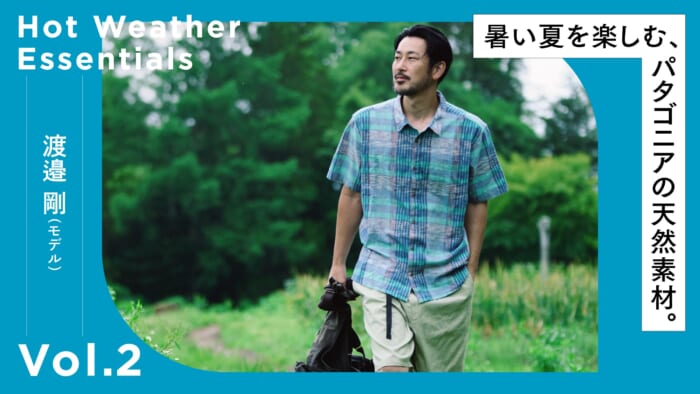
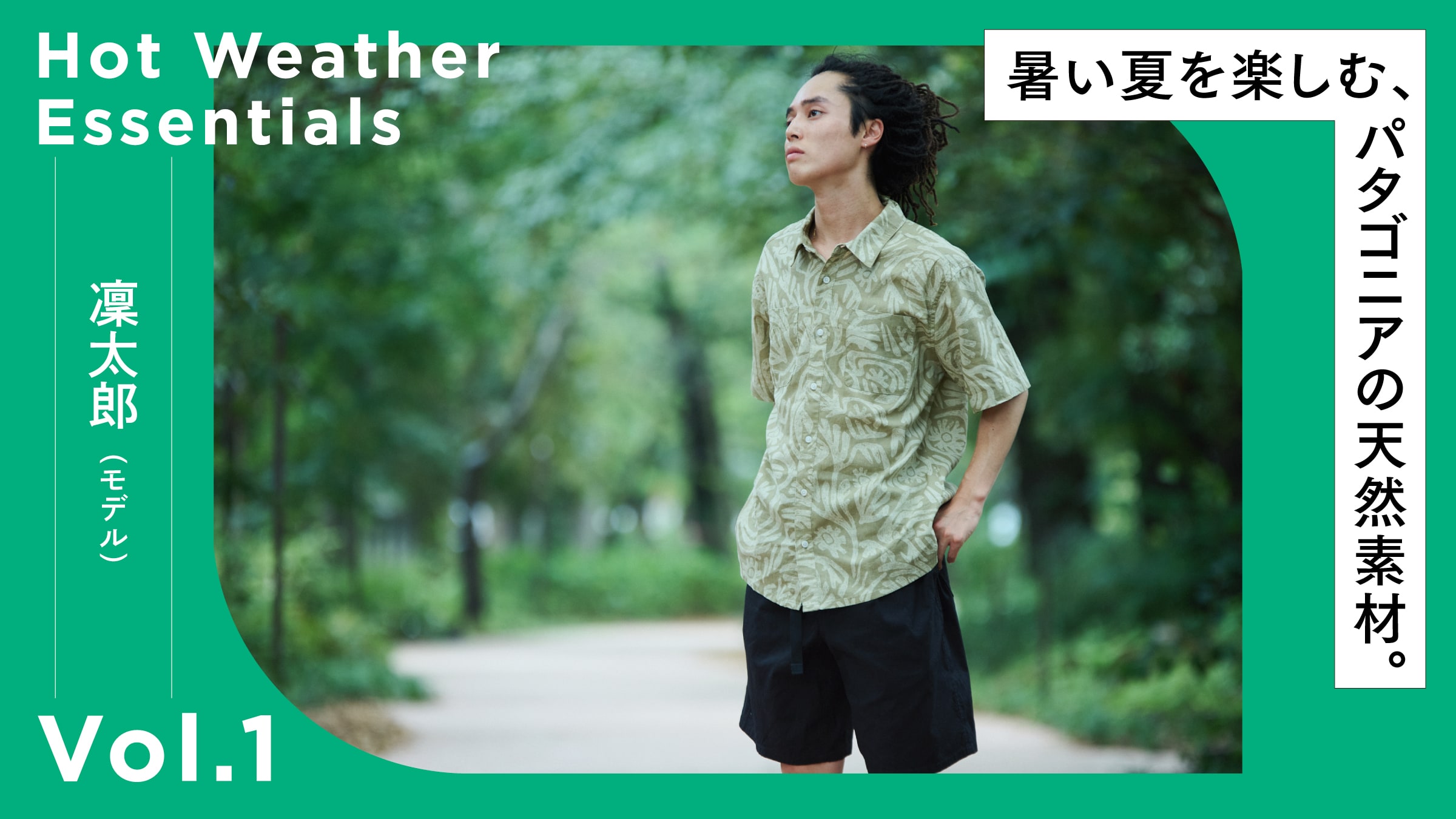
"Men's Back Step Shirt" ¥12,100
"Men's Lightweight All-Weather Gi Shorts, 9 inches" ¥ 14,850
The Patagonia “Men’s Back Step Shirt” that Rintaro is wearing is made from a blend of 55% hemp and 45% organic cotton, offering a comfortable feel against the skin and excellent breathability. The “Men’s Lightweight All-Weather Gi Shorts 9-inch” are also made from a blend of organic cotton and hemp, with a small amount of polyurethane added for stretch. Synthetic tech wear certainly keeps you comfortable on hot, humid days. But I feel like the texture of natural materials blends in better with the cityscape.
"I have some linen clothes, but I haven't really worn much hemp clothing before. It's incredibly comfortable. When I wore it directly against my skin, it felt great, and since it's a shirt, the breeze blows right through. I sweated quite a bit, but it dried out just from spending a little time indoors. The shorts are cool to wear, too, and since they're stretchy, they're easy to move in."
The “Men’s Back Step Shirt” and “Men’s Lightweight All-Weather Gi Shorts 9 inches” are made from a hemp-blend fabric that’s easy to care for and perfect for everyday wear. Hemp is known for its durability and breathability, as well as its antimicrobial and odor-neutralizing properties, making it ideal for summer. The combination of hemp and organic cotton is one of Patagonia’s signature materials. It balances style and function, ensuring comfort even in the heat.
“Patagonia is worn by a wide range of people, from my dad’s generation to my friends. I’ve even looked for vintage Patagonia gear myself. I’m also interested in trail running gear, like ‘Capilene.’ I heard from a senior who wears nothing but Patagonia that the brand uses a lot of recycled materials, so I have the impression that they’ve been committed to environmental issues for many years. Since I love nature too, I’m conscious of that. When I’m running in the mountains, I try to pick up things like rice ball wrappers if I see them lying around.”
Since 1985, Patagonia has continued to donate 1 percent of its sales, in cash or in kind, to protect and restore the natural environment. In 2002, Patagonia founder Yvon Chouinard and others established the nonprofit organization “1% for the Planet.” Participating companies continue to donate 1% of their annual sales to environmental organizations. In addition, Patagonia has developed numerous manufacturing processes and programs designed to reduce its environmental impact. Wearing Patagonia clothing for a long time thus indirectly contributes to protecting the global environment.
"Since we're playing in nature, I want to take good care of the Earth's environment. We haven’t taken any concrete steps yet, but my friends and I have been talking about making our own running gear—using sustainable materials, of course. I want to use materials that break down naturally. After learning that the used clothes we donated to Africa ended up as piles of trash, I’ve decided that if I’m going to make my own clothes, I want to use materials that return to the earth or natural materials.”
Wearing Patagonia’s natural-fiber clothing to beat the heat is sure to be a small step toward solving the climate crisis at its root. But putting all that serious talk aside, why not check out Patagonia’s natural-fiber collection as an option to make this summer just a little more comfortable? We also have a wide selection of T-shirts, polo shirts, bottoms, and more.
- 1
- 2