Shot02_“NEW CLASSIC” No. 8
It takes some courage, but once you try it, you'll be surprised at how well it fits.

—I’d also like to ask about your career. What was the turning point that sparked your interest in comedy?
South Kaw: I think this is true for everyone my age who grew up in Osaka: I grew up watching shows like “4:00 Yo-da” and “Gottsu Ee Kanji” as a kid. It really instilled in me the idea that Downtown’s comedy was incredible. From there, influenced by my older sister, I started following young comedians like the Chihara Brothers who were active at the 2-chome Theater, and I spent my childhood watching nothing but comedy and variety shows whenever I turned on the TV.
—Were you definitely aiming to become a comedian?
South Kaw: Actually, that’s not quite right. After I graduated from college, I was planning to become a police officer. I love a good commotion, so I thought I’d like to rush to the scene of incidents (laughs). But as I watched comedy shows and events, my passion for comedy was reignited. I wavered between taking the civil service exam and pursuing comedy, though I did think to myself, “But becoming a comedian is probably out of the question.” But then, while listening to the commentary tracks on solo live shows and radio programs, I learned about the role of a broadcast writer. I realized there was a job where I could work behind the scenes, creating content side by side with comedians, so I entered the Shochiku Geino training school with the goal of becoming a writer.
—So, what made you switch to performing on stage?
South Kaw: It all started when a staff member told me during an audition, “We’re not hiring writers right now, but writing material as a solo comedian is great experience that will help you become a writer.” So I started writing material as a solo comedian, went to weekly open mics, began performing in live shows… and before I knew it, I was on stage myself.
—You gained attention for your unconventional style, including “Systema” (a routine where getting hit doesn’t hurt), but was there a particular event that served as a turning point for you personally?
South Kaw: A lot has happened, and while I’ve definitely been helped by many of my seniors, there was a moment when I thought to myself, “Wait, maybe I can actually pull this off.” I’d always assumed that someone like me would never make it, but when I started doing “Systema,” the comedians at Yoshimoto laughed their heads off. I’d always had this unfounded insecurity about Yoshimoto—that “they’re scary but funny, so they probably don’t think we’re funny at all.” But when they laughed, even crossing agency lines, I realized, “It doesn’t matter—if I’m funny, it’ll get through.” I’d been in the business for over 10 years, but seeing them laugh made me think, “If even these people are laughing, maybe I actually have a shot at this.” It was the first time I ever felt truly confident in myself.
—While his material is unconventional, when I watch him on TV, I also get the impression that he’s keenly aware of his surroundings and does a good job of maintaining balance on set.
South Kaw: To make it in this business, I’ve always kept in mind something Ryutaro Ueoka once said: “A comedian absolutely has to be vulgar to make it.” The conventional route is through competitions like M-1, but there was a time when I wasn’t getting results in those contests, and I was ready to quit comedy, thinking, “I’ll never make it—it’s hopeless.” During the COVID-19 pandemic, I decided to just let it all hang out, thinking, “I don’t care if people say I’m doing something incredibly stupid.” When I started making jokes about my agency and using gossip as material, the public really took to it with a lot of enthusiasm. That’s when I realized, “Mr. Ueoka was absolutely right.”
But I’m just an ordinary adult over 40, and I’m not young enough to insist on having my own way at work. Once I’m on set, I can’t just disregard the director’s plan or the junior staff. I’m just trying to strike a balance and do my best in the moment. Sure, from an objective perspective, people might think, “He was just badmouthing it, and now he’s suddenly trying to strike a balance?” (laughs), but I’d say, “No, that’s just part of the job.” The core principle that underlies everything is simply the desire to “get a laugh in the moment.” It’s not about big-picture elements like foreshadowing or deeper messages—when it’s a team effort, we work together to create a flow that gets the whole group a laugh, and when I’m on my own, I go for it. Ultimately, I just want to create a fun atmosphere with everyone.
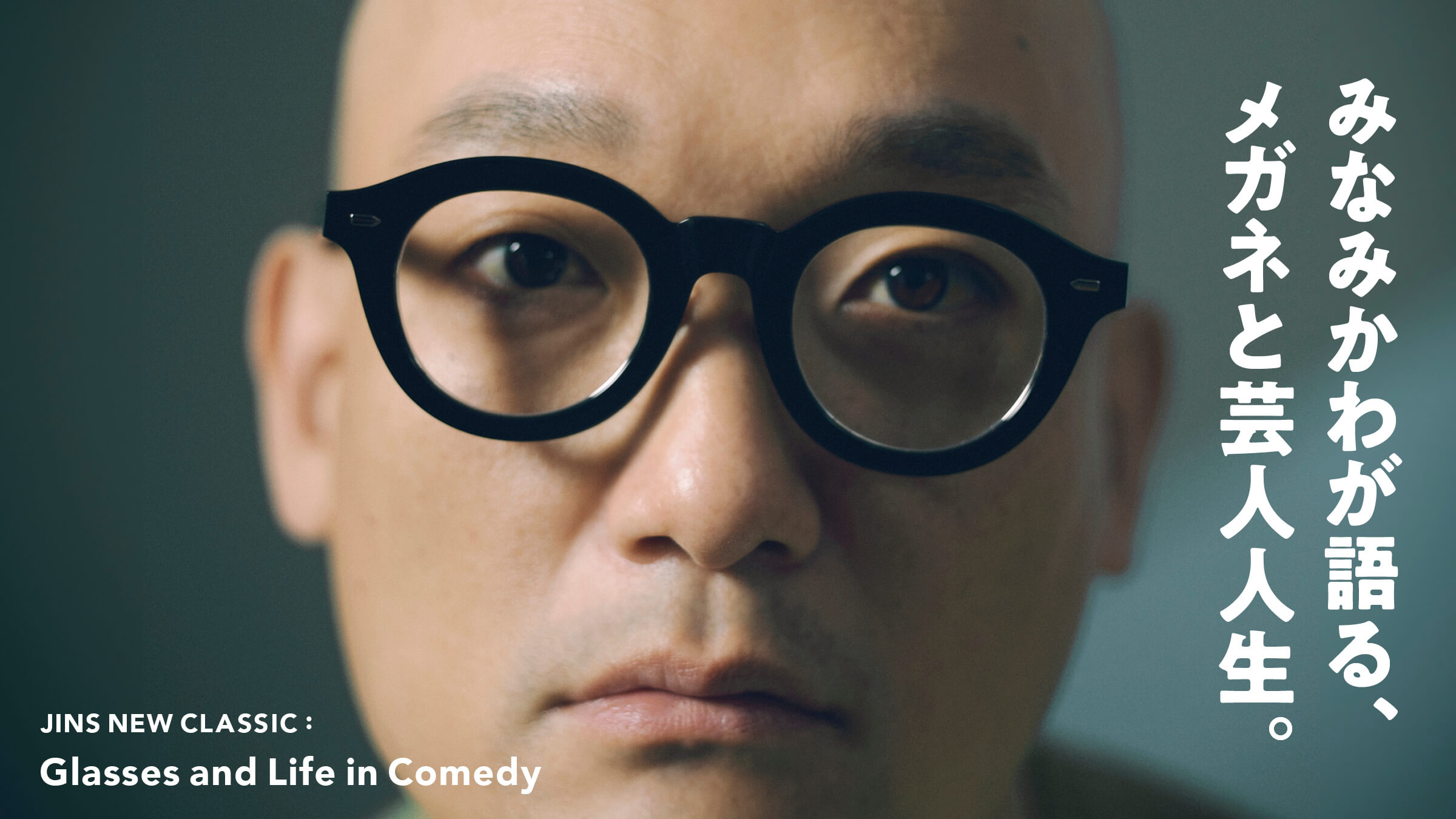
—Please also share your thoughts on these “No. 8” thick-framed glasses you’ve been wearing.
South Kaw: Personally, I’d like to wear these when I’m out and about in my free time. I’d love to wear a straw hat with my family for a summer outing. It takes a bit of courage to choose thick frames like these, but once you put them on, they blend in surprisingly well. They create an artistic vibe, and since even the nose pads are finished in metal, I’m extremely satisfied with them. Having the nose pads made of metal really gives me that feeling of wearing a high-quality pair of glasses.
—These thick-framed glasses are made in Sabae and are a model that showcases the craftsmanship of local artisans.
South Kaw: Sabae is great, isn’t it? I own a few Japanese-made ones myself, and I think the craftsmanship is really delicate. Usually, “Made in Japan” items are much more expensive, so it’s amazing that this one costs less than 30,000 yen.
— Finally, could you tell us what you look for when choosing glasses for everyday use and how you incorporate them into your fashion?
South Kaw: I usually love wearing photochromic lenses that change color in sunlight, since I’m concerned about UV rays and eye strain. Rather than carefully coordinating them with my outfits, my style is to pick a pair intuitively right before heading out—just thinking, “Maybe these today?” as I glance at the glasses lined up by the front door. No matter what I’m wearing, putting on my favorite pair—the one I chose on a whim at the last minute—makes me think, “Okay, my look is set,” and it really ties the whole outfit together. To me, glasses feel like an important switch that gets my day started.