We have confidence in what we've built.
During his past three business trips to Italy, Mr. Kaneko has visited the ancient city of Ferrara, home to the Ferragamo headquarters. He says that “Italian culture is alive and well” in the brand’s craftsmanship. What impressions did he gain from his visit to the headquarters?
—Ferrara is famous as an ancient city with beautiful Renaissance-era streetscapes, but is it also known as a center of craftsmanship?

Kaneko:It seems there are several other brands besides that have workshops here. I’m sure there must be a lot of artisans here.
—So, was the cityscape really that beautiful?
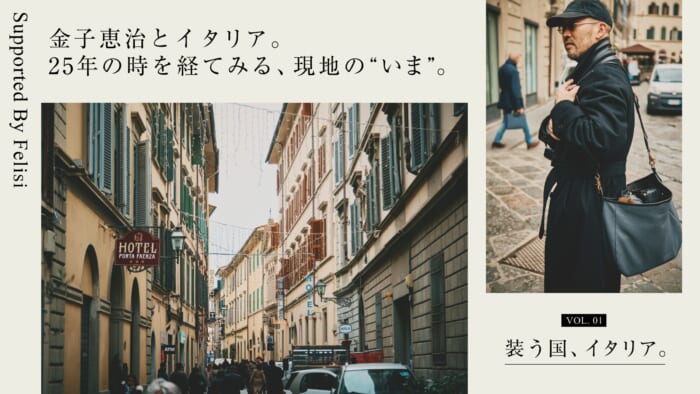
Kaneko:Since the medieval streetscape remains completely intact, it really feels like you’ve stepped back in time. It’s no wonder that the “Ferrarage” series, directed by Mr. Kamoshida, was inspired by the scenery of this town.
—Ms. Kaneko, walking around with her “Ferragamo” bag, really blends right in with the city, doesn’t she?
Ferraresi 25/40/LD+A ¥143,000
Kaneko:It really suits this town, doesn't it? And it looks even cooler set against the backdrop of a Japanese streetscape.
—It looks like it would be easy to use, too.
Kaneko:It fits a 14-inch laptop, and I also like that the strap length is adjustable. You can wear it over your shoulder or across your body.
—The strap adjustment mechanism is functional, but it’s also designed to be visually appealing, isn’t it?
Kaneko:That's right. It's both functional and stylish. That's where the appeal of *Ferragamo* lies. The leather is also of excellent quality—it's soft yet has a substantial feel, and scratches aren't very noticeable. It has a great reputation.
—What was the Ferragamo headquarters like?
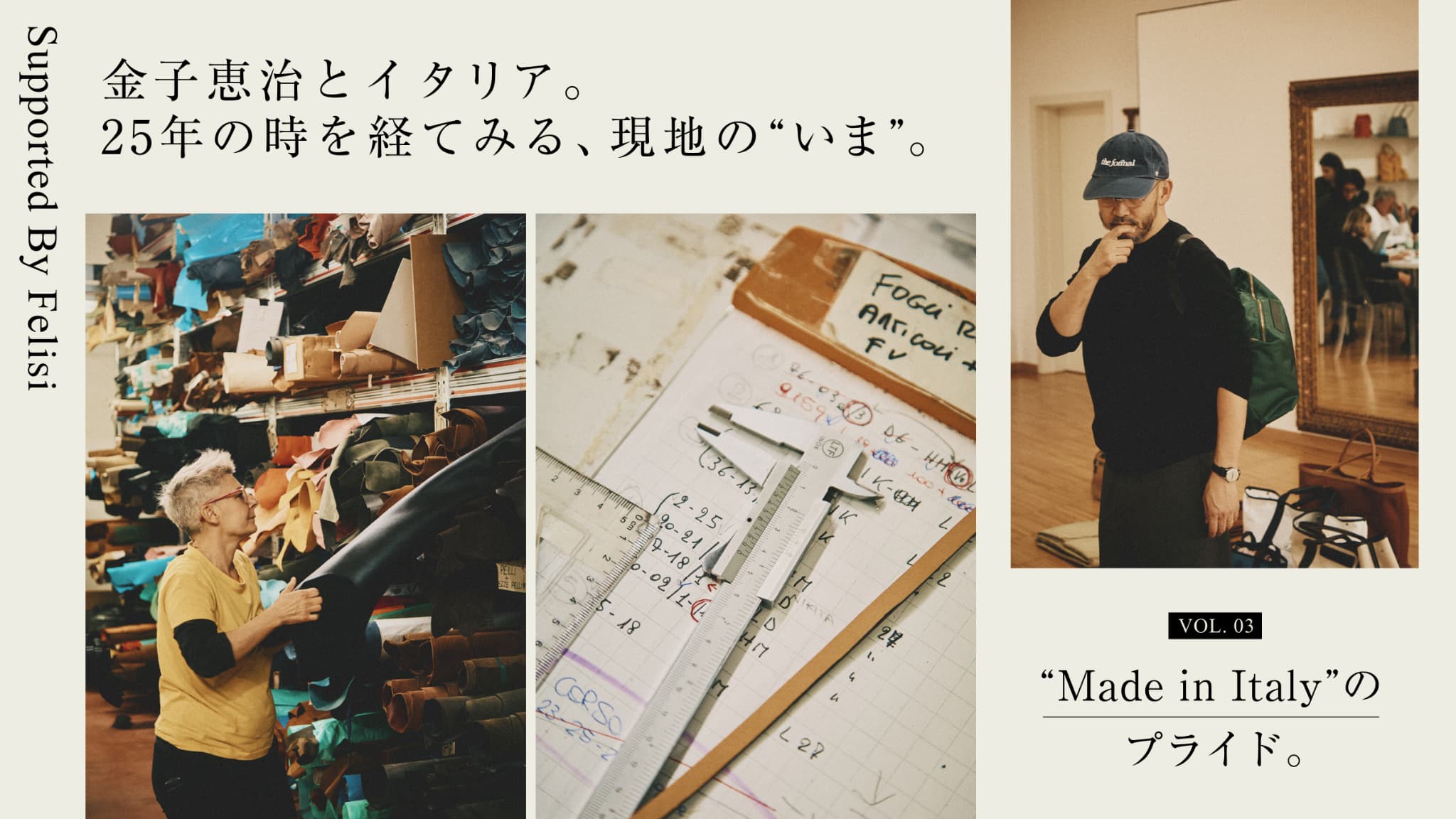
Kaneko:Everyone was working in an office with a clean, modern interior. There’s also a workshop in the back, and a showroom and archive room on the second floor.
—The archive room is truly impressive.
Kaneko:The items gathered here are the cream of the crop from our archives, and if I linger too long, the president actually tells me, “Don’t stare at them so much” (laughs). I think that just shows how much he values the archives.
—Earlier, you mentioned that Ferragamo’s approach to craftsmanship “truly honors tradition,” didn’t you?
Kaneko:Even when creating a new bag, I think they draw on their archives while considering how to adapt them to the present day. I really appreciate how they create their designs while cherishing history in that way. It’s hard to put into words, but it feels like they trust what they’ve created in the past and are using that foundation to create something new.
Kaneko:When it comes to materials, we continue to use the same ones over and over again. Even when we do use new materials, we’re extremely cautious—we carefully select and test them, and we won’t put a product on the market unless we’re fully satisfied with it.
—They take pride in every single design and detail.
Kaneko:That's true. At the same time, the workshop was incredibly well-organized. There was a lot of leather there, but you could tell it was stored properly and handled with care. That really gave me a sense of how this brand operates.
—It’s a sense of trust that comes from something other than the object itself, I guess.
Kaneko:The president is a woman named Annalisa Ferroni. She’s strict in a good way and makes sure everything is done thoroughly. Of course, she values her staff, but she also takes pride in her own work.
—I’ve heard that there are a lot of family-run businesses in Italy. That’s why they value family so much, and I’m sure they have strong relationships of trust with their employees, too.
Kaneko:His niece also works at the company, and that’s the impression I got. She feels it’s important to protect the artisans, so she apparently speaks her mind to the Japanese Ferragamo team, urging them to sell more bags in Japan and let the artisans make even more.
Kaneko:At the same time, he keeps a close eye on internal operations and actively participates in design discussions. Even when defective products are found, he investigates the cause himself rather than leaving it entirely up to the person in charge.
—So you really do keep a close eye on what’s happening on site, don’t you?
Kaneko:That's right—they're incredibly hands-on. That's why their manufacturing process never wavers or loses momentum. They'll flat-out reject any request we make if there's even the slightest flaw, and I can really sense their determination to make the business work by carefully calculating every detail.
—That’s a very simple, sturdy style.
Kaneko:That’s really true. We’re moving forward steadily, one step at a time, and our approach is to create only high-quality, stylish products. I realized we need to convey that mindset as well.