Japan's unique culture of improvement is amazing.

-I know you often go to hard environments, but what are your equipment requirements?
Sato: I try not to separate my travel and everyday clothes so much that I can go abroad in this way. It is important to have a balance between functionality and appearance. I don't want to look too gaudy and gaudy, but I also don't want to look too dirty. Some backpackers think that the dirtier they are, the less likely they are to be attacked, but in reality, they often attract the same kind of people.
Abroad, Japanese people tend to be at the extremes of either being overly dressed up or, conversely, being sloppy, with surprisingly few in between. I want to be normal when I am there, so when I buy something, I always consider whether or not I can use it on my trip.
-What is the only tool you would take with you on a trip?
Sato: What are your seven travel essentials?“ I am often asked, ”What are your seven tools for traveling? I don't want to have special tools that I can't travel without. If I depend on such tools, I will lose my mobility when the time comes. If I were asked to go to Southeast Asia for a week with the camera set I have now and my smartphone, I would probably be able to do so. I want to minimize my essentials as much as possible. I know that sounds a bit like a magazine (laughs).
-Do you have any particular tool that you think is essential for your work?
Sato: I have been using "Leica" for a long time. In big cities like Tokyo or New York, they stand out as luxury items, but when I go to the Middle East, rural Asia, or Africa, the classic design makes them less conspicuous. With a large camera, the person being photographed has to be prepared, and the risk of theft goes up, but the Leica is small, and the person being photographed can relax and say, "I'm sure they didn't take much of anything. It's a tool that really suits my style.
-Do you find any advantages of Japanese products when you are shooting overseas?
Sato: I feel it so much. Japanese people “improve.” They are always "improving" their cars. For example, in Russia, a 60-year-old car "Lada" is still running with the same specifications, and when it breaks down, they just fix it, but basically don't update it. Classic American shoes are still made the same way they were in the past, and bagels in New York City have hardly changed at all.
If you go to a 100-yen shop, you will see a line of scissors that have been improved little by little. I think this kind of “culture of making things better by making small changes” is unique to Japan. I think this is unique to Japan. For better or worse.
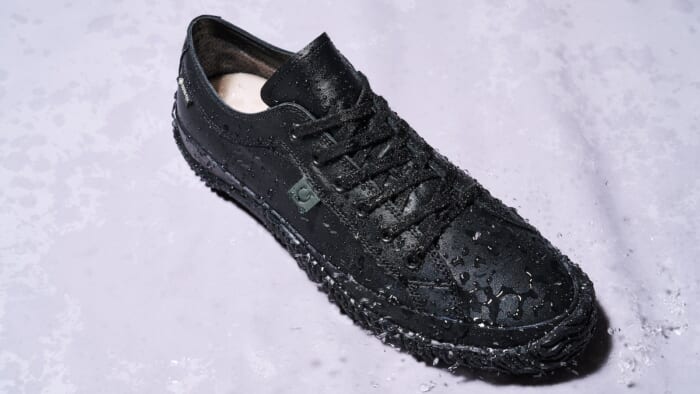
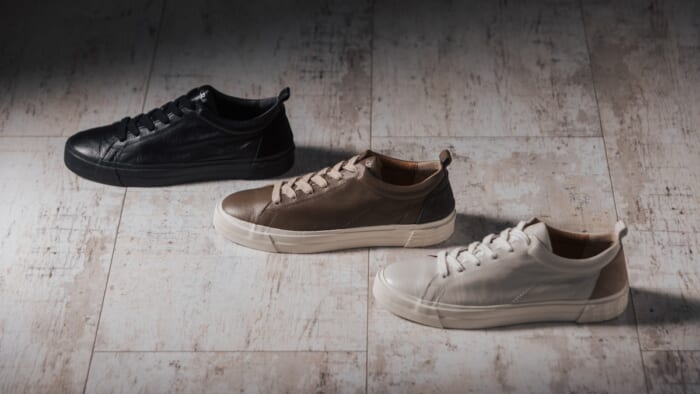
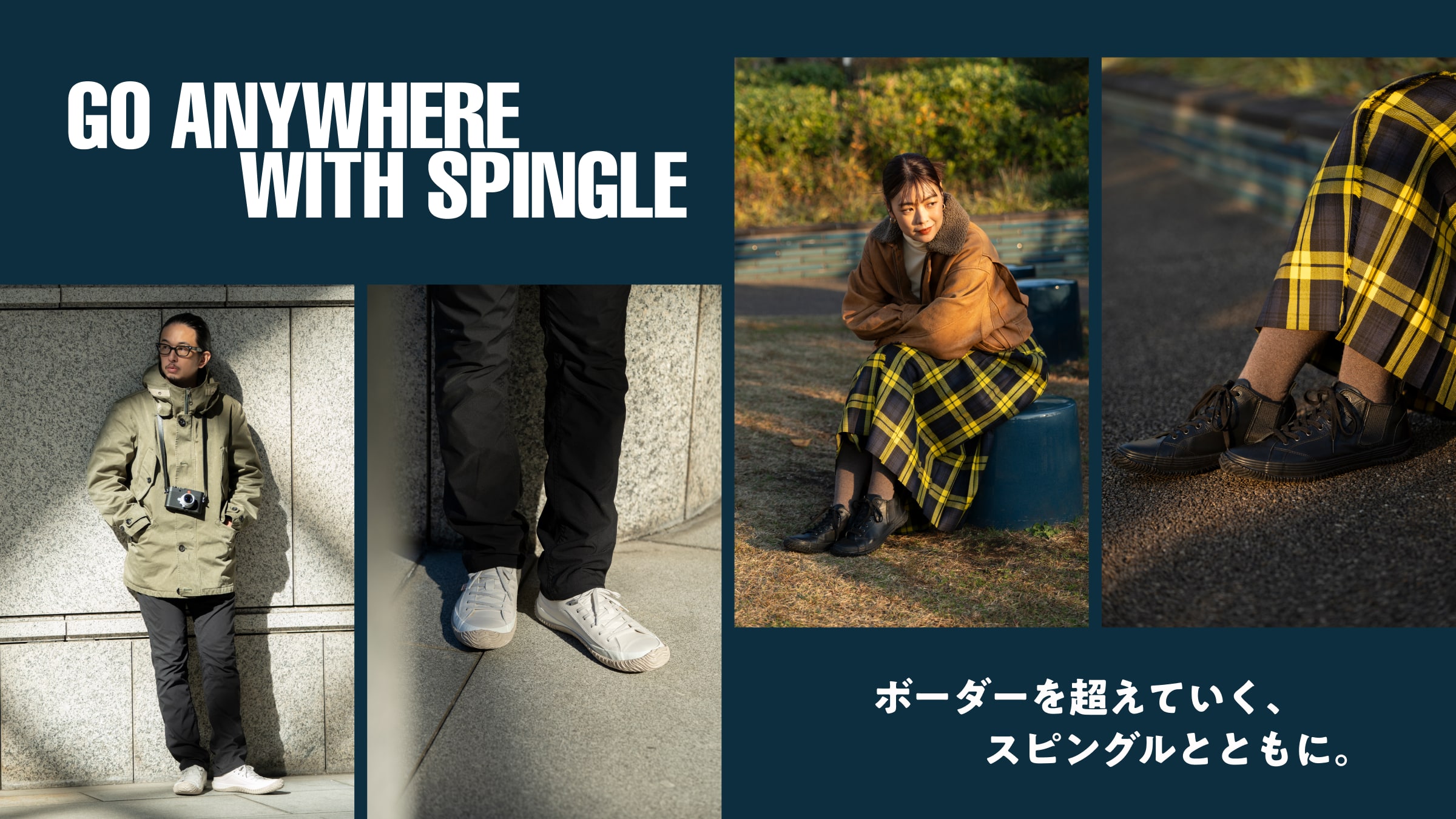
-The “SP-110” model is a pair of kangaroo leather uppers on a basic foundation of old gym soles.
Sato: Japan has many excellent basics to begin with, but I think that too much improvement often results in something that is not well understood. In that sense, I feel that these shoes are made with a Japanese sensibility that is well utilized, with just a few slight changes made while keeping the classic shape.
There are two types of things that should be changed and two types of things that do not need to be changed. However, when business is the only priority, the goal is to change and differentiate the product. As a result, users end up with a lot of features that they don't really need. As I mentioned earlier, I like the Leica camera, but the shape of that camera has not changed much in 70 years. It is a famous story that Steve Jobs, when creating the “iPhone,” was conscious of a universal design like the Leica.
-I wonder if you also tend to take photographs of things that have remained in their original form. I think that is exactly the case with Japanese festivals.
Sato: “Rather than sticking to the ”classics“ or the ”originals“ themselves, I'm more attracted to the ”exceptions." I'm more attracted to the "exceptions. There are many unusual festivals around Japan that would normally disappear, but for some reason have remained as exceptions.
-Why has it survived there alone? Is there a sense in which you are approaching the mystery from an ethnographic point of view?
Sato: That's right. For example, at a festival called “Boze” in the Kagoshima/Tokara Islands, people cover their entire bodies with grass and wear huge masks, and it looks remarkably similar to the festivals around Papua New Guinea. When you see it in Papua New Guinea, it looks like an “exotic ritual.” but when you put it side by side with the Japanese "Boze," you can actually see a ground connection. What at first appears to be just an "exception" But the gradation between the two and the distance between the two and myself suddenly come to the fore. I really enjoy that feeling.