PROFILE

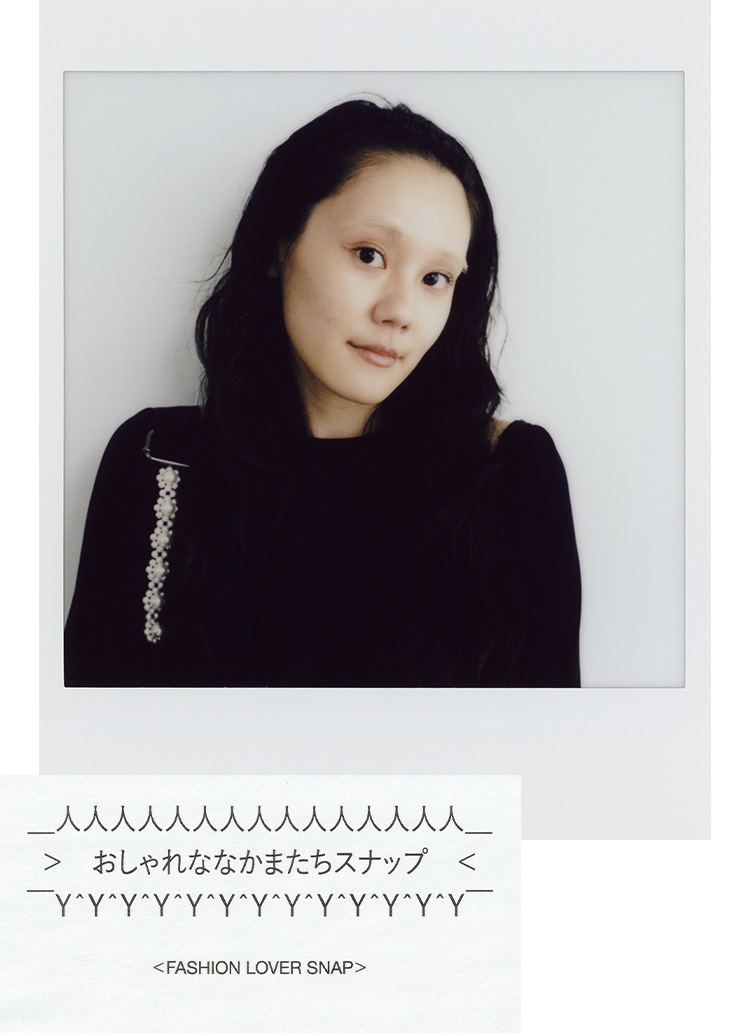
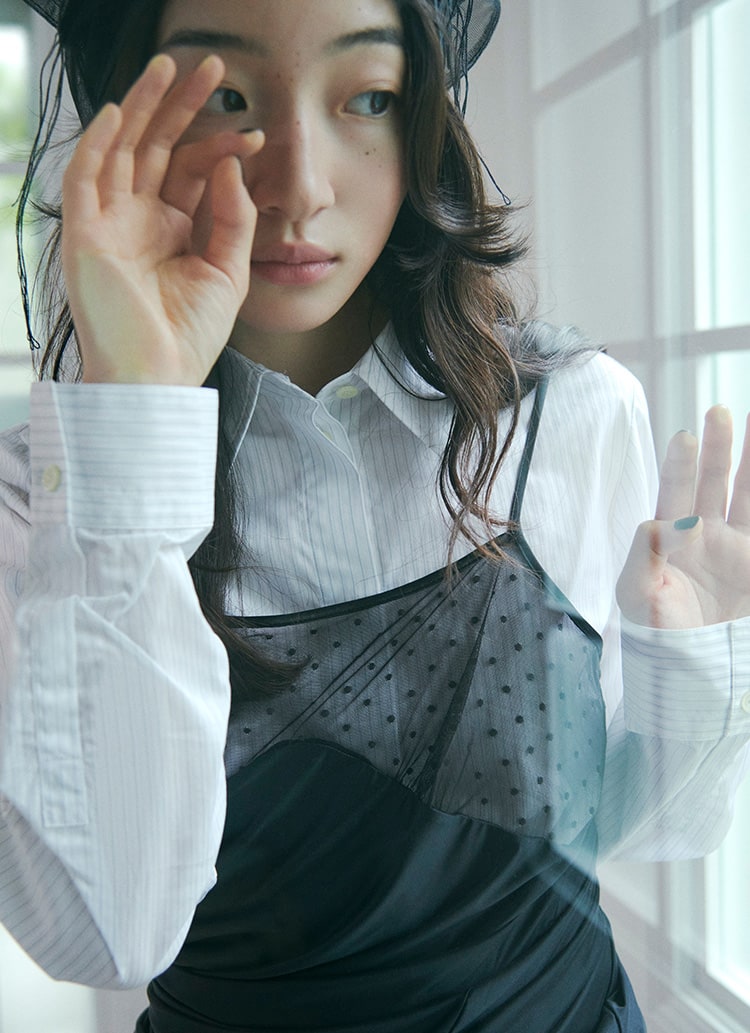
In 2014, she joined Maiden Company, which operates “Maidens Shop.” After working as a buyer’s assistant and store manager, she is currently responsible for the overall management of all stores and serves as a buyer.
PROFILE
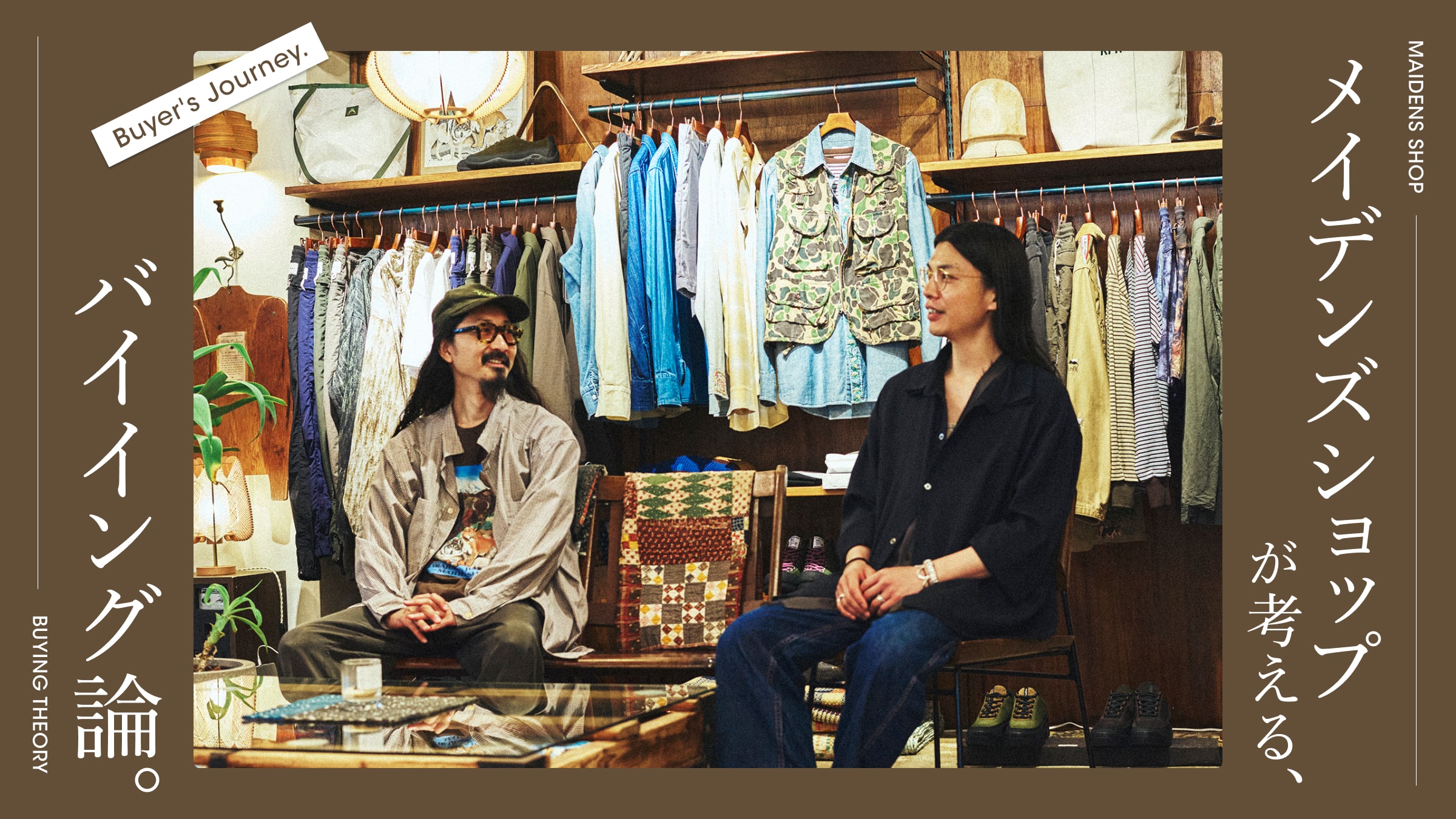
In 2015, he worked part-time at “Maidens Shop” while still a student, and joined the company as a full-time employee the following year. After working in sales, he is currently the store director of the Harajuku branch and a buyer for the men’s division.
Toward a new community space.
—It’s been about three months (at the time of this interview) since the new “Maidens Shop” location opened in Jimbocho. Looking back on the experience so far, what are your thoughts?
Makino: Since we were opening in Jimbocho, I was honestly a bit anxious—there were so many unknowns about how well the fashion industry would be accepted in this neighborhood. But despite my worries, so many people came to visit the store, and we were able to get off to a great start.
—Is the customer base different from that of the Harajuku store?
Makino: That's right. I feel like the age range here (at the Jimbocho store) is really wide. We have students, and we also have customers who are over 60.
Tanaka: I get the impression that people come to the Harajuku store from all over to shop for fashion, but at the Jimbocho store, it seems like the customers are mostly people who live in the neighborhood.
—It sounds like you’ve had some unexpected encounters and consultations recently, too.
Makino: A lecturer from a certain university really liked our Jimbocho location. He asked, “Would it be okay if I brought my students here to hold a class?” Since that kind of thing almost never happens at our Harajuku location, I thought it was interesting. It’s nice to get requests like that.
—Was that (building connections with the local community) the reason you opened a store in Jimbocho?
Makino: Actually, that's not really the case. It wasn't so much the location as the fact that I fell in love with this building at first sight.
—So that’s the story behind your unexpected choice of Jimbocho as a location.
Makino: Just as we were closing our “well-made by MAIDENS SHOP” store in Tokyo Midtown Hibiya, we started talking about how we’d like to open a street-level store somewhere, so we were looking for a location.
We’d been discussing whether Shibuya, Setagaya, or Meguro—or somewhere like that—might be a good fit, considering operations and coordination with our existing Harajuku store, but then I happened to come across this property on social media. Although it’s quite a distance from the Harajuku store, I had an immediate gut feeling that, given its exterior and interior, we could create something really interesting here.
Tanaka: It seems this building used to be a printing company, and the interior had that classic “The Office” vibe. But with its L-shaped windows and atmospheric staircase, I could really sense its potential.
—So you’re saying you stripped everything off the ceiling and floor, right?
Makino: That's right. Based on my experience building several stores in the past, I was convinced that “breaking things down would make it look cool.” From there, I had numerous discussions with the contractor who always handles our interior work, and we worked together to bring it to its current state.
Tanaka: Since we signed the lease for the property last September, the construction period will be about half a year.
—Could you tell us about the interior design theme and any particular details you focused on?
Makino: Since this is a unisex store, we paid special attention to the design of the first floor, which serves as the entrance. We wanted to create a warm, inviting atmosphere so that customers would feel comfortable coming in.
Makino: The Harajuku store is designed to evoke the architecture of Frank Lloyd Wright (the American architect). So, the Jimbocho store follows that same design philosophy. For example, the stone tiles used on the first-floor floor are sourced from the same region as the Pennsylvania stone used in Frank Lloyd Wright’s masterpiece, Fallingwater.
—You can really sense the extraordinary attention to detail in the furnishings.
Makino: As for the fixtures, we had some steel racks custom-made to fit the space and suspended them from the ceiling, but that’s about all we made ourselves; the rest is basically vintage items we’ve found all over the world.
Basement Level 1
2F
3F
Makino: The styles are all over the place—there are pieces from the U.S., others from Scandinavia, and even some vintage Japanese furniture. By deliberately mixing these elements, we designed the interior to ensure that no single floor has a distinct “XX-style” feel.
—There was a coffee stand on the first floor, but this is the first time “Maidens Shop” has tried something like this, right?
Tanaka: That's right—we've had the good fortune to partner with "CROWD ROASTER," based in Jimbocho. They roast all of our coffee using their own original blends.
Makino: Sometimes neighbors stop by just to have a cup of coffee. I think it’s wonderful that a community has formed in this way.
—Had you been thinking about adding a coffee stand for a long time?
Makino: Last year and the year before, I had the opportunity to hold pop-up events at a store called “Colbo” in New York, and I think the scenes I saw there may have had a strong influence on me.
Tanaka: "Corbo" was actually a clothing store that served coffee, and every morning the same people would come in, drink their coffee, have a pleasant chat with the staff, and then head home. The next day, and the day after that, too. Then, on the fourth day, they’d suddenly buy some clothes and head home. That’s when I realized how wonderful it is when a clothing store isn’t just about buying and selling clothes, but serves as an extension of everyday communication.
—As a new community hub in Jimbocho, I’m looking forward to seeing how it grows in the future.
Makino: I’d be happy if we could become the kind of store where customers feel comfortable just popping in.