A cool, eco-friendly material.
After leaving the fields, Mr. Watanabe arrived at Karuizawa Station. The sky was overcast that day, and just as it looked like the weather was about to take a turn for the worse, fog rolled in. Karuizawa is known for its frequent fog—so much so that it’s said to be “shrouded in fog 100 days a year”—but thanks to this, the climate remains cool, and the high humidity allows plants and crops to thrive. However, even Karuizawa recorded a record number of summer days last year when temperatures exceeded 25°C. As mentioned earlier, the reality is that the area’s former coolness is gradually being lost.

"When I go to Tokyo for a photo shoot, I really feel how muggy it is there. It gets hot in Karuizawa, too, but it’s definitely more comfortable here. Well, I figure summer is supposed to be hot, and if I break a sweat, I can just take a shower. Since extreme heat isn’t something you can easily fix, I try to take it easy—for example, if I’m working in the fields, I avoid the hottest part of the day."
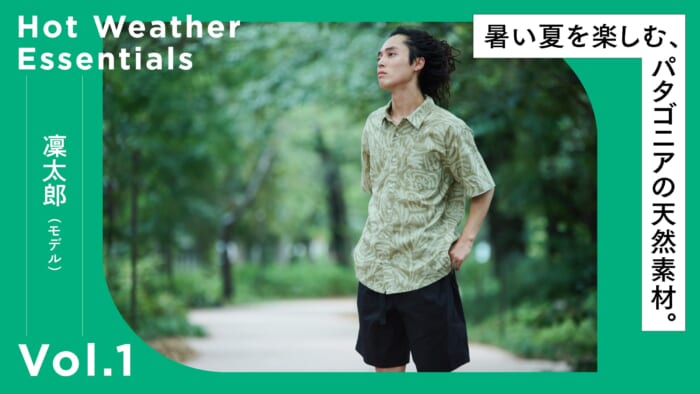
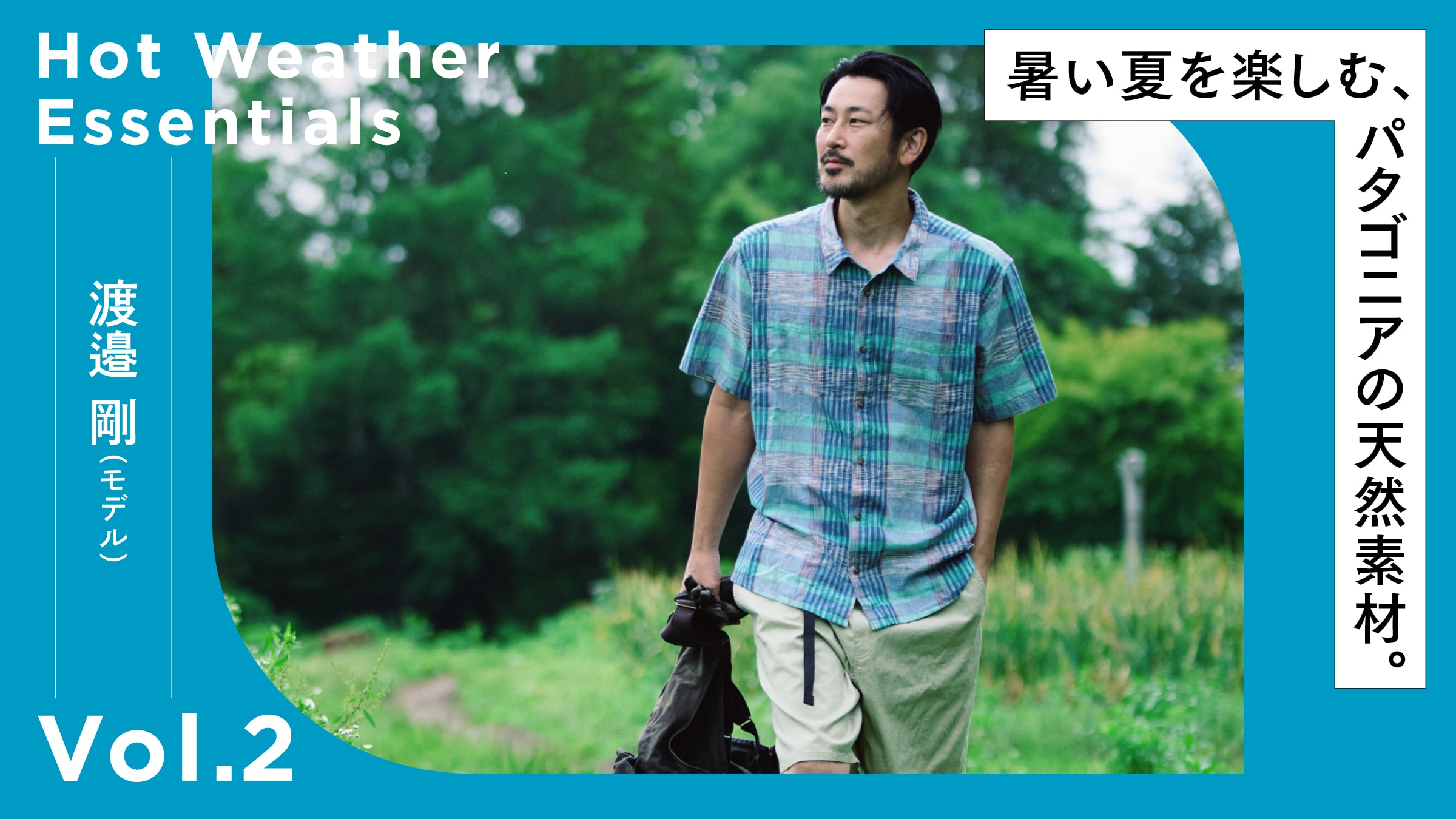
There are various ways to beat the heat, but the easiest thing you can do in your daily life is to rethink what you wear. The Patagonia “Men’s Back Step Shirt” that Mr. Watanabe is wearing is made from 55% hemp and 45% organic cotton, making it highly breathable, cool, and comfortable. The “Men’s Lightweight All-Weather Gi Shorts 9-inch” also use organic cotton and hemp, offering a refreshing feel. A small amount of polyurethane is blended into the fabric, providing stretch and allowing for easy movement. And even though both the shirt and shorts are made with hemp, they resist wrinkles after washing and are easy to care for. Thanks to the functionality of these natural materials, they help alleviate the muggy heat while remaining comfortable enough for everyday wear.
"Both the shirt and the shorts are incredibly breathable and feel great against the skin. I think I’ll be able to wear them comfortably even when the height of summer arrives. I love hemp because it feels like it molds to my body the more I wear it. I also really like that the fabric is sturdy and will last a long time—that’s one of my criteria for choosing clothes. The blue check pattern has a refreshing feel to it, too, so I think it’s perfect for summer."
Hemp is a natural material that is easy to cultivate with minimal environmental impact; it grows quickly with little water or fertilizer, and its deep roots replenish essential nutrients in the soil. In addition to using materials that cause minimal damage to the global environment, supports the Regenerative Organic Certification program, which goes a step beyond organic farming. This international certification system aims to restore farmland soil to a healthy state, revitalize ecosystems, and protect the working conditions of farmworkers. Mr. Watanabe, who places great importance on the health of farmland soil, shares this commitment to low-impact materials and resonates with Patagonia’s philosophy.
“From its breathability and comfortable feel against the skin all the way to its cultivation, I have nothing but positive impressions of hemp. I rarely wear synthetic fabrics in my daily life; I choose only natural materials. ”Kawamata Silk,” which I’m currently involved in promoting, is also a natural material. While silk and hemp differ in that one is animal-derived and the other is plant-derived, I believe both are sustainable materials for both people and nature.”
Left: “Men’s Lightweight All-Weather Gi Shorts, 9 inches” ¥ 14,850; Right: “Men’s Back Step Shirt” ¥ 12,100
The "Men's Back Step Shirt" features action pleats on the back, allowing for easy movement of the shoulders and arms. Incidentally, this colorway is called "Bouquet: Dolomite Blue." The design features a common floral pattern, and the color name is derived from the Dolomites, a mountainous region in northeastern Italy.
The logo is discreetly placed on the inside of the placket.
The “Men’s Lightweight All-Weather Gi Shorts 9-inch” feature a logo above the right back pocket. The understated design makes them easy to wear every day.
What Ms. Watanabe has been doing even longer than her modeling career is roasting her own coffee. She carefully roasts pesticide-free green beans using a hand-cranked roaster. Continuing from last year, this year she also she set up a booth as “Watanabe Coffee” at the “Patagonia Karuizawa” event, selling coffee and vegetables she grew herself. “Patagonia Karuizawa” hosts events in partnership with farmers, such as a market selling organic vegetables, which aligns with Ms. Watanabe’s values.
“Since attracts people with a keen sense of awareness, I think it’s easier for them to pick up organic vegetables at a fair price. There aren’t many stores that specialize in organic products, but people feel comfortable walking into a store. I really resonate with ’s commitment to the environment and its philosophy of wearing clothing for a long time. 〈Patagonia〉’s approach to manufacturing resonates deeply with my own farming philosophy, which centers on cherishing the cycles of nature. “I didn’t start farming because I wanted to do something good for the environment, but as I’ve lived a natural lifestyle, I’ve come to see how farming, coffee, and sericulture are all interconnected—and as a result, I’ve naturally become more environmentally conscious. I feel that this sentiment grows stronger with each passing year.”
Wearing clothing made from hemp and organic cotton can also contribute to environmental conservation, starting with soil health. Rather than simply consuming, taking a moment to reflect on the story behind each garment will surely enrich your fashion style. Above all, Patagonia’s collection made from natural materials offers excellent functionality and features designs that blend seamlessly into city life. Be sure to check out this collection to stay comfortable this summer.
- 1
- 2