In the 1990s, the term "vintage" was used to describe vintage clothing that did not meet the definition of "antique," but still had value, as opposed to "antique" clothing that was 100 years old. Nowadays, there is a movement to find new value in "new vintage," even in old clothes from the 1980s onward, which used to be called "regular" vintage clothes. In this project, four vintage clothing stores with different styles propose new ways to enjoy vintage clothing. Each of them will talk about the charm of vintage clothing with their own sense of style.
Thankfully, this series is now entering its 19th season! For the 146th installment, featuring an entirely new lineup of shops, we’re visiting “Greenport,” located right in front of Wakabayashi Station in Setagaya Ward. What kind of new vintage finds will the owner, Mr. Nagamine, introduce to us!?
Text_Tommy
Edit_Yosuke Ishii
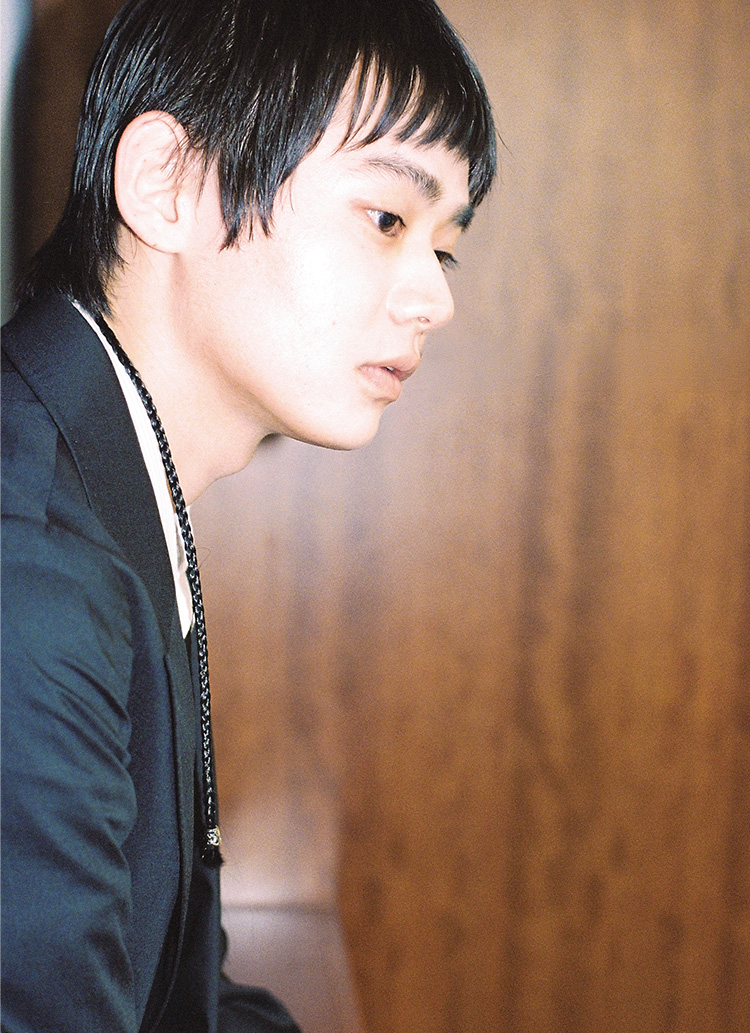
Hiroya Nagamine / Owner of Greenport
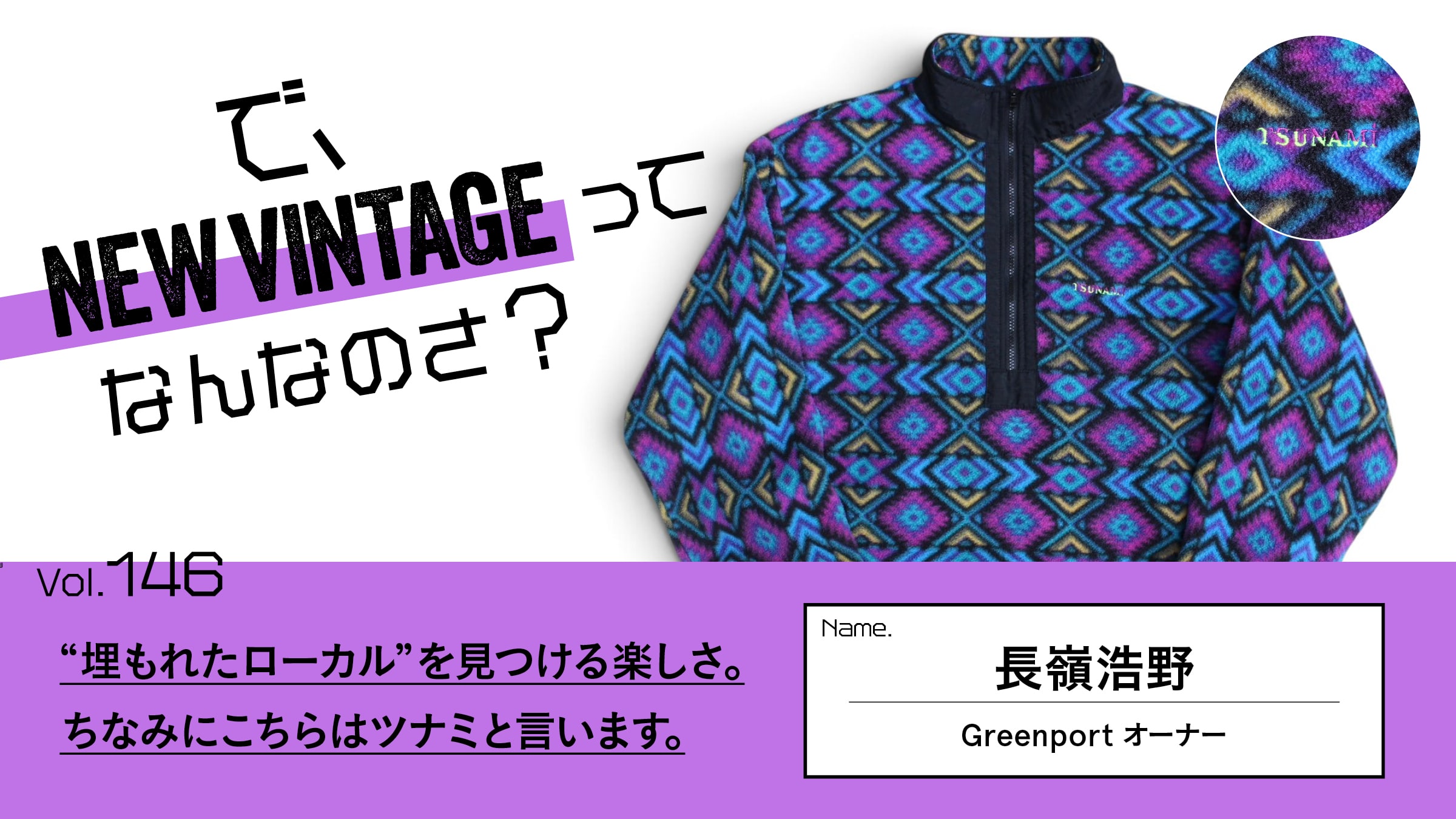
Vol. 146_Tsunami's Fleece Pullover Jacket
—The theme of this series is “finding good regulars now that will be remembered and go down in history like true vintage items.” First, let me ask you this: What kind of shop is “Greenport”?
I focus mainly on American outdoor gear—which I love—while mixing in elements like American traditional style depending on my mood at the time, along with a few fun and pop-inspired goods. I curate these items so they blend harmoniously into a single space. I source most of my items from the U.S. Since I grew up shopping at old-school vintage stores that specialized in American vintage clothing, I make a point of selling my items at fair prices whenever possible.
—So, what does “Green Port” mean by “New Vintage”?
Hmm… I wonder why that is? (laughs). Speaking for myself—or rather, for the shop—the moments that really get me excited about selling vintage clothes are when I make a “new discovery.” So, of course, I’m interested in the design, but I’m also really fascinated by the story behind it. Like, “I thought I’d seen this design somewhere before, so I looked it up—and turns out it’s a brand started by a designer who used to work for that other brand! That’s why this piece looks so similar!” Items that lead to discoveries like that really stand out to me.
In today’s world, where virtually every item has already been unearthed, there’s still room for customers to do their own research and enjoy the thrill of discovering something new. I wonder if those kinds of items are what we call “new vintage.”
—I heard you source items from the U.S. Do you often come across items like that?
Partly because I approach each buying trip with the mindset of “I’m definitely going to find something new!”, I always end up discovering something new. Since Americans tend to have a strong love for local products, local dealers really push local brands and items, and I keep coming across things that make me think, “What is this?”
—I see. So, could you tell us about the new vintage you’re introducing this time?
As some of you may already know, we’ve stocked two fleece pullover jackets from the brand “TSUNAMI.” It appears to be a Canadian brand that originated in the 1980s, but its active period was short-lived, and it seems the brand itself disappeared by the 1990s. I picked these up after the owner of a local outdoor shop told me about them while I was sourcing merchandise.

—This is the first time I’ve heard of this brand. Is it related to the Japanese word for “tsunami” in any way?
But when I looked it up, I couldn’t find any information at all… I’m guessing they used it simply because Japanese was trendy overseas at the time. I don’t think there’s much meaning behind it. That’s because the only items this brand carries are fleece, so it doesn’t seem to have anything to do with surfing or anything like that. In that sense,〈BLACK MOUNTAIN〉, which has appeared in this series beforeIt’s kind of a vibe similar to [something], I guess.
—That’s right. While that brand is famous for its simple, animal-inspired, painterly graphics, the designs here are a bit more subdued—or perhaps abstract.
When I looked into 〈Tsunami〉, I found that they actually have quite a few patterned items, but overall, the color palette does give off a subdued impression. That said, just like with 〈Black Mountain〉, since they’re a brand that specializes in fleece, I think the variety is virtually endless. It just comes down to whether you can find that one piece that makes you think, “This is it!” So, with that in mind, here’s the first one.
Tsunami Fleece Pullover Jacket ¥10,450 (Green Port)
—That's really understated.
This is one of the early Canadian-made pieces… though, to be honest, the brand was only active for a short time, and there are really only two versions: one made in Canada and one made in the U.S. (wry smile). It’s a pullover, but the collar is a mock neck stand-up collar with a drawstring. Both the sleeves and hem are gathered, and combined with the subdued, mixed-color palette, it gives off a very classic vibe. However, perhaps because it’s made in Canada, the fabric itself feels dense and warm. You can actually find this tag fairly often.
—It’s interesting how early editions are easier to find. They say, “No matter what the item is, its popularity tends to decline toward the end of its production run, so both the number produced and the number available on the market drop sharply, making it more likely to become rare.”
I wonder what this is (lol). The logo is subtly placed on the left chest, but it’s so understated that you wouldn’t notice it at first glance. The other one, on the other hand, is quite flashy. This one features a half-zip pullover design with cuffs that taper at the ends. The embroidered logo on the chest and the back tag are both two-tone, and the pattern and color scheme are really lovely, aren’t they? If this were a Patagonia piece, the price for such a bold all-over print would likely be sky-high, but with this one, there’s absolutely no need to worry about that.
Tsunami Fleece Pullover Jacket ¥12,100 (Green Port)
—So this one is newer than the Canadian-made one we saw earlier, right?
That’s right. The “PARK CITY UTAH” printed on the tag refers to “Park City,” a mountain resort town located in Summit County, Utah, in the United States. Since the design isn’t particularly elaborate, it was likely intended as a souvenir for skiers visiting the area.
—By the way, are there actually any “Tsunami” collectors out there?
What do you think? I don’t think these exist yet, so I’m hoping that if this sparks some interest, it might lead to even more new discoveries. At large chain stores—as opposed to independent shops—these items tend to get buried in the regular lineup. But when I looked into them, I found they’re made in Canada or the U.S., and there are some really interesting patterns out there. I myself hadn’t paid any attention to them at all during my previous job at a wholesale company—in fact, I probably would have just overlooked them—but now that I’ve rediscovered how interesting they are, I really hope you’ll all give them a look.
Hiroya Nagamine / Owner of Greenport
He began his career at a certain select shop. He then joined a vintage clothing wholesaler. He was immediately assigned to the company’s warehouse in the U.S., where he spent about five years literally surrounded by vintage clothing. In the spring of 2025, I opened my own shop, “Greenport,” right near Wakabayashi Station on the Setagaya Line. I source my merchandise primarily from the U.S. The collection centers on outdoor wear, incorporating Ivy League and preppy elements, along with a few fun and pop-style accessories. My curation—where all these items blend seamlessly into a single cohesive space—has garnered a loyal following.
Instagram:@greenport_store