PITTI's style is effortless. That's why it's easy to understand.
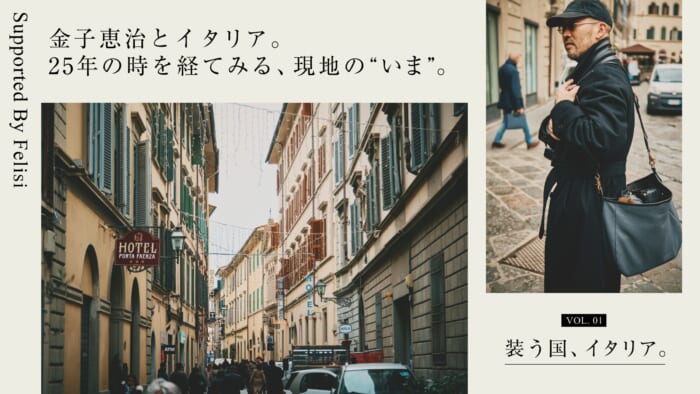
At the PITTI venue, Kaneko says, “I just took tons of photos.” As a fashion director, what kinds of styles did she capture? There must be hints hidden there for thinking about future fashion trends.
—Was there anyone at PITTI who caught your eye, Mr. Kaneko, or any particular outfits that stood out to you?
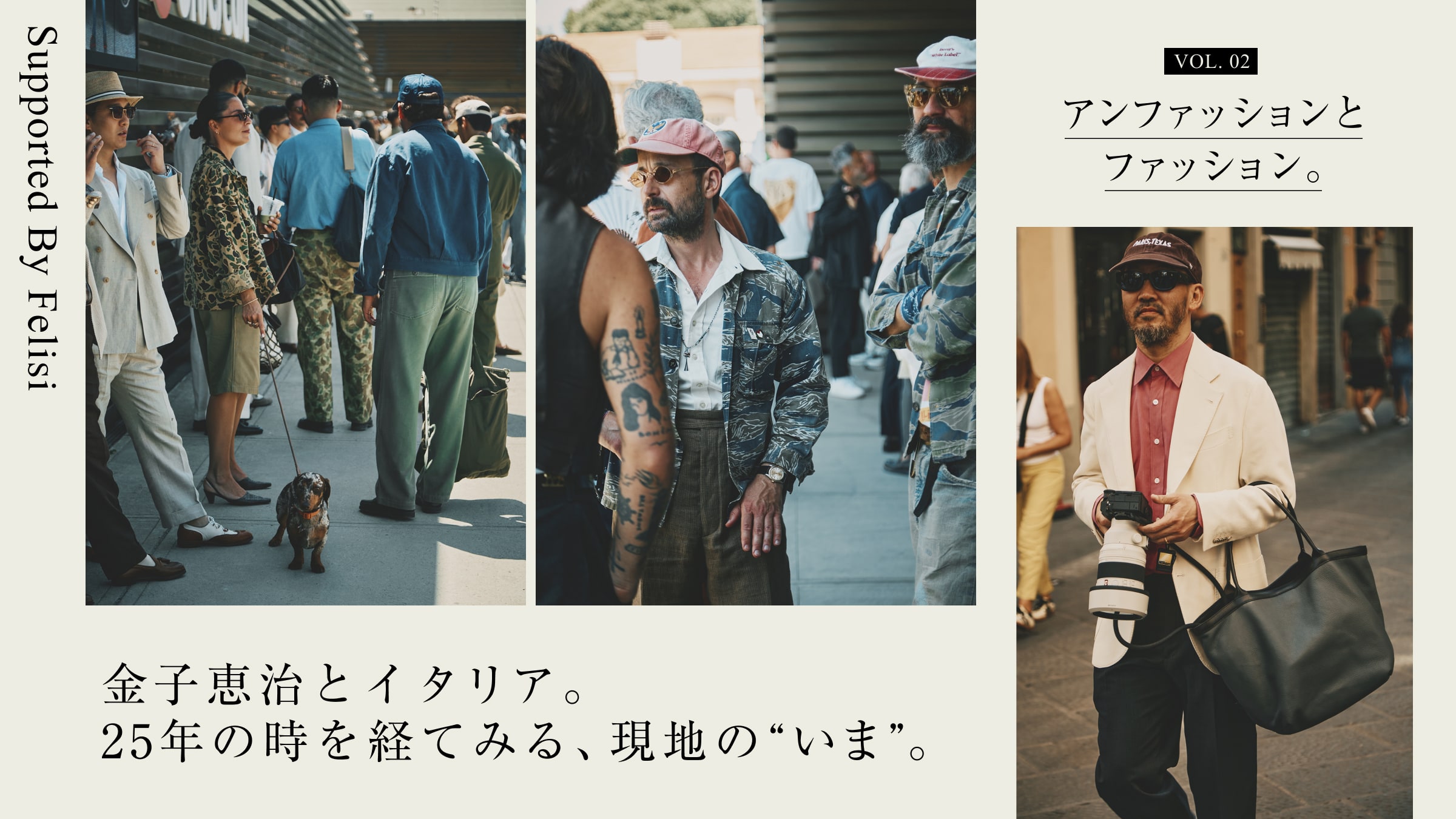
Kaneko:There were all kinds of people at the venue, but before I knew it, I found myself framing only the more understated ones in my viewfinder. There were some people dressed really stylishly, but to me, they were a bit too flashy. I was more drawn to the people who were more ordinary, yet clearly put thought into their appearance. While the famous photographers were, as expected, snapping photos in search of novelty and flashiness, I was interested in the people who had that authentic, down-to-earth style.
—I sense a perspective that’s very typical of Mr. Kaneko there. Looking at the photos, it seemed to me that there were a lot of people who, while dressing in a traditional style, managed to pull it off with a twist.
Kaneko:That's right. While many of their outfits follow classic styles, there are plenty of people whose unique personalities really shine through. However, the way they put their own spin on things is completely different from how we do it here in Japan.
—What's the difference?
Kaneko:I get the feeling that Japanese men's fashion is all about acquiring a lot of knowledge and enjoying how to style outfits within that context. But the people at PITTI have a much more laid-back approach. That's why it's so clear and easy to understand.
—I see. So, “whether it looks cool as fashion” is more important than the story behind the outfit.
Kaneko:That's right. The mindset is simple—or rather, it's more intuitive, or maybe just unapologetic. Even when pairing slacks with sneakers, it's just that—there's absolutely no pretentiousness or deep meaning behind it.

—When I think back to men’s fashion in Japan, it seems to me that “American casual” was introduced, and Japan developed its own unique set of rules for enjoying that style.
Kaneko:In Japan, there are so many set styles, like “a white T-shirt and jeans.” But at PITTI, while there are plenty of people dressed head-to-toe in American traditional style, the vibe is much more laid-back, and I really like that sense of freedom. I hope that simple mindset—“I’m wearing this because I want to”—becomes more widespread.
—Was there a specific style that caught your eye?
Kaneko:I’ve been posting photos on Instagram, and this post got the most reactions.
—It’s a simple look—white pants and loafers—but there’s something about the casual vibe that’s actually pretty cool.
Kaneko:A lot of people were wearing slip-on-style shoes this summer. They’re incredibly attuned to the seasons. If it were me a little while ago, I might have even suggested wearing boots in the summer (lol).
—Even when I'm wearing long sleeves, I can feel the coolness at my feet.
Kaneko:Since summers are short in Europe, I get the sense that people want to enjoy them to the fullest. I guess that’s reflected in their fashion, too.
—Since Japanese summers are so humid, we tend to err on the side of comfort, don’t we?
Kaneko:There are so many functional fabrics out there, aren’t there? It’s true that you don’t really see them much in Europe. I suppose they’re around in a sports context, of course. For example, in Florence, I saw a lot of people enjoying fashion by wearing linen shirts and other summery fabrics.
—Linen is a natural, functional fabric, isn't it?
Kaneko: I often hear people say, “Linen requires special care.” It’s true that it does require more care than cotton and other fabrics, but if you prioritize convenience above all else, I feel that its appeal as a style inevitably fades.
Going back to the basics, I’m realizing once again that the functionality and texture of natural fibers are really important elements of style.