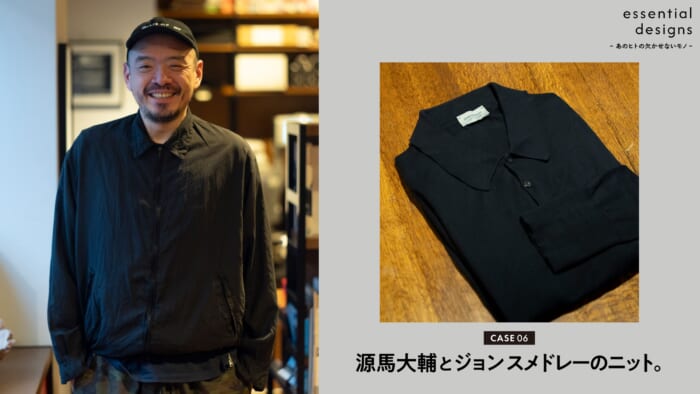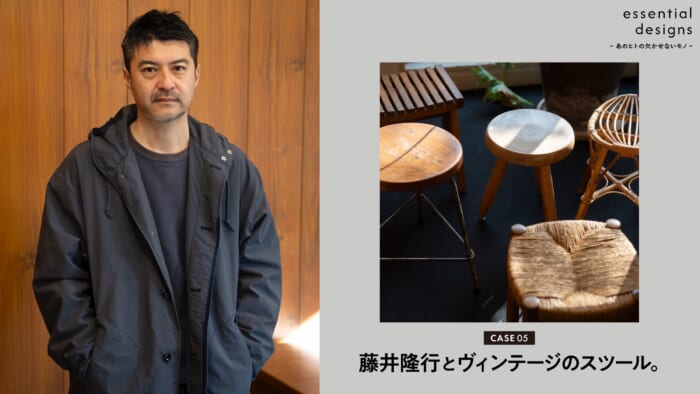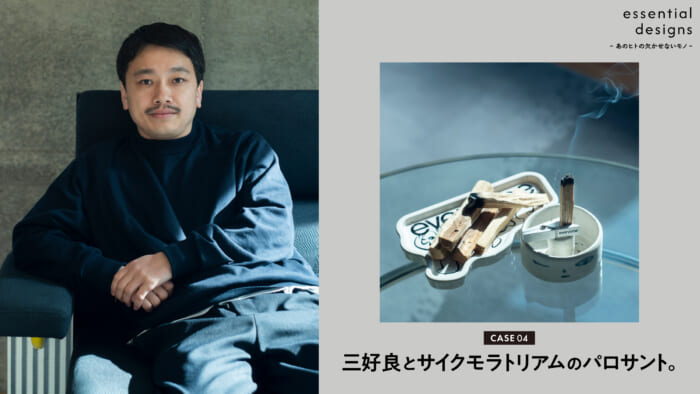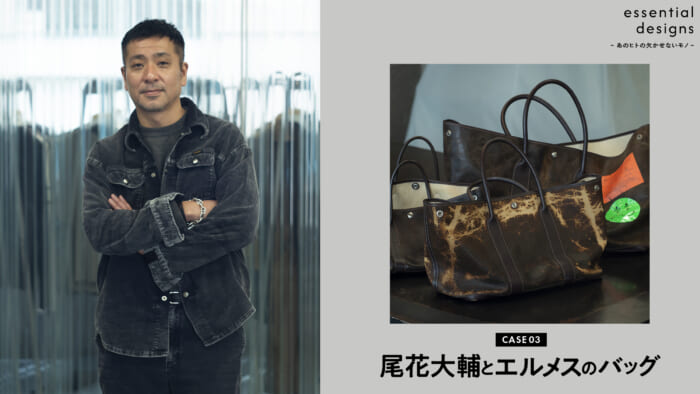
“Traditional” means "something you can love for a lifetime."
—And that’s how this German trainer came to be.
Kojima: I love leather shoes and wear them often, but I wanted a pair I could take on trips and walk long distances in without worrying—just like sneakers. On top of that, I wanted a shoe that would look good with pants—that was one of the reasons I created these shoes. For example, when I go on business trips to Europe, it rains frequently there, doesn’t it? But changing my footwear to suit the weather just isn’t my style. I was grappling with these kinds of dilemmas, so I thought, “Well, why not try refining the aspects I’m not satisfied with in my own way?” This project, which I’d been nurturing for some time, is the result.

—The key point is that the upper has no lining.
Kojima: I’ve always really liked unlined shoes. and the penny loafers—which the company used to manufacture—are well-known, and brands like also make them. 〈Brooks Brothers〉—which the company used to manufacture—are well known, and brands like 〈John Lobb〉 also make them. Since they lack a lining, the silhouette appears narrower, and above all, they’re popular among fans in the shoe industry for their exceptional comfort. That’s exactly what I love about them.
—They incorporated the specifications that Mr. Kojima preferred.
Kojima: By leaving them unlined, we’ve achieved a silhouette that’s even narrower than Repro’s original design, making them easy to slip on and off—a true win-win. Some people even seem to wear them like slippers by stepping on the heels. The leather itself is lightweight and stretchy, and the shoes are incredibly soft and comfortable to wear. We’ve used Italian nappa leather—a particularly high-quality type of cowhide—and it’s truly supple.
—Come to think of it, unlike the original, it’s a single tone, isn’t it?
Kojima: That's right. The classic design features a two-tone combination of white leather with gray suede reinforcements and a natural rubber-colored sole, but we've coordinated everything in a single tone to match the upper. Actually, we've even tweaked the pattern itself from the original design to make it narrower.
—They’ve all grown into such beautiful plants.
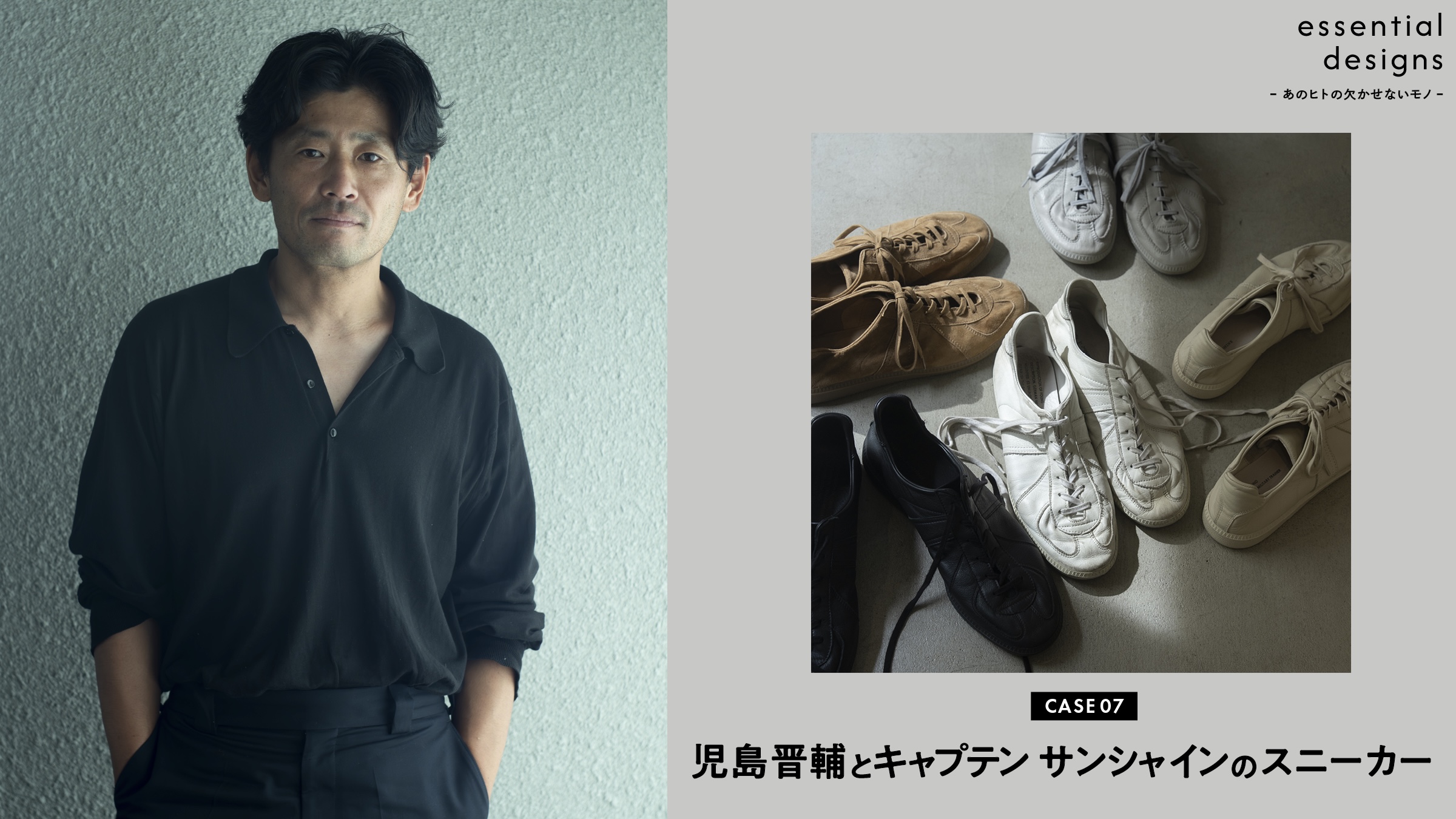
Kojima: Everything I brought today is my own, but among them, the white pair is a sample from my first collection, so I’ve worn them quite a bit and they’ve really developed some character, haven’t they? Even though I keep thinking, “I really should take care of them soon,” I’ve come to love them just the way they are.
Here’s an exclusive sneak peek at a sample of the brown suede shoe scheduled for release in the 27SS season. While the Nappa leather upper is extremely soft, the suede is even softer. It molds to your foot the moment you put it on, feeling almost like a sock. “We really want as many people as possible to experience this comfort.”
—Has brown suede ever been released before?
Kojima: Actually, this is scheduled for release in the Spring/Summer 2027 collection. While the leather is nice, I thought a slightly softer option would be good too, so I made it out of suede. I think the texture and color turned out to be quite reminiscent of adidas’ “Tobacco” shade. That’s something I’ve been able to draw on precisely because I’ve always loved vintage pieces and have been surrounded by them—and figuring out how to incorporate that into my own designs is what makes it so interesting.
—Besides your attention to detail regarding the product itself, do you also pay attention to how it’s worn?
Kojima: "Tying my shoelaces really tight" is something I've always been particular about. I love shoes with this kind of slim, low silhouette, and tying the laces tight really brings out the best in them.
To further accentuate the slim, low silhouette created by the unique pattern design, the shoelaces are pulled tight. “I recommend this because it makes the shoe look even narrower,” says Mr. Kojima. With regular shoes, you’d have to choose a larger size to achieve this look, but because these are unlined—with no inner lining—you can wear them this way even in your exact size.
—Mr. Kojima, around when did you start actively choosing things based on your own sense of aesthetics?
Kojima: Since you can’t buy anything without the money to do so, in the sense that I “gained the freedom to choose,” it really wasn’t until I entered my 30s. I did try pretty hard when I was younger and experimented with all sorts of things, but I’m the type who thinks, “Once I find something I like, that’s good enough for me,” so I consider myself to have a rather narrow perspective.
—Let me ask you again. What, in your view, are the “criteria for something to be considered essential,” Mr. Kojima?
Kojima: I have all sorts of personal rules, but I do tend to choose traditional items. To put it another way, I suppose it’s about “things I can love forever.” When I look around at the things I own now, they’re all things I’ve been collecting for a long time—and for one reason or another, they’re still here.
—If you had to name the items you want or are looking for the most right now—the ones that could become essentials in the future—what would they be?
Kojima: I’m always on the lookout for places that could serve as a base. But since I see it as a matter of serendipity, I guess it all comes down to timing. Oh, and while I’m not sure if it’ll become an “Essential,” there is something I’ve been following with interest lately.
—Please let me know.
Kojima: I started hiking because of a friend, and that led me into the world of ultralight gear—and man, that world is wild. The way people in garage brands connect with each other and do business—that whole “way of life”—has something in common with the vibe of Harajuku in the ’90s, which I found really interesting. I guess that’s a recent discovery of mine.
- 1
- 2