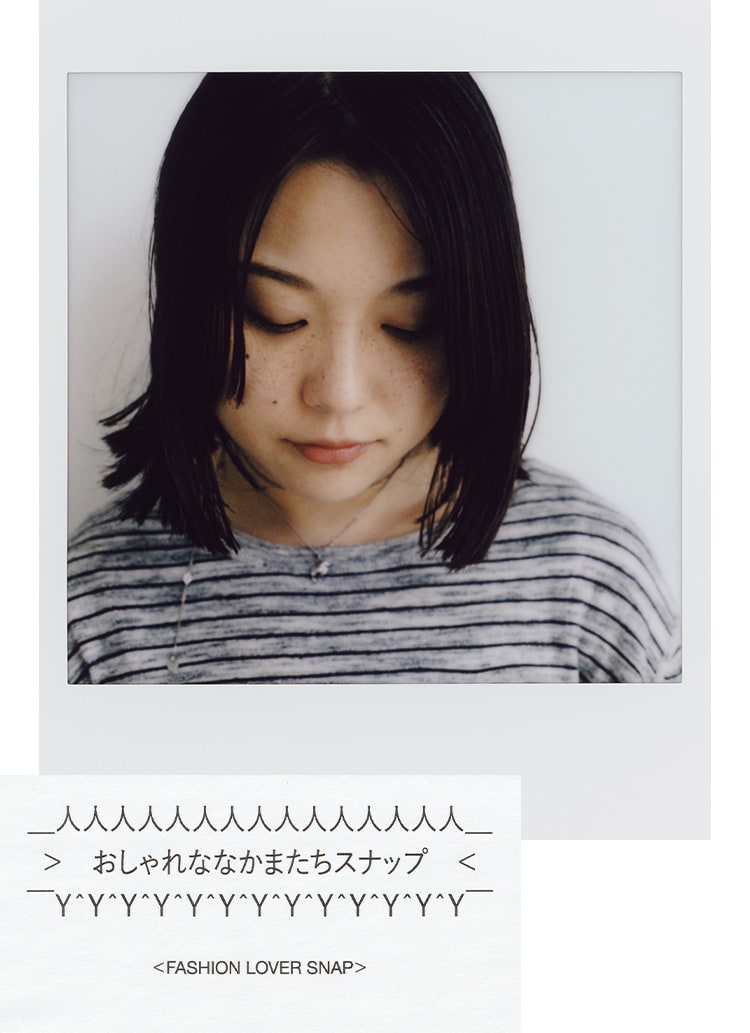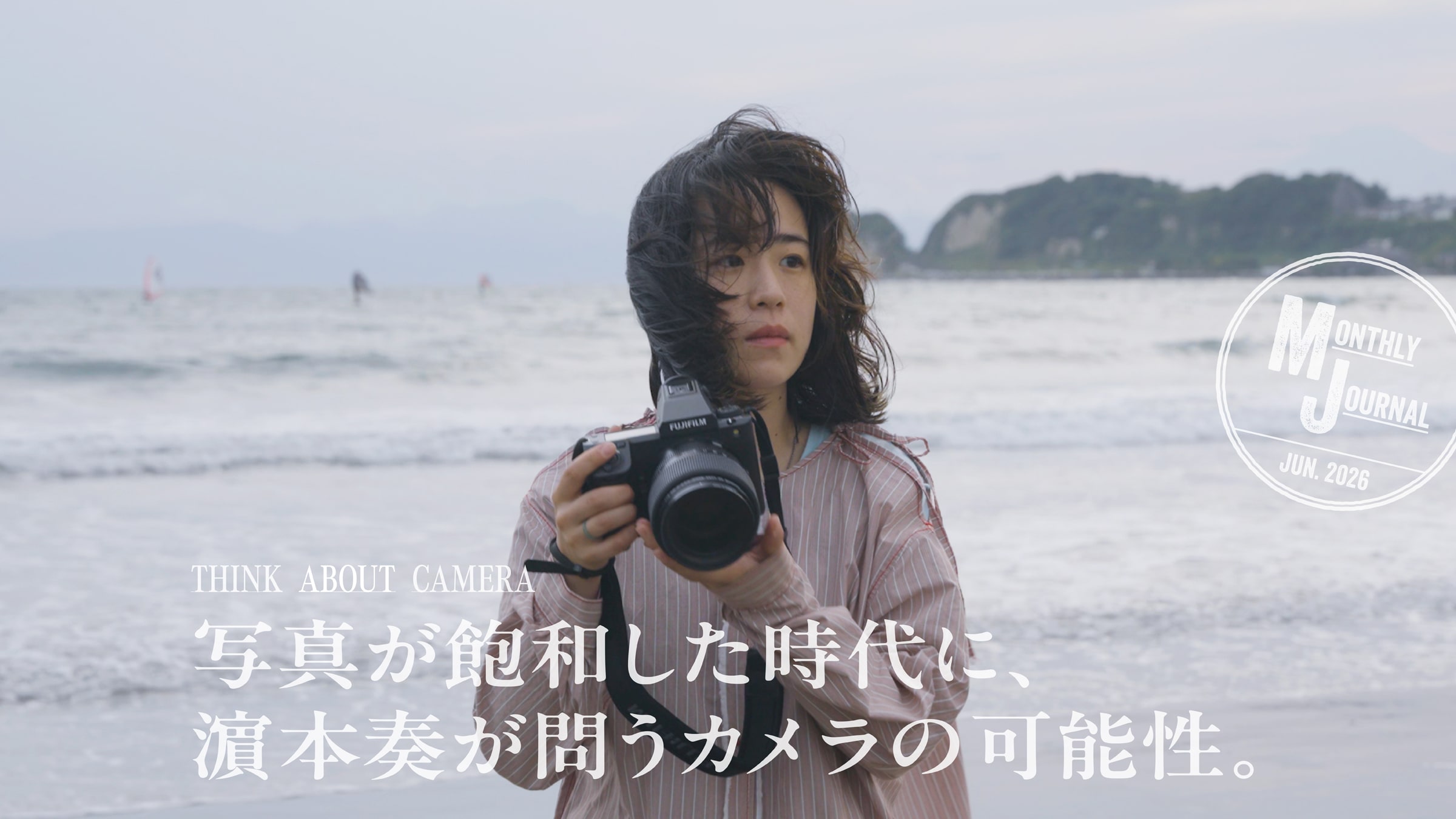
PROFILE
In 2026, at the age of 25, he won the 50th “Kimura Ihei Photography Award” for his photo book *—… (Chō Tan
Tan)*, which focuses on the “Furyū Special Attack Unit,” a human weapon used toward the end of World War II. His unique exhibition methods and choice of printing media have drawn attention for his work, which expands the boundaries of photographic expression. He has also published the photo books *midday
ghost* and *VANISHING POINT*, selecting equipment that best suits the theme of each project.
Instagram:@kanadehamamoto
Things you can't control are interesting.
—— So, it was a “disposable camera” that got you started in photography, right?
Hamamoto: While moving out of my parents’ house, I found a disposable camera and had the film developed. It seemed to be film my parents had taken a long time ago, and the developed photos had a purplish tint overall, giving them a somewhat eerie atmosphere. There were images of my parents from 10 to 20 years before I was born—a time I could never have witnessed firsthand—and it was a moving experience, quite different from looking at a family album; it felt as if a moment from the past had suddenly appeared right before my eyes. I really love how things happen that I can’t control, thanks to the camera and the passage of time.

—— What was the first camera you ever owned?
Hamamoto: On my way home from getting the film developed, I bought a Canon AE-1. When I told the staff at the camera shop that I wanted to take photos with a film camera, they recommended this model for beginners. Normally, I think they would have suggested a compact camera with fully automatic features, but for some reason, they recommended this one.
When I actually started using it, I didn’t know how to operate it, so at first I couldn’t take any decent photos. Since it was film, I didn’t know the results until it was developed, and since I didn’t take any notes on the settings at the time, I have no idea why the photos turned out the way they did. But I found that process of feeling my way through it to be really interesting. With digital photography, you’re left with all sorts of shooting data—like ISO settings—so you can look back on your shots, but I think the fact that I was in an environment where I couldn’t do that actually worked out for the best in the end.
—— Before you took up photography, were you involved in any kind of creative activities?
Hamamoto: Until then, I really hadn’t done anything special—I was just an ordinary middle school and high school student. The only photos I took with my smartphone were selfies at sports festivals, and I didn’t have any particular dreams for the future; I just drifted through life. When I was little, I used to go to an art studio, but even when I looked at the finished pieces, they didn’t resonate with me at all, and I couldn’t bring myself to like what I drew.
But when I first started taking photos, unexpected things would happen, and since I was relying on the camera as a tool, it felt like it wasn’t entirely my responsibility—there was a sense of “irresponsibility” in a good way. After all, the subjects in the photos are already there, so there’s no pressure to create something from nothing—and that’s when I felt I’d finally found something I could confidently show to others.
—— Even though I’ve asked you about this before, in your case, Mr. Hamamoto, it’s different from the general desire to take beautiful photos, isn’t it?
Hamamoto: For example, even when I see beautiful photos of scenic views like the ones in a calendar, I don’t feel the urge to take them myself. Instead, I was drawn to the changes brought about by the passage of time—the kind I felt when looking at old photos of my parents. Our memories aren’t always vivid when we recall them, and without us even realizing it, their shapes and colors gradually change, don’t they? I felt that the way photographs change over time is very similar to the vagueness of human memory.
Until then, I was a real diary addict. Even when talking to a relative who had dementia—who had forgotten everything—I’d get scared, wondering, “Where has this person’s life gone?” and “What on earth will be left of me when I die?” Driven by the single-minded desire not to forget everything, I started keeping a diary in which I recorded my every move in minute detail.
But when I write my diary in too much detail, sometimes it doesn’t quite click when I read it back later. I end up thinking, “Did that really happen?” and can’t remember, which just makes me feel down about how much I’ve forgotten. It was during a time like that that I discovered photography, and I thought, “Maybe this is the way to go.” Even if the photos aren’t perfectly taken, I’m surprisingly good at remembering things like where I took the shot, how I felt at the time, or what the temperature was. When I look at the developed photos, I feel a sense of liberation. It’s not a replacement for a diary, but I think photography just happened to be a good fit for me.
QUESTION
Email Interview
Kanade Hamamoto Interviews Takayuki Kobayashi of Flotsam Books: Part 1
We asked Takayuki Kobayashi, the owner of “Flotsam Books”—who has known Hamamoto for many years and is well-versed in photo books and photographers—about her appeal.
Q1. If someone who just learned the name Kanade Hamamoto today came to “Flotsam Books,” how would you, Ms. Kobayashi, describe her work?
A1. There's this photographer who's really interesting. I'm not really sure what he's up to, but his work is always fascinating.
Q2. Mr. Kobayashi, what do you think are the distinctive features of her photographs?
A2. There are all kinds of works—serious ones, radical ones, and those with interesting ideas—but I think what really stands out is that the final result is beautiful.
Q3. From your perspective, Mr. Kobayashi, having worked with many photographers and creators, are there any traits—such as temperament or personality—that make Mr. Hamamoto the artist he is?
A3. I get the impression he’s incredibly proactive. I feel like most people tend to announce something like, “I’m thinking of doing this,” before actually doing it, but with Mr. Hamamoto, it seems like he just takes action first. I often find out about her travels only after hearing that she’s been somewhere. For example, she once flew to France just to see a major exhibition by Boris Mikhailov. Or when I tried to ask her to mind the store, she was in Kyushu—I never seem to know where she is.