6. Mexico (15th)

Home ¥13,200
(Soccer store fcFA)
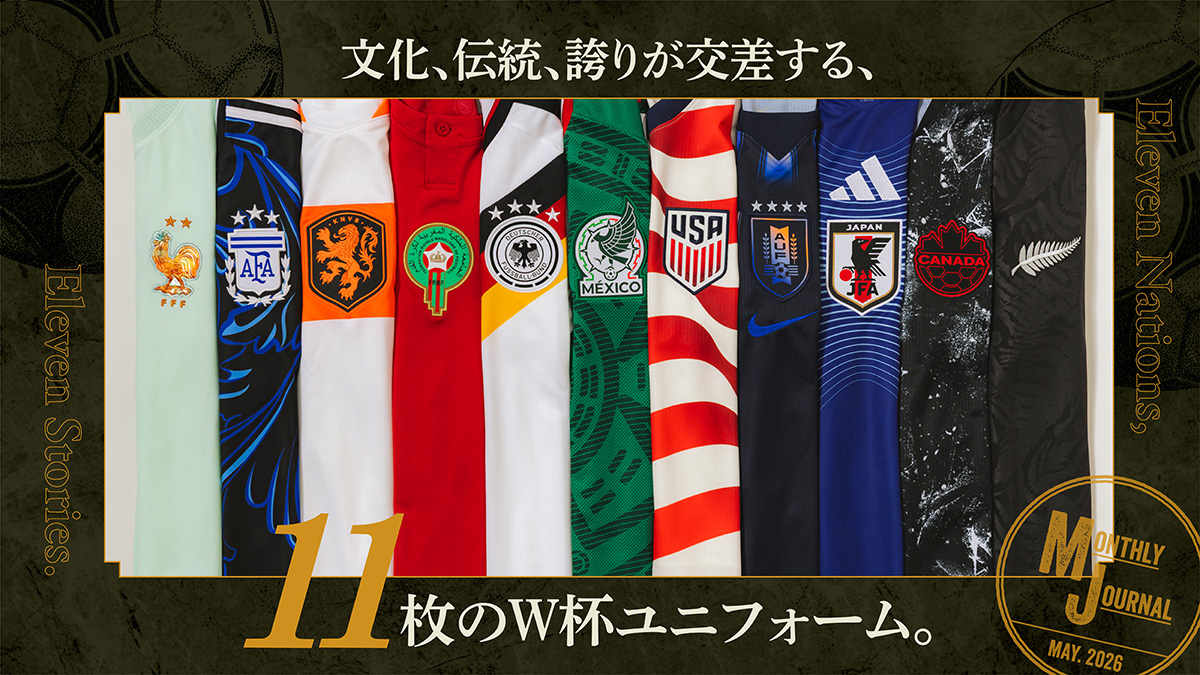
Since its participation in the first tournament, Mexico, a North and Central American powerhouse, has made the most appearances in a World Cup tournament of any country outside of Europe and South America. Known by the nickname “El Tri,” meaning “the three colors” in Spanish, they often use green, one of the three colors used in the national flag, as the base color for their home field, which signifies independence and hope. This year's tournament marks the first time in four years that green, which signifies independence and hope, has been used as the base color of the home team. The front and back of the body is decorated with a motif of the “Stone of the Sun,” a stone carving from the Aztec civilization, which was sampled from the legendary uniform worn by the national team in France in 1998. However, adidas, the company that produces the uniforms, has been in formal dialogue with Mexico's National Institute of Anthropology and History, and other institutions to ensure respect for the cultural background of the uniforms. As a result, the “sun stone” was not directly adapted, but was reconstructed into an original pattern incorporating the eagle, the symbol of the Mexican soccer federation. While referencing tradition, this updated piece is truly a “uniform that wears culture” with a modern interpretation.