FEATURE

Translated By DeepL

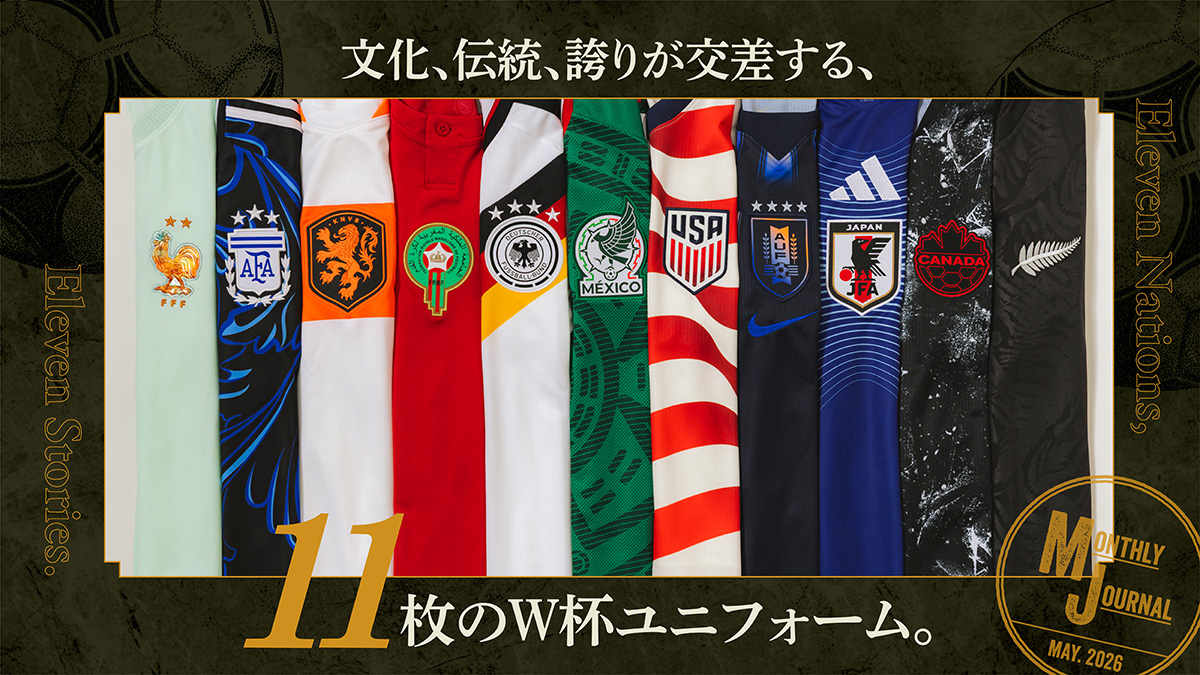
Eleven World Cup uniforms at the intersection of culture, tradition, and pride.
Eleven Nations, Eleven Stories.

Eleven World Cup uniforms at the intersection of culture, tradition, and pride.

In recent years, the national football uniform has evolved into a “cultural canvas” that reflects the history, tradition, aesthetics, prestige, values, ethnicity, national consciousness, and atmosphere of the times of each country. For this reason, looking at the uniforms is not only about enjoying football, but also about learning about the culture of countries around the world.

In this issue, we have selected 11 countries with particularly outstanding designs and cultural backgrounds from among the uniforms released for the FIFA World Cup 2026. From France and Argentina, the favorites to win the tournament, to Japan and New Zealand, we introduce them in order of their current FIFA world ranking. Let's explore new ways to enjoy the World Cup through these 11 uniforms, which are not measured by strength alone, but rather by the culture and identity of each country.

  • Photo_Hiroyuki Ozawa
  • Edit & Text_Riku Ogawa

8. Uruguay (17th)

Away ¥15,620
(Soccer store fcFA)

Uruguay, the host nation of the first World Cup in 1930 and the inaugural champion, reigned as one of the world’s top football powers in the early 1900s. This away kit pays homage to that era of history. The graphic design extending from the chest to the sleeves features a visual representation of the seating layout at the “Estadio Centenario” in Montevideo, Uruguay—a venue known as the “sacred ground of FIFA finals” because it hosted the final of the first World Cup. and incorporates the silhouette of the first-ever championship trophy, the “Jules Rimet.” Furthermore, the design incorporates elements reminiscent of ancient indigenous armor, expressing the spirit of “fighting while carrying the glory built by our forebears.” It is a jersey that embodies the very history of the nation’s soccer. Incidentally, the four stars shining above the emblem also hold a history unique to Uruguay. Although Uruguay has won the World Cup twice—in 1930 and 1950—the men’s football tournaments at the 1924 and 1928 Olympics are officially recognized as FIFA-sanctioned world championships. Thus, the “four stars” represent these achievements as well.

INFORMATION

soccer store fcFA

Address: 1-48-2 Oshiage, Sumida-ku, Tokyo
Phone: 03-5637-8068
Hours: 11:00-18:00
home page
Instagram:@fcfa_japan
X:@fcfa_japan

Related Articles#MONTHLY JOURNAL

See more